Best Teething Toys for Puppy Bite Training in 2026
Discover the best teething toys for puppy bite inhibition training in 2026. Learn expert redirection techniques to stop destructive chewing fast.
The Critical Window for Bite Inhibition Training
Welcoming a new puppy into your home is an exciting milestone, but it quickly introduces one of the most challenging phases of canine development: teething. In 2026, modern veterinary behaviorists emphasize that teething is not merely a physical discomfort phase; it is a critical behavioral window for teaching bite inhibition. Puppies explore the world with their mouths, and without proper redirection, this natural instinct can evolve into destructive chewing or problematic nipping. According to the American Kennel Club (AKC), the foundation for a well-mannered adult dog is laid between the ages of eight weeks and six months, making the selection of the right teething toys an essential component of your training toolkit.
Effective bite inhibition training relies heavily on operant conditioning. When a puppy bites your hand, the goal is not to punish the behavior, but to redirect the chewing drive toward an appropriate, textured object. This is where high-quality teething toys become your primary training aids. By pairing the right toy with positive reinforcement techniques, you can satisfy your puppy's physiological need to chew while simultaneously conditioning them to understand household boundaries.
Why the Right Teething Toy Matters for Behavioral Conditioning
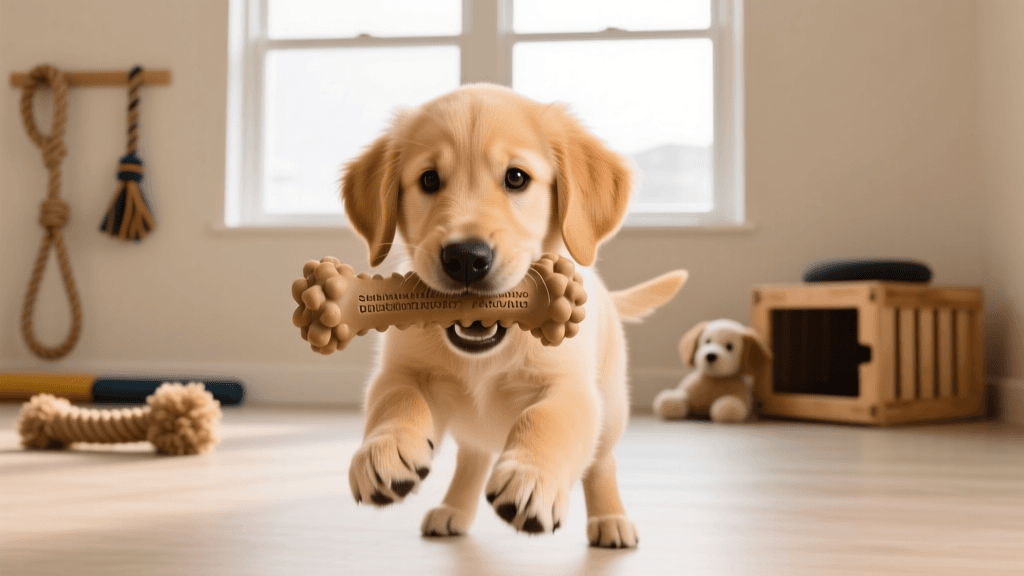
Not all chew toys are created equal, especially when viewed through the lens of behavioral training. A toy that is too hard can fracture developing puppy teeth, while a toy that is too soft will be destroyed in minutes, potentially creating a choking hazard and reinforcing the idea that chewing through objects is a rewarding game. In 2026, the gold standard for training toys involves variable textures, stuffable compartments for classical conditioning, and ergonomic shapes that allow the puppy to grip the toy with their front paws while chewing.
Furthermore, the ASPCA notes that appropriate chewing outlets help alleviate the gum inflammation associated with adult teeth pushing through the jawline. By providing toys that can be frozen or stuffed with high-value treats, trainers can create a positive association with the toy, making the redirection process significantly smoother when the puppy inevitably targets a shoe or a human hand.
Top 4 Teething Toys for Training in 2026 (Comparison Chart)
Below is a comprehensive comparison of the most effective teething toys recommended by certified professional dog trainers (CPDTs) this year. These selections are based on durability, safety, and their utility in active training sessions.
| Toy Name | Material | Best Training Application | Durability Rating | 2026 Avg. Price |
|---|---|---|---|---|
| KONG Puppy Toy (Classic) | Soft Rubber Formula | Classical conditioning, crate training | Moderate | $14.99 |
| Benebone Puppy Wishbone | Softer Nylon Blend | Independent chewing, jaw relief | High | $16.50 |
| Nylabone Puppy Chew Ring | Flexible Polymer | Texture variety, gum massage | Moderate | $11.99 |
| West Paw Zogoflex Hurley | Zogoflex Foam | Interactive fetch, drop-it training | High | $18.00 |
1. KONG Puppy Toy (Classic)
The KONG Puppy remains a staple in 2026 for a reason. Its proprietary soft rubber formula is specifically calibrated for developing teeth. From a training perspective, its hollow center is invaluable. By stuffing the KONG with a mixture of puppy-safe peanut butter and kibble, then freezing it overnight, you create a long-lasting puzzle that keeps the puppy engaged for up to an hour. This is exceptionally useful for crate training and teaching independence, as it conditions the puppy to associate their crate with a high-value reward.
2. Benebone Puppy Wishbone
Benebone has refined their puppy line to feature a slightly softer nylon that yields under pressure without splintering. The wishbone shape is ergonomically designed to allow the puppy to anchor the toy with their front paws, which satisfies their natural instinct to hold and tear. This toy is best used for independent chewing sessions when you are busy but need to ensure the puppy is not targeting furniture.
3. Nylabone Puppy Chew Ring
The ring shape offers multiple angles for chewing, and the raised bristles act as a rudimentary toothbrush, helping to clean plaque as the puppy chews. The flexible polymer is gentle on sensitive gums. Trainers often use this toy for scenting games, rubbing a small amount of wet food on the bristles to encourage the puppy to investigate and chew the toy rather than household items.
4. West Paw Zogoflex Hurley
For active puppies, the Hurley is a game-changer. It floats, bounces unpredictably, and is incredibly durable. In training, the Hurley is the premier tool for teaching the 'Drop It' and 'Leave It' commands. Because it is highly engaging, puppies are motivated to chase it, but its solid construction means it will not break apart when the puppy bites down hard during a game of tug.
Step-by-Step Guide: Redirecting Bites Using Teething Toys
Having the right toys is only half the battle; knowing how to deploy them during a biting incident is where the actual training occurs. Follow this step-by-step redirection protocol to teach bite inhibition effectively.
Step 1: Anticipate and Intercept
Puppies usually bite out of overstimulation, boredom, or teething pain. Learn to read your puppy's body language. If they are exhibiting 'zoomies', biting at your ankles, or intensely staring at your hands, a biting incident is imminent. Before they make contact, present a teething toy. This proactive interception prevents the unwanted behavior from being rehearsed.
Step 2: The 'Toy Swap' Redirection Technique
If the puppy does latch onto your skin, avoid yanking your hand away quickly, as this triggers their prey drive and encourages them to bite harder. Instead, freeze your hand completely, making it a boring, unyielding object. Simultaneously, present a high-value teething toy (like a frozen KONG) directly in front of their nose. The moment they release your skin to investigate the toy, lavishly praise them and engage in a gentle play session with the toy.
Step 3: Rewarding the 'Soft Mouth'
Bite inhibition is not just about stopping the bite; it is about teaching the puppy to control the pressure of their jaw. If your puppy is chewing on your hand but applies zero pressure (a 'soft mouth'), mark the behavior with a clicker or a verbal 'Yes!' and immediately reward them by offering a teething toy or a treat. This conditions the puppy to understand that gentle mouthing is acceptable, but hard biting results in the cessation of play.
Advanced Conditioning: Teaching the 'Drop It' Command
Teething toys are the perfect vehicle for teaching the 'Drop It' command, a crucial safety cue for all dogs. During a teething phase, puppies are often possessive of items that soothe their gums. To train 'Drop It' without creating resource guarding, use the West Paw Hurley or a similar tug-friendly toy.
Engage the puppy in a mild game of tug. After a few seconds, stop moving your hand completely and present a high-value treat near their nose. The puppy will naturally drop the toy to eat the treat. The exact millisecond they release the toy, say 'Drop It', give the treat, and then immediately return the toy to them. Returning the toy is critical; it teaches the puppy that dropping an item does not mean the fun is over, which drastically reduces the likelihood of resource guarding as they mature into adulthood.
Troubleshooting: What If My Puppy Ignores the Toy?
A common frustration among new owners in 2026 is the puppy that ignores a $20 teething toy in favor of a baseboard or a slipper. If your puppy rejects their toys, you must increase the toy's perceived value through classical conditioning. Never leave teething toys scattered around the house; this leads to habituation, where the toy becomes part of the background scenery. Instead, keep the toys in a designated bin and only bring them out during interactive play sessions or when the puppy is actively seeking something to chew.
Additionally, experiment with temperature and scent. Soaking a nylon chew toy in low-sodium chicken broth and freezing it can drastically increase its appeal to a puppy with inflamed gums. The American Veterinary Medical Association (AVMA) recommends monitoring puppies closely during these cold-therapy sessions to ensure they do not chew off and swallow large pieces of the toy.
Common Training Mistakes to Avoid in 2026
As canine behavioral science continues to evolve, certain outdated training methods have been thoroughly debunked. Avoid the following mistakes when managing a teething puppy:
- Physical Punishment: Tapping the puppy's nose or holding their mouth shut creates fear and damages the human-animal bond. It does not teach the puppy what to do; it only teaches them to avoid you.
- Inconsistent Rules: Allowing the puppy to chew on your hands when they are tiny and cute, but scolding them when they are larger and stronger, creates profound confusion. Establish a strict 'no skin contact' rule from day one.
- Providing Old Shoes as Toys: Puppies cannot distinguish between an old sneaker and a brand-new designer shoe. If you want them to chew toys, only provide toys.
Conclusion
Navigating the puppy teething phase requires patience, consistency, and the right equipment. By leveraging the best teething toys of 2026 as active training tools rather than mere distractions, you can effectively teach bite inhibition, prevent destructive habits, and build a foundation of trust with your dog. Remember that every redirected bite is a successful training repetition. Stick to your redirection protocols, utilize high-value stuffable toys, and celebrate the small victories as your puppy grows into a well-mannered adult companion.
anouk-beaumont
All our authors care for dogs every day — read more of their work on the authors page.