Best Teething Toys for Puppy Bite Training in 2026
Discover the best teething toys for puppy bite training in 2026. Learn behavioral redirection techniques to stop nipping and soothe sore gums effectively.
The Intersection of Teething Relief and Behavioral Conditioning
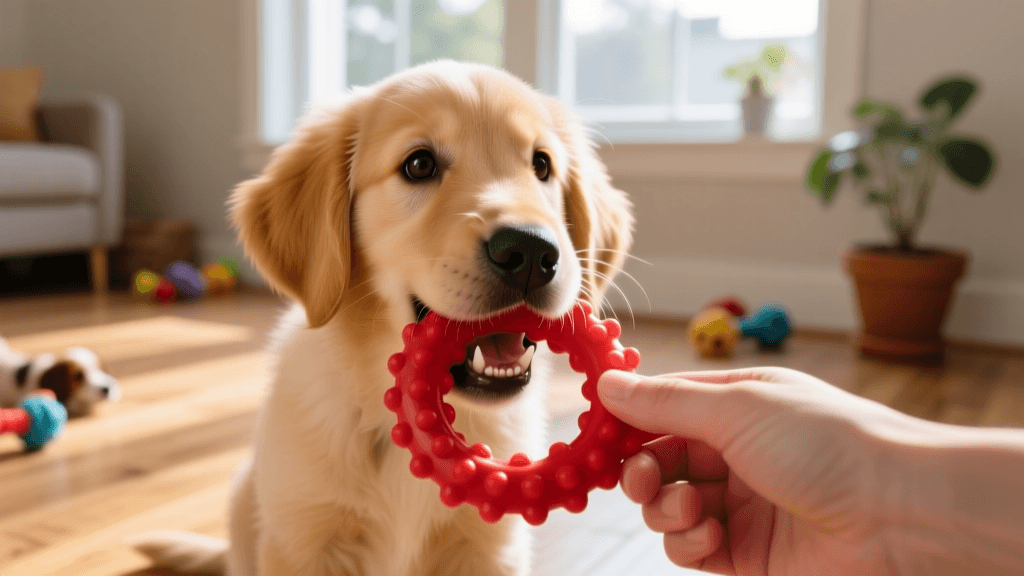
Bringing a new puppy home is an exhilarating experience, but it quickly introduces a universal challenge for dog owners: the teething phase. As we navigate the pet care and training landscape in 2026, modern veterinary behaviorists emphasize that teething toys are not merely pacifiers designed to save your furniture. Instead, they are critical, high-value tools for behavioral conditioning, bite inhibition training, and impulse control. When a puppy is between the ages of 12 weeks and 6 months, their deciduous (baby) teeth are falling out, making way for adult teeth. This process causes significant oral discomfort, driving the puppy to chew on anything they can find—including your hands, ankles, and baseboards.
Understanding how to leverage the best teething toys for specific training outcomes is the key to raising a well-mannered adult dog. According to the American Kennel Club (AKC), providing appropriate, textured chew outlets during this developmental window is essential for proper oral exploration and preventing long-term destructive habits. In this comprehensive guide, we will explore the top teething toys of 2026 and provide actionable, step-by-step training protocols to transform your puppy's nipping behavior into polite, conditioned responses.
The Behavioral Science of Puppy Teething and Chewing
Before selecting a toy, it is vital to understand the 'why' behind the behavior. Puppies explore their environment much like human toddlers do with their hands—through tactile and oral investigation. When teething pain is layered on top of this natural curiosity, the urge to bite becomes overwhelming. If a puppy nips your hand and you react by pulling away or yelping, the puppy may interpret this as an invitation to play, inadvertently reinforcing the biting behavior.
Behavioral conditioning in 2026 focuses heavily on redirection and positive reinforcement. By presenting a highly engaging teething toy the exact moment the puppy exhibits an undesirable chewing behavior, you are teaching them what is acceptable to put in their mouth. The ASPCA notes that successful chew training relies on making the approved toys more rewarding and physically satisfying than household items or human skin.
Top Teething Toys for Behavioral Redirection in 2026
Not all toys are created equal when it comes to training. The best toys for behavioral conditioning offer a combination of soothing textures, interactive elements, and durability. Here are the top three training-focused teething toys dominating the market in 2026.
1. KONG Puppy Classic (Updated 2026 Softer Polymer Formula)
The KONG Puppy Classic remains the gold standard for behavioral redirection. The 2026 iteration features an updated, ultra-soothing polymer that is gentle on sore gums while remaining durable enough for aggressive chewers. From a training perspective, the KONG is unparalleled because it is stuffable. By filling the core with a mixture of wet puppy food, plain pumpkin puree, and low-sodium bone broth, and then freezing it, you create a high-value puzzle toy. This is incredibly effective for 'place' training and crate conditioning, as it keeps the puppy anchored to a specific spot, associating their bed or crate with a soothing, long-lasting reward.
2. West Paw Toppl Puzzle Toy
For puppies that require cognitive fatigue to stop hyperactive nipping, the West Paw Toppl is a game-changer. Made from Zogoflex, a pliable yet highly durable material, the Toppl features inner prongs that hold treats and kibble. The genius of the Toppl for training lies in its modularity; you can interlock a large and small Toppl together to increase the difficulty. This engages the puppy's problem-solving skills, draining mental energy that would otherwise be directed toward biting your children or other pets. It is the premier tool for teaching a puppy to settle independently.
3. Nylabone Puppy Chew Teething Dinosaur
When the primary training goal is to teach a puppy the difference between 'hard' acceptable objects (like furniture legs) and 'hard' unacceptable objects, the Nylabone Teething Dinosaur is ideal. The raised bristles and nubs act like a toothbrush, massaging inflamed gums and cleaning teeth. Behaviorally, this toy is used for binary choice training. When you catch your puppy gnawing on a wooden table leg, you immediately interrupt the behavior and offer the Dinosaur. The similar hard texture satisfies the puppy's desire for resistance, while the edible chicken-flavor infusion reinforces that this specific object is the correct choice.
Step-by-Step Training: Using Toys for Bite Inhibition
Bite inhibition is the process of teaching a puppy to control the force of their mouthing. While expert trainers at the AKC suggest that some puppy-to-puppy play is necessary for learning this, owners must actively manage human-to-puppy interactions using toys. Here is the 2026 standard protocol for redirection:
- The Anticipation Phase: Keep a textured teething toy (like the Nylabone Dinosaur) within arm's reach at all times during the puppy's active waking hours.
- The Interruption: If the puppy's teeth make contact with your skin, immediately cease all movement. Do not yank your hand away, as this triggers a prey drive response.
- The Redirection: Calmly say 'Oops' or 'Too bad,' and immediately present the teething toy directly in front of the puppy's nose.
- The Reinforcement: The moment the puppy releases your skin and bites the toy, offer enthusiastic verbal praise ('Yes! Good chew!') and gently engage in a 30-second game of tug or independent chewing.
Consistency is paramount. Every family member and visitor must follow this exact protocol to prevent mixed signals, which can severely delay behavioral conditioning.
Comparison Chart: Matching the Toy to the Training Goal
Selecting the right tool for the specific behavioral issue you are addressing will accelerate your training timeline. Use the table below to match your puppy's current training hurdle with the appropriate 2026 teething toy.
| Training Goal | Recommended Toy | Key Feature | Estimated 2026 Price |
|---|---|---|---|
| Crate Training & Settling | KONG Puppy Classic | Stuffable core for long-duration licking | $12 - $16 |
| Hyperactivity & Nipping | West Paw Toppl | Cognitive puzzle fatigue | $18 - $24 |
| Furniture Chewing Redirection | Nylabone Dinosaur | Hard texture & bristles for heavy jaw pressure | $8 - $12 |
| Teaching 'Drop It' Command | Canvas Tug Rope (Chilled) | Interactive, easy to trade for high-value treats | $10 - $15 |
Advanced Conditioning: Teaching 'Drop It' and 'Leave It'
Teething toys are the ultimate props for teaching vital impulse control commands like 'Drop It' and 'Leave It.' These commands are not just party tricks; they are essential safety skills that could save your dog's life if they pick up something toxic or dangerous.
Training 'Drop It' with a Tug Toy
Start with a soaked, frozen canvas tug rope, which provides excellent teething relief. Engage your puppy in a gentle game of tug. After a few seconds, stop moving entirely and become 'boring.' Present a high-value treat (like freeze-dried liver) right to their nose. The puppy will naturally release the toy to eat the treat. The exact millisecond their mouth opens, say 'Drop It.' Repeat this sequence 10 times per session. Eventually, the puppy will drop the toy upon hearing the verbal cue, anticipating the reward. This builds a positive association with releasing objects from their mouth, drastically reducing resource guarding tendencies.
Training 'Leave It' with the West Paw Toppl
Place the treat-loaded Toppl on the floor but cover it with your hand. The puppy will sniff, lick, and paw at your hand. Wait in silence. The moment the puppy stops trying to get the toy and pulls their head back even an inch, mark the behavior with a clicker or a 'Yes!' and reward them with a different treat from your pocket. Gradually remove your hand, hovering just above the toy, ready to cover it again if they lunge. This teaches the puppy that ignoring a highly desirable teething toy yields an even better reward from you, laying the groundwork for impeccable impulse control in high-distraction environments.
Safety, Sizing, and Supervision Rules for 2026
While teething toys are incredible training aids, they must be used safely. In 2026, veterinary standards dictate that no chew toy should be harder than a dog's teeth. A good rule of thumb is the 'kneecap test': if you can comfortably tap the toy against your own kneecap without it hurting, it is generally safe for a puppy's developing teeth. Avoid antlers, hooves, and hard nylon bones designed for adult dogs, as these frequently cause slab fractures in puppy premolars.
Always supervise your puppy with any toy, especially puzzle toys and stuffable rubber toys. Inspect the toys weekly for signs of excessive wear, tearing, or missing chunks. A toy that was perfectly safe for a 10-pound puppy can become a severe choking hazard once they hit their 25-pound teenage growth spurt. Size up your toys proactively as your dog grows to ensure safe, uninterrupted training sessions.
Conclusion
Navigating the puppy teething phase requires patience, consistency, and the right equipment. By viewing teething toys through the lens of behavioral conditioning rather than simple distraction, you can effectively eliminate painful nipping, protect your home from destruction, and build a foundation of trust and impulse control. Whether you are utilizing a frozen KONG for crate training or a puzzle Toppl to drain mental energy, the strategic use of these tools in 2026 will ensure your puppy matures into a polite, well-adjusted, and happily chewing adult dog.
aaron-whyte
All our authors care for dogs every day — read more of their work on the authors page.