Preventing Puppy Separation Anxiety: 2026 Alone Time Training
Prevent puppy separation anxiety in 2026 with our step-by-step alone-time desensitization schedule and Furbo smart camera treat-tossing techniques.
The Rising Importance of Alone-Time Training in 2026
As we navigate the hybrid work landscapes and flexible schedules of 2026, bringing a new puppy into your home presents a unique set of challenges. While many owners are home more often than they were a decade ago, puppies still require structured, intentional training to learn how to be alone. Without proactive intervention, a puppy that is constantly accompanied can quickly develop severe distress when left unattended. Preventing puppy separation anxiety is vastly easier than treating it in adulthood. By implementing a systematic desensitization protocol during your puppy's first few months, you can foster confidence, independence, and emotional resilience that will last a lifetime.
Isolation Distress vs. True Separation Anxiety
Before diving into training, it is crucial to understand what your puppy is actually experiencing. Many young puppies exhibit crying, whining, and scratching when left alone. This is often isolation distress—a natural, evolutionary response where a vulnerable young animal vocalizes to reunite with its pack. True separation anxiety, however, is a more severe panic disorder linked specifically to the absence of a primary attachment figure. According to the American Society for the Prevention of Cruelty to Animals (ASPCA), true separation anxiety involves intense panic, destructive escape attempts, and inappropriate elimination that occurs exclusively when the dog is separated from their guardian. While isolation distress is normal and expected in young puppies, failing to address it can lay the neurological groundwork for clinical separation anxiety later in life.
Pre-Departure Cue Desensitization
Puppies are incredibly observant and quickly learn the environmental cues that predict your departure. The sound of jingling keys, the rustle of a jacket, or the act of putting on shoes can trigger a cortisol spike before you even touch the doorknob. To prevent this, you must desensitize your puppy to these triggers. Throughout the day, perform your departure routines without actually leaving. Put on your shoes and sit on the couch. Grab your keys and make a cup of coffee. Put on your coat and read a book. By repeatedly exposing your puppy to these triggers in a low-stakes environment, you strip them of their predictive power, keeping your puppy's nervous system calm when it is actually time for you to leave.
The 30-Day Puppy Alone-Time Desensitization Schedule
The foundation of preventing separation anxiety is gradual, systematic desensitization. You must build your puppy's tolerance for solitude in micro-increments, ensuring they remain under their anxiety threshold at all times. Below is a structured 30-day protocol designed to build confidence using positive reinforcement and modern smart home technology.
| Week | Target Duration | Primary Action | Tech & Tool Integration |
|---|---|---|---|
| Week 1 | 5 to 60 Seconds | Micro-departures; stepping out the door and immediately returning. | Snuggle Puppy heartbeat toy in the crate. |
| Week 2 | 1 to 10 Minutes | Short absences; remaining completely silent upon return. | Introduction to the smart camera feed (no audio). |
| Week 3 | 15 to 45 Minutes | Moderate absences; pairing departure with high-value food puzzles. | Active treat-tossing via smart camera at random intervals. |
| Week 4 | 1 to 3 Hours | Real-world absences; running errands and returning calmly. | Two-way audio check-ins and automated puzzle feeders. |
Week 1: Micro-Departures and Boundary Setting
During the first week, your goal is to teach your puppy that your departure is temporary and entirely unremarkable. Place your puppy in their designated safe space, such as a crate or a puppy-proofed pen equipped with a Snuggle Puppy (a plush toy with a simulated heartbeat that mimics the feeling of littermates). Step out of the room or out the front door for merely five seconds, then return. Do not make eye contact, speak, or offer affection upon your return. Wait until the puppy is completely calm and silent before acknowledging them. Gradually increase these micro-departures to 30 and then 60 seconds over the course of the week. The AKC's guide to puppy crate training heavily emphasizes keeping the crate a positive, low-pressure zone during these initial stages.
Week 2: Introducing the Smart Camera
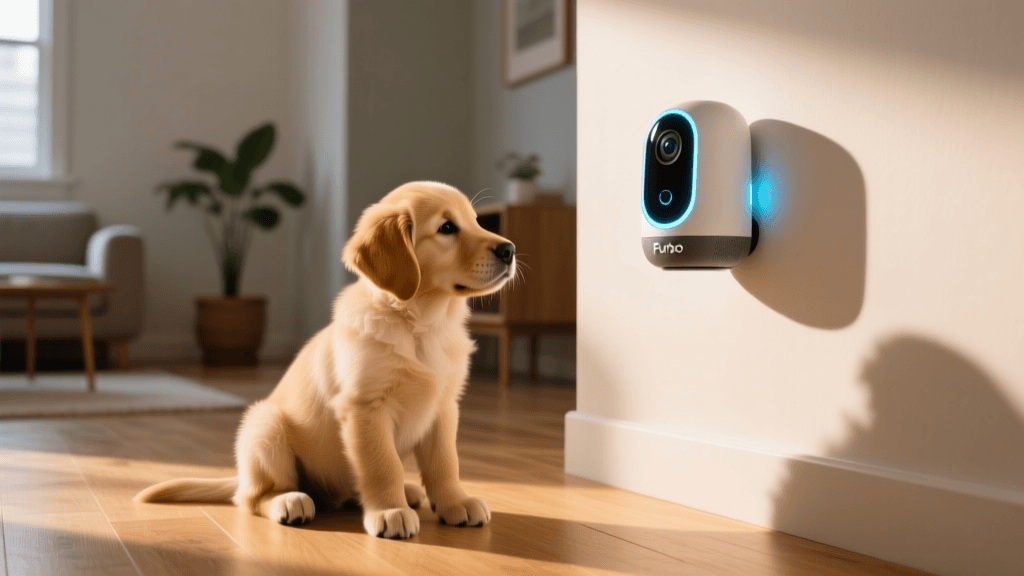
In week two, you will extend your absences to between one and ten minutes. This is the ideal time to introduce a smart pet camera, such as the Furbo 360. However, do not use the two-way audio feature yet. Hearing your voice without seeing you can actually confuse and frustrate a young puppy, potentially increasing their distress. Instead, use the camera purely as an observational tool to monitor your puppy's body language. If you notice stress signals like pacing, panting, or whining, you have pushed the duration too far too fast. Return to the previous successful duration and proceed more slowly.
Week 3: Counter-Conditioning with Treat Tossing
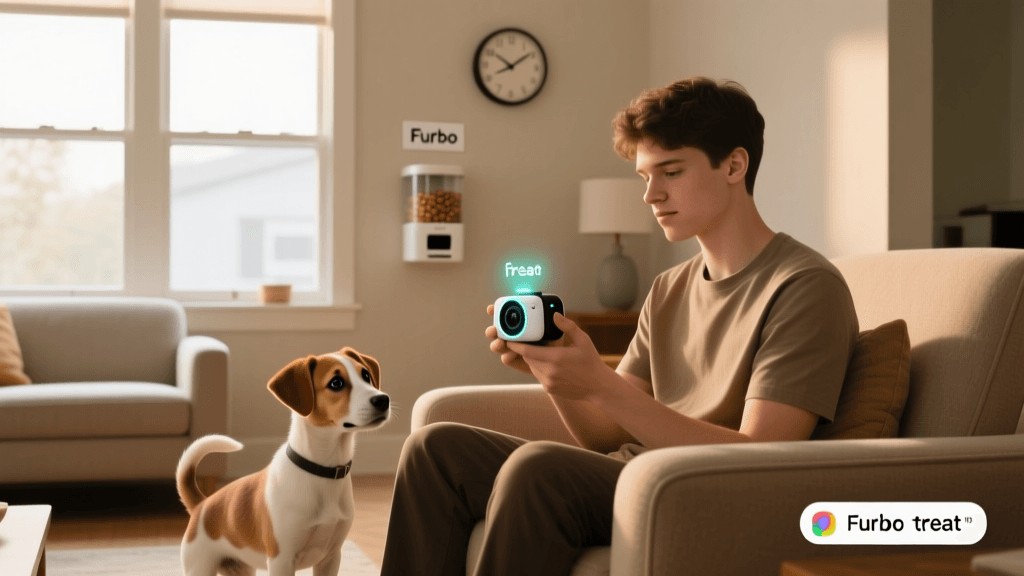
Now that your puppy is comfortable with short absences, it is time to change their emotional response to being alone. When you leave for 15 to 45 minutes, provide a long-lasting enrichment item, such as a frozen Kong Classic stuffed with puppy-safe peanut butter and plain yogurt. Approximately ten minutes into your absence, use your smart camera's treat-tossing feature to dispense a single, low-calorie training treat (like Zuke's Mini Naturals, which are under three calories each). This creates a positive association: being alone predicts the arrival of delicious surprises. Randomizing the treat tosses keeps the puppy engaged and prevents them from simply waiting by the door.
Week 4: Real-World Absences and Generalization
By week four, you are ready to simulate real-world scenarios. Leave the house for one to three hours to run errands or work from a coffee shop. You can now utilize the two-way audio feature on your camera, but use it sparingly. A calm, reassuring "good dog" can be helpful if the puppy is settling down, but avoid using it to soothe a panicking puppy, as this can inadvertently reward the anxious behavior. Ensure that your departures and arrivals remain incredibly boring. The American Kennel Club (AKC) consistently advises owners to ignore their dogs for the first five to ten minutes upon returning home to prevent the reinforcement of hyper-aroused greeting behaviors.
Optimizing Your Puppy's Safe Space
The physical environment plays a massive role in a puppy's ability to self-soothe. In 2026, veterinary behaviorists highly recommend creating a multi-sensory calming environment. Start with pheromone therapy; the Adaptil Optimum line provides advanced synthetic dog-appeasing pheromones that mimic the comforting signals of a nursing mother dog. Plug the diffuser in near the puppy's safe space at least 48 hours before beginning your desensitization protocol. Additionally, mask unpredictable outdoor noises—such as delivery drones, traffic, or neighbors—with continuous white noise or specially designed bio-acoustic music for dogs. Visual barriers, such as covering the crate or using privacy film on lower windows, can also prevent territorial barking and visual overstimulation.
Nutritional and Supplemental Support
For puppies that are particularly sensitive or struggle to settle, nutritional support can bridge the gap during training. Consult your veterinarian about incorporating calming supplements containing L-theanine, L-tryptophan, and hydrolyzed milk proteins. Products like Solliquin or Zesty Paws Calming Bites have become staples in modern puppy rearing, helping to support a balanced nervous system without causing drowsiness. These supplements are most effective when given daily, building up in the puppy's system over several weeks, rather than used as an on-demand "quick fix" right before you leave the house.
Common Mistakes That Worsen Puppy Anxiety
Even well-meaning owners can accidentally sabotage their alone-time training. Avoid these critical errors:
- Emotional Departures and Arrivals: Making a big fuss when leaving or returning validates the puppy's belief that your absence is a major, stressful event. Keep greetings and goodbyes incredibly mundane.
- Using the Crate for Punishment: If your puppy associates their safe space with time-outs for bad behavior, they will develop a negative emotional response to confinement, making alone-time training nearly impossible.
- Flooding: Leaving a puppy alone for four hours before they are ready for four minutes is called "flooding." This does not teach the puppy to cope; it teaches them to panic and eventually shut down, leading to learned helplessness.
- Relying Solely on Exhaustion: While physical exercise is important, an over-tired puppy is often a cranky, anxious puppy. Mental enrichment and enforced nap times are just as critical for emotional regulation.
When to Consult a Veterinary Behaviorist
While isolation distress is normal, true separation anxiety is a medical condition that requires professional intervention. If your puppy exhibits self-injurious behavior, breaks teeth or nails trying to escape confinement, or completely refuses high-value food when left alone, your training protocol must pause. In these cases, consult a board-certified veterinary behaviorist (DACVB). They can accurately diagnose the condition and, if necessary, prescribe short-term anti-anxiety medications to lower the puppy's baseline arousal levels, allowing your desensitization training to actually take hold. By combining modern technology, structured routines, and compassionate behavioral science, you can ensure your puppy grows into a confident, secure adult dog who is perfectly content spending time on their own.
jonas-cole
All our authors care for dogs every day — read more of their work on the authors page.