2026 Puppy Agility Foundation: Safe Sport Prep Guide
Discover safe, joint-friendly puppy agility foundation training for 2026. Learn essential milestones, gear, and mental prep for future dog sports success.
Welcome to the Future of Dog Sports: 2026 Puppy Foundations
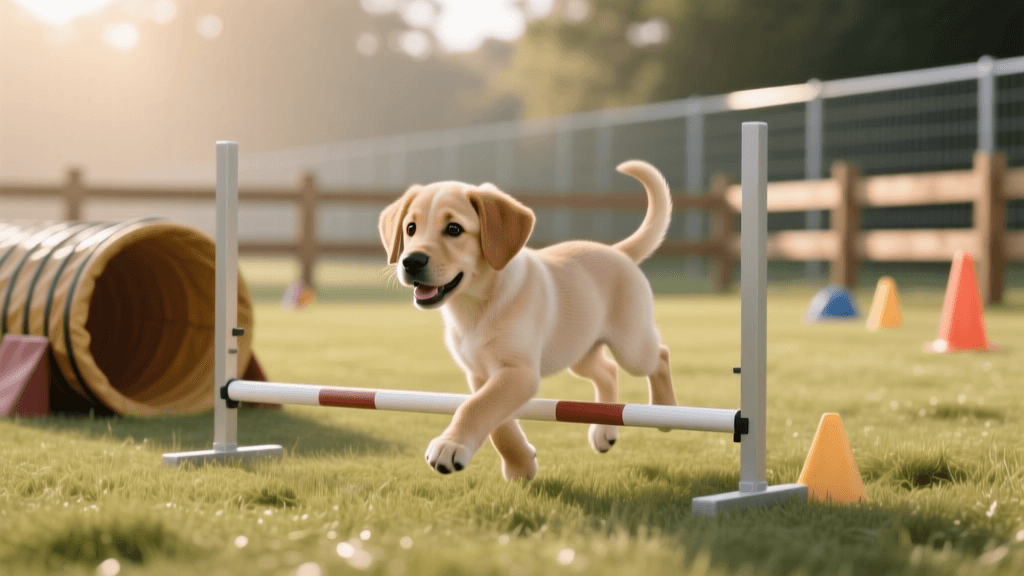
The world of competitive dog sports has evolved dramatically, and as we move through 2026, the emphasis on ethical, science-based puppy development has never been stronger. Whether your goal is to compete in agility, obedience, rally, or FAST CAT, the first year of your puppy's life is the most critical window for building a confident, capable, and resilient athlete. However, a common mistake among eager handlers is rushing into full-height equipment and repetitive drills too early. True puppy sport preparation is not about teaching a puppy to run a course; it is about developing body awareness, impulse control, engagement, and a deep bond. According to the American Kennel Club's Agility Guide, foundation work done before a puppy reaches physical maturity sets the stage for a long, injury-free competitive career.
The Golden Rule: Protecting Growing Joints and Growth Plates
Before you introduce any sport-specific movements, you must understand the biology of a growing puppy. Puppies have open growth plates (physis) at the ends of their long bones. These areas are made of soft, rapidly dividing cartilage that is highly susceptible to injury from repetitive impact, twisting, or overextension. According to veterinary data highlighted by the Orthopedic Foundation for Animals, these growth plates typically do not fully close and ossify into solid bone until a dog is between 12 and 18 months of age, depending on the breed and size.
What is strictly forbidden during the first year:
- Jumping over full-height or even half-height agility jumps.
- Weaving through poles (which places severe torsional stress on the spine).
- Repetitive fetching of balls or frisbees on hard surfaces, which encourages sudden, uncontrolled stops and turns.
- Scaling A-frames or dog walks at full height.
What is highly encouraged (Flatwork and Body Awareness):
- Targeting (nose and paw touches).
- Perch work (rear-end awareness).
- Backing up and lateral movements.
- Crate games and start-line stay foundations.
- Running through short, straight, collapsed tunnels.
Essential 2026 Gear for Puppy Sport Prep
Having the right equipment ensures your puppy remains comfortable and engaged during training sessions. The 2026 market offers highly specialized, biomechanically sound gear designed specifically for developing athletes.
| Gear Category | 2026 Top Recommendation | Key Feature for Puppies | Estimated Cost |
|---|---|---|---|
| Sport Harness | Hurtta Trail Master 2026 Edition | Distributes pulling force evenly without restricting shoulder extension during tug play. | $65 - $80 |
| Training Platform | Klimb Dog Training Platform | Provides a stable, non-slip raised surface for teaching rear-end awareness and sit-stays. | $140 - $160 |
| Treat Pouch | Doggie Styl Magnetic Pouch | Silent magnetic closure prevents startling noise-sensitive puppies during high-rate reinforcement. | $45 - $55 |
| Engagement Toy | West Paw Bumi with Tug-o-War | Ergonomic, floatable, and gentle on developing puppy teeth and jaws during drive-building. | $20 - $25 |
Month-by-Month Foundation Milestones
A structured timeline helps you track your puppy's developmental progress without pushing them beyond their physical or mental limits. Here is a roadmap for the first 12 months.
8 to 12 Weeks: The Engagement and Handling Phase
During this critical socialization window, the focus is entirely on building a positive association with the training environment. Introduce your puppy to various surfaces (grass, gravel, rubber matting, wobble boards) to build proprioception. Practice collar grabs, handling paws, and examining ears and teeth, pairing every interaction with high-value food rewards. Begin basic 'Crate Games' to teach the puppy that their crate is a rewarding place to be, which is essential for resting between runs at future trials.
3 to 5 Months: Body Awareness and Impulse Control
As your puppy's coordination improves, introduce 'perch work.' Using a small, elevated disc or book, teach the puppy to place their front paws on the object and move their hind legs around it in a circle. This builds crucial rear-end awareness, a skill vital for navigating tight turns on an agility course later in life. Simultaneously, teach the 'It's Yer Choice' game to build impulse control. Place treats in your open hand and close it if the puppy dives in; only open and reward when they offer a calm sit or eye contact. This translates directly to a solid start-line stay in the competition ring.
6 to 8 Months: The Teething and Fear Period Adjustment
Many puppies experience a secondary fear period and intense teething during these months. Adjust your training accordingly. If your puppy is hesitant about a new object or noise, do not force them. Allow them to investigate at their own pace and reward bravery. Because adult teeth are settling, avoid intense, repetitive tug-of-war games that could damage emerging dentition. Shift focus to nose work and scent discrimination games, which provide immense mental fatigue without physical strain.
9 to 12 Months: Advanced Flatwork and Environmental Proofing
With growth plates nearing closure for many medium breeds (though large and giant breeds will need to wait longer), you can begin advanced flatwork. Teach 'send-aways' to a target mat, introductory contact behavior (walking across a flat plank on the ground to teach the 'two-on, two-off' position), and jumping through a hoop resting entirely on the grass. Begin taking your training sessions to busy parks or outside the ring at local trials to proof your dog's focus against environmental distractions like barking dogs, PA systems, and crowds.
Mental Conditioning and Focus Games
Physical skills are useless in the ring if the dog cannot maintain focus on the handler. In 2026, top competitors prioritize 'engagement' over obedience. Engagement means the dog views the handler as the most rewarding element in the environment. Practice the 'Look at That' (LAT) game: when your puppy notices a distraction (a jogger, another dog), mark the moment they look at it with a clicker or a 'yes,' and then feed them when they turn back to you. This teaches the puppy that noticing a distraction is simply a cue to re-engage with the handler, completely neutralizing the distraction's pull.
Building the Obedience Bedrock
While agility and flyball are thrilling, a solid obedience foundation is non-negotiable for any sport dog. The AKC Canine Good Citizen Program provides an excellent framework for the manners required at busy trial venues. Your puppy must learn to settle on a mat, accept friendly strangers without jumping, and walk on a loose leash through a crowd. A dog that cannot settle in a chaotic crating area will burn out mentally before they ever step onto the course.
Nutrition and Physical Conditioning for the Sport Puppy
Feeding a future sport dog requires a delicate balance. Overfeeding and promoting rapid growth is a leading cause of orthopedic issues like hip and elbow dysplasia. Feed a high-quality, AAFCO-approved puppy diet formulated for your dog's expected adult size. For large breeds, a specific large-breed puppy formula is mandatory to ensure calcium and phosphorus ratios support steady, controlled bone development. Keep your puppy lean; you should be able to easily feel their ribs without pressing hard, and they should have a visible abdominal tuck. Excess weight places unnecessary stress on developing joints during foundational body-awareness exercises.
Conclusion: Patience Pays Off in the Ring
Preparing a puppy for dog sports is a marathon, not a sprint. The handlers who achieve the most success and longevity in competitive sports are those who dedicate the first year to invisible foundations: confidence, focus, body awareness, and joy. By respecting your puppy's biological timeline, utilizing joint-safe training methods, and prioritizing mental engagement, you are building a resilient athlete ready to tackle the challenges of the 2026 competition season and beyond. Embrace the puppy phase, celebrate the small victories, and look forward to the incredible partnership that awaits you on the start line.
tom-renshaw
All our authors care for dogs every day — read more of their work on the authors page.