2026 Puppy Agility Foundation: Safe Sports Prep Guide
Discover safe 2026 puppy agility foundation training. Learn growth plate protection, age-appropriate drills, and essential gear for your pup's first year.
Introduction to Puppy Sports Foundation in 2026
The landscape of canine sports has evolved significantly by 2026, with a massive emphasis on longevity, joint health, and psychological well-being. If you are raising a puppy with dreams of competing in agility, obedience, rally, or fast cat, the first twelve months of their life are the most critical. However, the modern approach to puppy sports preparation is radically different from the methods of the past. Today's top trainers and veterinary orthopedic specialists agree: rushing a puppy onto full-height equipment or demanding repetitive physical feats before their skeletal system has matured is a recipe for career-ending injuries.
This comprehensive guide focuses strictly on the first year of your puppy's life. We will cover how to build an unbreakable foundation of drive, body awareness, and confidence while strictly protecting their developing joints. By following these 2026 standards for puppy care and sports preparation, you will set your future athlete up for a long, healthy, and successful competition career.
The Critical Science of Growth Plates
Before you teach your puppy to weave through poles or launch off a dog walk, you must understand their anatomy. Puppies possess growth plates (physes) at the ends of their long bones. These areas of rapidly dividing cartilage cells are incredibly soft and vulnerable to trauma, repetitive stress, and excessive impact. If a growth plate is damaged before it closes, it can lead to stunted bone growth, severe arthritis, or lifelong structural deformities.
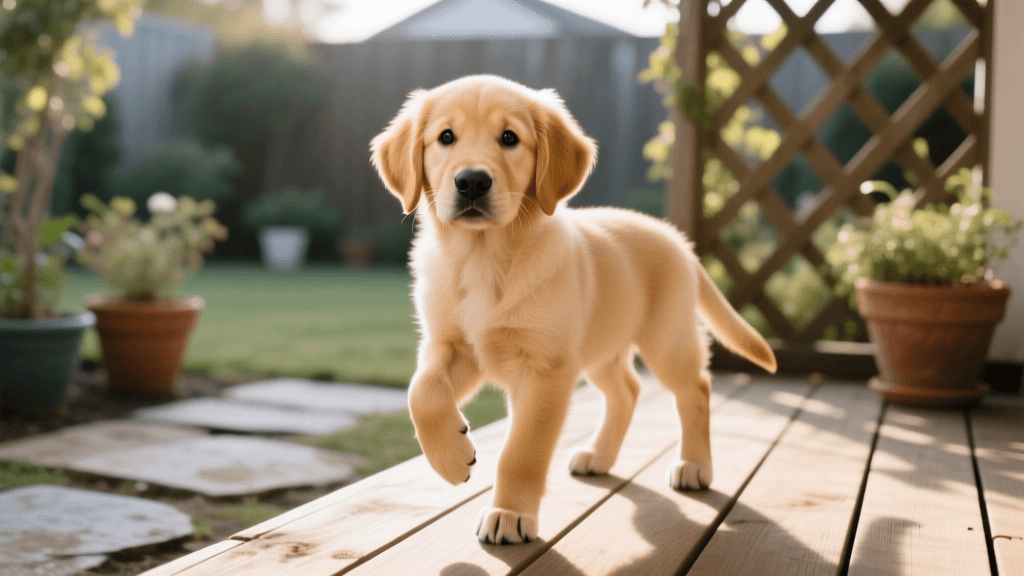
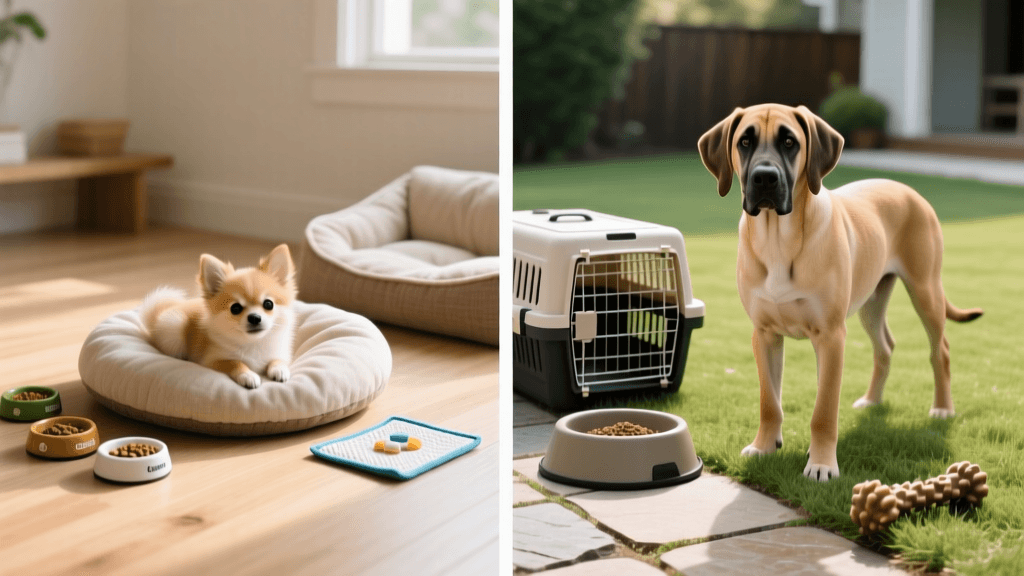
According to the Orthopedic Foundation for Animals (OFA), the timeline for growth plate closure varies wildly depending on the breed's size and genetics. Small breeds may see their growth plates close as early as 8 to 10 months, while giant breeds might not reach full skeletal maturity until they are 18 to 24 months old. Because of this variance, the golden rule of 2026 puppy agility training is to keep all four paws on the ground or on flat, low-impact surfaces until a veterinarian confirms via X-ray that the growth plates have fully fused.
What This Means for Training
- No jumping: Do not allow your puppy to jump up onto couches, beds, or out of the back of an SUV. Lift them or use ramps.
- No repetitive fetching: Hard stops and sharp turns on slippery surfaces or uneven ground can cause micro-fractures in developing cartilage.
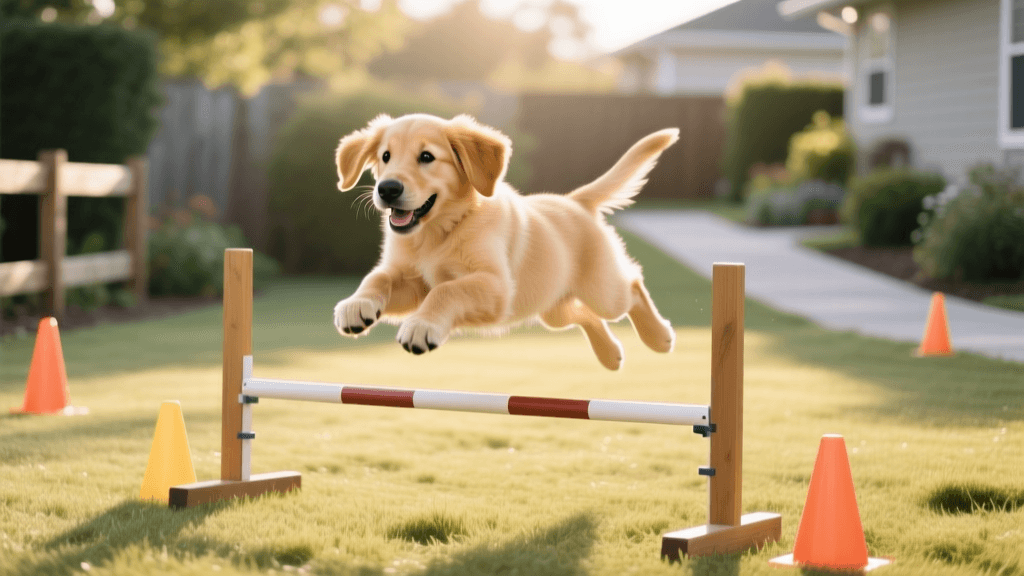
- No full-height equipment: Agility jumps should remain on the ground (ground poles), and contact obstacles should be flat or lowered to the floor.
Age-Appropriate Foundation Drills (Months 2 to 12)
Building a sports puppy is about cultivating mental engagement, rear-end awareness, and a love for working with their handler. Here is how to structure your training during the puppy's first year.
Months 2 to 4: Confidence, Socialization, and Targeting
During this early window, your primary goal is environmental socialization and building a reinforcement history. Introduce your puppy to wobble boards, inflatable fitness pods, and different textures (tarps, grates, grass, sand). Teach a strong nose target and paw target. A paw target is the foundational skill for hitting contact zones on the A-frame and dog walk later in their career. Keep sessions incredibly short—no more than 3 to 5 minutes—to prevent mental fatigue and frustration.
Months 5 to 8: Flatwork and Drive Building
As your puppy grows, you can introduce 'flatwork.' Flatwork refers to agility handling maneuvers performed without any equipment. You will practice shadow handling, where you run in a field and use your body language to cue your puppy to turn, accelerate, and decelerate. This is also the time to build toy drive and tug-of-war mechanics. A dog that loves to tug with their handler will have a massive advantage on the start line and at the finish line of an agility course. Focus on teaching your puppy to wrap around single uprights (like a tree or a cone) to learn the mechanics of collection and turning without the impact of landing from a jump.
Months 9 to 12: Introduction to Equipment (Safely)
If your veterinarian has given you the green light regarding your specific breed's skeletal development, you can begin introducing low-impact equipment. The American Kennel Club (AKC) emphasizes that early equipment exposure should focus on the mechanics of the obstacle rather than speed. Teach your puppy to walk through ladder rungs on the ground to perfect their foot placement. Introduce the chute (tunnel) in its fully collapsed, shortest form so they do not have to navigate deep curves at high speeds. Continue to keep all jump bars resting directly on the grass.
Essential 2026 Puppy Sports Gear
Having the right tools makes foundation training significantly easier and safer. The gear market in 2026 offers highly specialized equipment designed specifically for the biomechanical safety of developing puppies. Below is a comparison chart of the most recommended foundation gear for your puppy's first year.
| Gear Type | Recommended Product/Style | Primary Benefit for Puppies | Estimated 2026 Cost |
|---|---|---|---|
| Wobble Board | FitoFit Canine Conditioning Board | Builds core strength and proprioception without high-impact joint stress. | $85 - $120 |
| Long Line | 1/2-inch Biothane Puppy Tracking Line | Waterproof, easy to clean, and prevents rope burn during drive-building games. | $35 - $50 |
| Target Stick | Retractable Clicker Target Wand | Teaches precise head and body positioning for future weave pole entries. | $15 - $25 |
| Scent Kit | Introductory Nosework Tin Set | Builds mental stamina and focus; excellent for tiring out a puppy safely on rainy days. | $25 - $40 |
Nutrition and Joint Conditioning for the Athlete
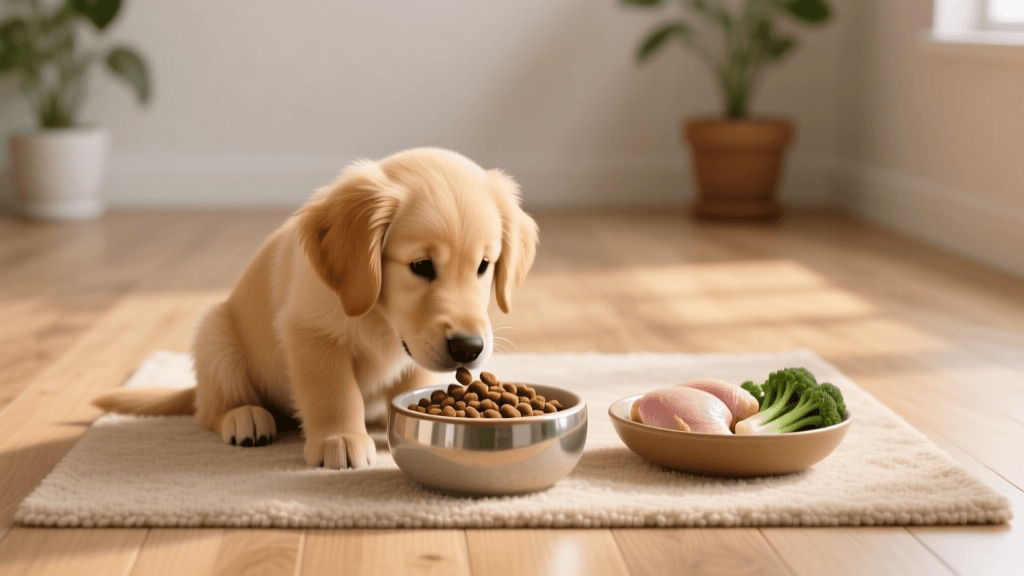
You cannot out-train a poor diet, especially when it comes to a growing sports puppy. Overfeeding is one of the leading causes of orthopedic issues in young dogs. Excess weight places unnecessary mechanical stress on soft growth plates. According to the WSAVA Global Nutrition Guidelines, large breed puppies must be fed a diet specifically formulated to control their growth rate, ensuring they grow slowly and steadily rather than in rapid, dangerous spurts.
Look for a puppy food that meets the AAFCO nutrient profiles for growth, but specifically check the calcium-to-phosphorus ratio, which should be strictly between 1.1:1 and 1.4:1 for large breeds. Additionally, supplementing with high-quality Omega-3 fatty acids (specifically EPA and DHA derived from wild-caught fish oil) is a standard 2026 recommendation for reducing systemic inflammation and supporting cognitive development in working dogs. Always consult with a canine sports nutritionist or your veterinarian before adding joint supplements like glucosamine or green-lipped mussel powder to your puppy's daily regimen.
Mental vs. Physical Fatigue: Avoiding Burnout
One of the most common mistakes novice handlers make is assuming that a physically tired puppy is a well-trained puppy. In the world of dog sports, mental fatigue is far more valuable and much safer for a developing body. Ten minutes of intense shaping, puzzle-solving, or trick training will exhaust a puppy just as much as a two-mile run, but without the repetitive concussive forces on their joints.
Watch your puppy closely for signs of stress or over-arousal. Lip licking, yawning, scratching, or a sudden lack of interest in high-value treats are all indicators that your puppy's brain is full. When you see these signs, end the session immediately on a positive note. The goal of the first year is to leave your puppy wanting more, ensuring that when they finally step up to the start line of their first trial, they do so with enthusiasm, joy, and a perfectly conditioned body.
Final Thoughts on Your 2026 Sports Journey
Raising a puppy for dog sports is a marathon, not a sprint. The foundation you lay during their first year—prioritizing joint safety, mental engagement, and a joyful relationship with training—will dictate their performance and health for the rest of their life. By adhering to modern veterinary guidelines, utilizing safe conditioning gear, and respecting the biological timelines of your puppy's growth plates, you are giving them the greatest possible gift: the physical capability to enjoy canine sports for years to come. Embrace the puppyhood phase, celebrate the small victories, and look forward to the incredible athletic partnership that awaits you both.
aaron-whyte
All our authors care for dogs every day — read more of their work on the authors page.