Preventing Resource Guarding in Multi-Dog Households
Learn how to prevent resource guarding and manage mealtimes safely in multi-dog households with expert tips, feeding schedules, and setup advice.

Sharing your life with multiple dogs is a uniquely rewarding experience, filled with double the cuddles, playtime, and companionship. However, managing a multi-dog household also comes with distinct logistical and behavioral challenges. One of the most common and potentially dangerous issues that arises when multiple canines share a living space is resource guarding. Whether it is over a bowl of kibble, a high-value chew, or even a favorite sleeping spot, resource guarding can quickly escalate from a low growl to a severe injury if not properly managed.
As a responsible pet parent, your goal is not merely to punish the guarding behavior, but to proactively design an environment and routine that eliminates the need for your dogs to compete. In this comprehensive guide, we will explore the mechanics of resource guarding, how to set up a safe physical environment, and the exact step-by-step feeding routines that keep the peace in multi-dog homes.
Understanding Resource Guarding in Multi-Dog Homes
Resource guarding is a natural, evolutionary survival instinct. In the wild, canines that successfully defended their food and territory were more likely to survive and pass on their genes. In a domestic setting, this translates to a dog displaying defensive behaviors—such as stiffening, lip licking, growling, snapping, or biting—when they perceive that a valuable item might be taken away by another dog or a human.
According to the American Kennel Club (AKC), resource guarding is not a sign of a 'bad' or aggressive dog; rather, it is a manifestation of anxiety and insecurity regarding access to vital resources. In a multi-dog household, the presence of littermates or housemates naturally increases this anxiety. Dogs may begin to 'speed eat' to consume their meal before a sibling can intervene, or they may begin to guard empty bowls simply because they associate the feeding area with competition.
Resource guarding is a natural canine survival instinct, not a sign of a 'bad' dog. In a multi-dog home, our goal is proactive management and environmental modification, not punishment.
Setting Up a Safe Physical Environment
The most effective way to prevent resource guarding is to remove the opportunity for it to occur. This requires strategic use of physical barriers to ensure that each dog has a secure, stress-free zone to eat and chew. Relying solely on obedience commands in a high-arousal situation like mealtime is a recipe for failure; environmental management is your first line of defense.
Spatial Separation and Equipment
Feeding dogs side-by-side in an open room is a primary trigger for multi-dog conflict. Instead, utilize physical barriers to create distinct feeding zones. Here are the specific tools and measurements you should consider:
- Crates: Crate feeding is the gold standard for multi-dog homes. For medium dogs (30-40 lbs), a 36-inch crate (approx. $60-$80) provides enough room to stand, turn, and lie down comfortably. For large breeds (70+ lbs), opt for a 42-inch or 48-inch crate. Ensure the crates are placed in separate rooms or on opposite sides of a large room to prevent visual intimidation.
- Baby Gates: If you prefer feeding in separate rooms without closing doors, invest in a sturdy, hardware-mounted gate. The Carlson Pet Products 4-foot Walk-Through Pet Gate ($40-$50) is excellent for standard doorways, while wider openings may require a 6-foot expandable gate. Avoid pressure-mounted gates for strong dogs, as the pressure of a dog leaning against it can cause the gate to slip and trigger a sudden resource-guarding incident.
- Feeding Mats: Use distinct, visually different feeding mats (e.g., 24x36 inch waterproof silicone mats) to help dogs recognize their specific 'safe zone.' Over time, the mat itself becomes a cue for calm behavior.
The Step-by-Step Structured Feeding Routine
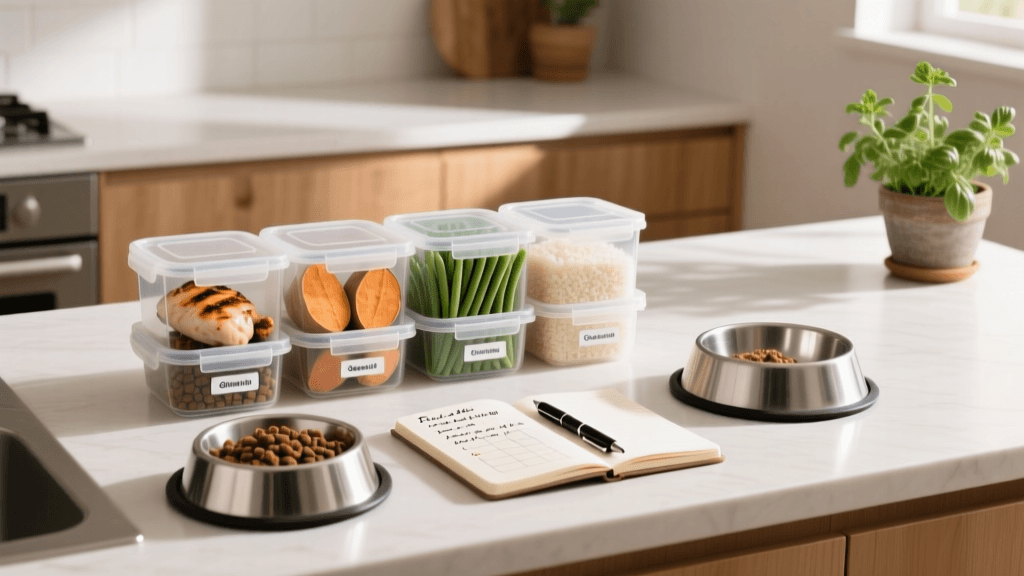
Once your physical environment is secured, you must implement a predictable, structured feeding routine. Dogs thrive on predictability, and knowing exactly how and when they will receive their food drastically reduces anxiety.
- The 'Sit and Wait' Protocol: Before bringing out the food bowls, ask all dogs to sit or go to their designated mats. If a dog breaks the sit, the food preparation stops. This teaches impulse control and reinforces that calm behavior, not frantic begging, yields resources.
- Sequential Bowl Placement: Walk each dog to their designated safe zone (crate or gated room). Place the bowl down and use a consistent release cue, such as 'Okay' or 'Free.' Do not allow dogs to roam freely while bowls are being placed.
- The 20-Minute Rule: Leave the bowls down for a maximum of 15 to 20 minutes. If a dog does not finish their meal in that window, calmly pick up the bowl and remove it until the next scheduled meal. This prevents 'grazing,' which encourages dogs to linger near food bowls and guard them from passing siblings.
- Simultaneous Release: Once all dogs have finished eating, call them out of their safe zones simultaneously and immediately pick up the empty bowls. Never leave empty bowls on the floor, as some dogs will guard the residual scent of the food.
Comparison of Feeding Strategies for Multi-Dog Homes
Choosing the right feeding strategy depends on your dogs' temperaments, your home's layout, and your daily schedule. Below is a comparison of the three most common methods.
| Feeding Method | Pros | Cons | Ideal For | Estimated Cost |
|---|---|---|---|---|
| Free-Feeding (Leaving food out all day) | Convenient for owners; dogs eat on their own schedule. | High risk of resource guarding; impossible to monitor individual appetites or medication. | Single-dog homes only. Never use in multi-dog homes. | $0 (beyond food cost) |
| Scheduled Group Feeding (Bowls in same room) | Quick and easy; promotes a communal pack feel if dogs are highly bonded. | Encourages speed-eating; high risk of low-level guarding and anxiety. | Dogs with zero history of guarding and excellent impulse control. | $20-$40 for heavy ceramic bowls |
| Scheduled Separated Feeding (Crates/Gates) | Eliminates competition; allows for tailored diets and medication; reduces anxiety. | Requires more time, space, and equipment setup. | All multi-dog homes, especially those with rescue dogs or a history of guarding. | $150-$300 for crates/gates |
Managing High-Value Treats and Chews
While dogs may tolerate each other perfectly during standard kibble meals, high-value treats like bully sticks, raw bones, or peanut butter-stuffed Kong Classic toys ($15) can trigger intense resource guarding. The rule for high-value items is simple: complete physical separation.
Never give a long-lasting chew to multiple dogs in the same room, even if they are lying on their own beds. The scent and value of the item are too high, and a dog may abandon their own chew to steal from a sibling, sparking a fight. Distribute chews only when dogs are in their crates or separated by closed doors. Once the dog has finished the treat, or if they drop it and walk away, enter the room, pick up the remnant, and store it out of sight before releasing the dog back into the shared living space.
Recognizing When to Seek Professional Help
Management and routine are highly effective for preventing and mitigating mild resource guarding. However, if your dogs have a history of physical altercations, if you notice escalating warning signs (such as stiffening or 'whale eye' when a sibling walks past their bowl), or if you feel unsafe managing the feeding process, it is time to call in a professional.
The ASPCA strongly recommends consulting with a certified professional if aggression or severe guarding is present. Look for a Certified Applied Animal Behaviorist (CAAB) or a veterinary behaviorist who can design a customized desensitization and counter-conditioning protocol. Punishing a growling dog will only suppress the warning signs, leading to a dog that bites without warning the next time they feel their resources are threatened.
By prioritizing environmental management, utilizing physical barriers, and maintaining a structured, predictable routine, you can transform mealtime from a stressful battleground into a peaceful, nourishing experience for every dog in your home.
anouk-beaumont
All our authors care for dogs every day — read more of their work on the authors page.