Navigating the Elimination Diet: Daily Routines for Food Allergies
Discover how to manage canine food allergies with a practical elimination diet. Learn daily routines, tracking tips, and multi-pet feeding strategies.

Understanding Adverse Food Reactions in Dogs
When your dog is constantly scratching, licking their paws, or suffering from chronic gastrointestinal upset, it is natural to suspect a food allergy. However, navigating the world of canine nutrition can be overwhelming. According to the American Kennel Club, true food allergies are actually quite rare compared to environmental allergies or food intolerances. An intolerance might cause an upset stomach, but a true allergy triggers an immune system response, usually manifesting as severe skin irritation, chronic ear infections, or persistent gastrointestinal distress.
To accurately diagnose and manage these reactions, veterinarians rely on the gold standard of nutritional diagnostics: the elimination diet. This is not simply swapping one commercial brand for another; it is a rigorous, highly controlled daily routine that requires dedication, precision, and a deep understanding of your dog's environment. In this deep dive, we will explore how to integrate an elimination diet into your daily life, manage multi-pet households, and track symptoms effectively.
The Gold Standard: The Veterinary Elimination Diet
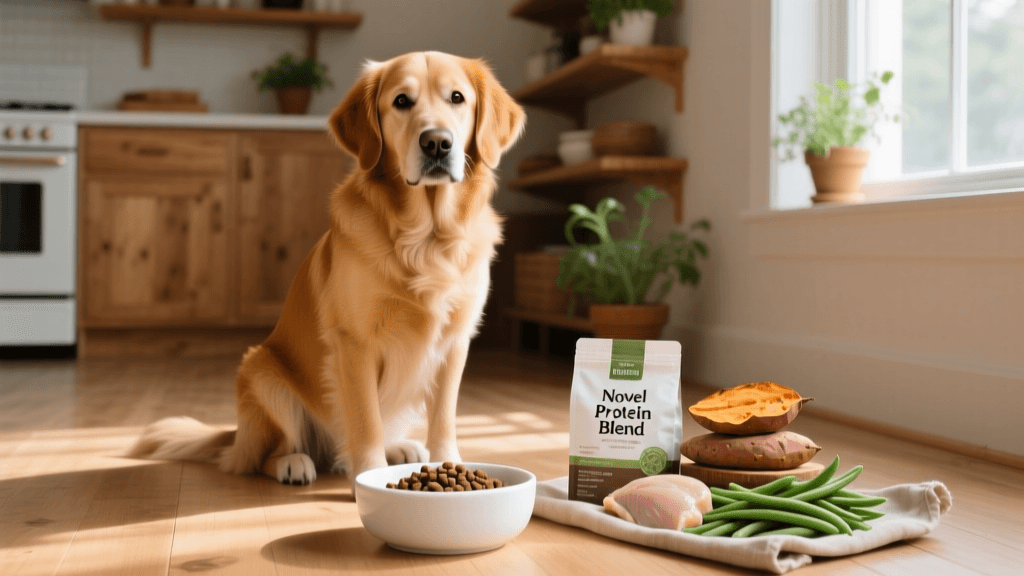
An elimination diet involves feeding your dog a diet with a single, novel protein and a single, novel carbohydrate source—or a diet where the proteins are broken down so small that the immune system cannot recognize them. This strict regimen must be maintained for a minimum of 8 to 12 weeks. During this period, absolutely no other foods, flavored medications, or treats can be introduced. Veterinary nutritionists at Tufts Cummings Veterinary Medical Center emphasize that even a tiny crumb of an offending protein can reset the clock on an elimination trial, meaning strict adherence to the daily routine is non-negotiable.
Novel Protein vs. Hydrolyzed Diets
When selecting a diet, you generally have two paths:
- Novel Protein Diets: These utilize ingredients your dog has never eaten before, such as rabbit, venison, kangaroo, or alligator, paired with a novel carbohydrate like sweet potato or oat. The cost for a 20lb bag of high-quality veterinary novel protein kibble typically ranges from $75 to $110.
- Hydrolyzed Protein Diets: Products like Royal Canin Veterinary Diet Hydrolyzed Protein or Hill's Prescription Diet z/d use proteins that are chemically broken down into amino acids. Because the protein molecules are so small, the immune system does not detect them as threats. These diets are often safer for dogs who have already eaten a wide variety of exotic meats.
A Day in the Life: Structuring the Elimination Routine
Integrating this strict nutritional protocol into your daily routine requires planning. The Cornell University College of Veterinary Medicine notes that cross-contamination in the home is one of the leading causes of failed elimination trials. Here is how to structure your day for success.
Morning Protocols: Strict Feeding and Medications
Start your morning by establishing a dedicated feeding station. If you have multiple pets, cross-contamination is a massive risk. Invest in a microchip-activated feeder, such as the SureFeed Microchip Pet Feeder (approximately $160). This device only opens when your allergic dog approaches, preventing them from snacking on their sibling's standard kibble.
Administering daily medications like flea and tick preventatives or joint supplements can be tricky, as most pill pockets and flavored treats contain common allergens like chicken or beef. Instead, use a small amount of your dog's prescribed wet elimination diet. Mash a teaspoon of the canned food into a paste, embed the pill, and roll it into a small meatball. If your dog requires liquid medications, ask your veterinarian for an unflavored compound.
Afternoon Walks: Navigating the Outside World
Mid-day walks present unique challenges well-meaning neighbors and strangers love to offer treats. During the 8 to 12-week trial, you must become your dog's fierce advocate. Train a solid 'leave it' command and politely inform neighbors that your dog is on a strict medical diet. Consider using a yellow 'Do Not Pet' or 'Medical Diet' leash sleeve to signal to others that your dog cannot accept outside food.
Furthermore, be hyper-vigilant during off-leash park visits or hikes. Dogs are natural scavengers, and eating discarded food wrappers, animal feces, or dropped snacks can instantly ruin the elimination trial. Keep your dog on a short leash in high-traffic areas and practice active recall to prevent scavenging.
Evening Enrichment: Multi-Pet Households and Puzzles
Dogs on elimination diets often miss out on the mental enrichment provided by standard treat-dispensing toys. To keep your dog engaged in the evening without breaking the diet, utilize puzzle toys like the Kong Classic. Stuff the toy with your dog's prescribed canned elimination diet, smooth a layer of dog-safe, xylitol-free pumpkin puree (check the label to ensure it is 100% pure pumpkin, not pie filling) over the top, and freeze it overnight. This provides 30 to 45 minutes of safe, allergen-free licking and chewing enrichment.
In multi-pet households, evening feeding times must be separated. Feed your allergic dog in a closed bedroom or crate while the rest of the pets eat in the kitchen. Wash all food bowls in the dishwasher daily on a high-heat sanitize cycle to remove lingering protein residues from standard diets.
Tracking Symptoms: The Daily Data Log
An elimination diet is only as effective as your data collection. You must track your dog's daily symptoms to determine if the diet is working. Create a simple daily log or use a pet health tracking app to record the following metrics:
| Category | Mild Symptoms (Monitor) | Severe Symptoms (Report to Vet) |
|---|---|---|
| Dermatological | Occasional paw licking, mild ear wax | Hot spots, severe erythema, hair loss |
| Gastrointestinal | Soft stool, slight increase in gas | Vomiting, diarrhea, refusal to eat |
| Behavioral | Normal energy, occasional scratching | Lethargy, obsessive chewing, restlessness |
Take weekly photos of your dog's skin, particularly their paws, armpits, and groin, to visually track the reduction in redness and inflammation over the 12-week period.
The Reintroduction Phase: Identifying the Culprit
If your dog's symptoms resolve or significantly improve after 8 to 12 weeks, it is time for the challenge phase. This is where you systematically reintroduce single-ingredient proteins to identify the exact allergen. Start by adding one novel protein, such as plain cooked chicken breast, to their daily meals for two weeks. If symptoms return, you have identified an allergy. Wait for the symptoms to subside, then test another protein, like beef or dairy.
This phase requires the same rigorous daily tracking as the initial elimination phase. Keep portions of the challenge protein small—roughly 10% of their daily caloric intake—to minimize severe reactions while still triggering an immune response if an allergy is present.
Long-Term Success and Nutritional Balance
Once you have identified your dog's specific triggers, you can work with a veterinary nutritionist to formulate a long-term, balanced diet. While commercial limited-ingredient diets are convenient, many owners opt for home-cooked or raw diets tailored to their dog's safe ingredients. If you choose this route, it is imperative to use a balanced recipe formulated by a board-certified veterinary nutritionist to ensure your dog receives essential micronutrients like calcium, taurine, and omega-3 fatty acids.
Managing a dog with food allergies is a marathon, not a sprint. By establishing strict daily routines, utilizing smart feeding technology for multi-pet homes, and maintaining meticulous symptom logs, you can successfully navigate the elimination diet and restore your dog's comfort, health, and vitality.
marcus-aldridge
All our authors care for dogs every day — read more of their work on the authors page.