2026 Guide: Preventing Puppy Separation Anxiety With Smart Tech
Learn how to prevent puppy separation anxiety in 2026 using Furbo smart cameras, structured crate training schedules, and proven desensitization techniques.
The Reality of Puppy Separation Anxiety in 2026
Bringing a new puppy home is one of life's greatest joys, but as we navigate the solidified hybrid work schedules of 2026, managing a dog's alone time has become a primary concern for new owners. Unlike the remote-work boom of the early 2020s, today's professionals are frequently required to be in the office three to four days a week. This sudden shift from constant companionship to extended isolation can trigger severe separation anxiety in young dogs if not proactively managed from day one.
According to the ASPCA, separation anxiety is characterized by extreme distress and destructive behaviors when a dog is separated from their guardians. Puppies are particularly vulnerable because they have not yet developed the coping mechanisms required for solitude. Preventing this condition is vastly easier than treating it, making early alone-time training an absolute necessity for modern dog owners.
Why Early Alone-Time Training is Crucial
The critical socialization and habituation window for puppies closes around 16 weeks of age. During this time, their brains are highly plastic, meaning they are rapidly forming associations about what is safe and what is dangerous. If a puppy learns that being alone is a terrifying experience, or worse, that crying and howling will eventually summon their owner back into the room, those neural pathways become deeply entrenched.
In 2026, veterinary behaviorists emphasize that independence is a learned skill. Just as you would teach a puppy to sit or stay, you must explicitly teach them how to be alone. This involves removing the emotional weight from your departures and utilizing modern technology to monitor their stress levels without inadvertently reinforcing anxious behaviors.
Top Smart Pet Cameras for Monitoring in 2026
Smart pet cameras have evolved significantly. The latest 2026 models feature advanced AI that can distinguish between a dog barking at a squirrel outside the window and a dog exhibiting panic-induced vocalizations. Having a reliable camera is non-negotiable for the desensitization process, as it allows you to gauge your puppy's true emotional state when you are out of sight.
| Camera Model | Key Feature | 2026 Avg Price | Best For |
|---|---|---|---|
| Furbo 360 | 360° view & treat tossing | $199 | Interactive engagement |
| Wyze Cam Pan v3 | Color night vision & pan/tilt | $39 | Budget-conscious owners |
| Eufy Indoor Pan & Tilt | Local storage & AI pet tracking | $49 | Privacy-focused monitoring |
The Furbo 360 remains a top choice for puppy training because the treat-tossing feature can be used to reward calm behavior remotely. However, if you are strictly observing and want to avoid accidentally rewarding a barking fit, the Eufy Indoor Pan & Tilt offers excellent local storage and AI tracking without the distraction of a treat launcher.
The 4-Week Crate and Alone-Time Desensitization Schedule
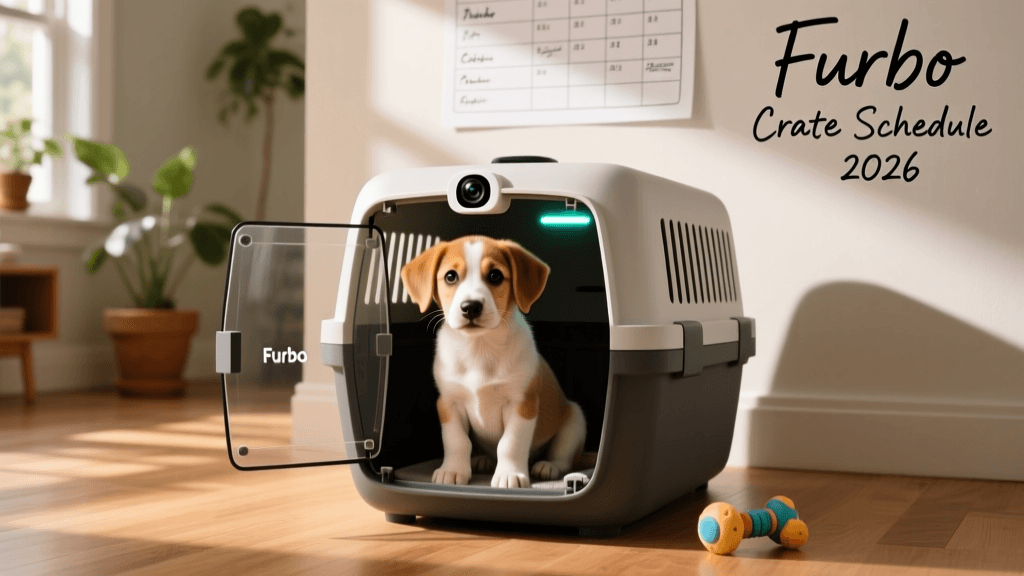
Proper crate training is the foundation of preventing separation anxiety. The American Kennel Club (AKC) emphasizes that a crate should be a safe den, never a place of punishment. Here is a structured 2026 protocol to build your puppy's independence over their first month home.
Week 1: Sight and Sound Desensitization
During the first week, your puppy should never be entirely alone. The goal is to associate the crate with positive experiences while you are still present. Feed all meals inside the crate with the door open. Introduce a white noise machine or a smart speaker playing classical music to mask household sounds that might trigger alertness or anxiety when you eventually leave. Practice closing the crate door for 1 to 5 minutes while you sit in the same room, gradually increasing the duration as long as the puppy remains relaxed. If they whine, wait for a brief moment of silence before opening the door to avoid reinforcing the noise.
Week 2: Short Absences with Smart Monitoring
Now, introduce brief absences. Place your puppy in the crate with a high-value chew, such as a frozen Kong stuffed with puppy-safe peanut butter. Step out of the room and close the door. Use your smart camera to monitor their behavior. You are looking for relaxed body language: soft eyes, slow chewing, and eventually, sleeping. Start with 1-minute absences and work your way up to 10 minutes. If the camera shows pacing, panting, or frantic scratching, you have pushed too far too fast. Return to Week 1 exercises and proceed more slowly.
Week 3: Building Duration and Distance
Week 3 focuses on desensitizing your puppy to departure cues. Dogs are incredibly observant and often begin to panic when they see you put on your shoes or pick up your car keys. Practice these actions without actually leaving. Put on your coat, jingle your keys, sit back down on the couch, and reward your puppy for staying calm. Once they ignore these cues, begin leaving the house for 15 to 30 minutes. Keep your departures and arrivals incredibly boring. Do not say a tearful goodbye, and when you return, ignore your puppy until they are completely calm and all four paws are on the floor.
Week 4: Real-World Departures
By week 4, you should be simulating your actual 2026 work schedule. Leave the house for 1 to 2 hours. Ensure the environment is set up for success: the white noise machine is on, the room is at a comfortable temperature, and the puppy has been adequately exercised before being crated. Review your camera footage upon returning. If your puppy sleeps for the majority of your absence, they are successfully learning how to self-soothe and enjoy their alone time.
Environmental Enrichment for Solo Hours
A tired puppy is a calm puppy, but physical exercise alone is not enough. Mental enrichment is crucial for tiring out a young dog's brain before you leave for work. In 2026, force-feeding and puzzle toys are standard recommendations for solo enrichment.
- Snuffle Mats: Hide your puppy's dry kibble in a fabric snuffle mat. This engages their natural foraging instincts and can keep them occupied for 20 minutes or more.
- Lick Mats: Spread plain Greek yogurt or pureed pumpkin on a textured silicone lick mat and freeze it overnight. The act of licking releases endorphins in a dog's brain, naturally soothing their nervous system.
- Rotating Toy Libraries: Do not leave all your puppy's toys out at once. Keep a rotation of three or four toys that only come out when you leave the house. This keeps the items novel and highly engaging.
When to Call a Certified Veterinary Behaviorist
While mild whining is normal for a new puppy, severe separation anxiety requires professional intervention. If your camera footage reveals self-mutilation, extreme drooling, refusal to eat high-value treats, or frantic attempts to escape the crate that result in broken teeth or nails, stop the training protocol immediately. These are signs of clinical panic, not just a lack of training.
In these cases, consult a Certified Veterinary Behaviorist. Modern veterinary medicine offers safe, short-term anti-anxiety medications that can lower a puppy's baseline stress levels enough for behavioral modification to actually work. Remember, the goal of getting a dog is to build a lifelong bond of trust, and utilizing the right technology and structured schedules ensures your puppy feels safe, even when you are miles away.
beth-carrasco
All our authors care for dogs every day — read more of their work on the authors page.