Step-by-Step Guide to Overcoming Dog Leash Reactivity
Learn the psychology behind dog leash reactivity. Follow our step-by-step counter-conditioning guide with exact distances, timing, and treat strategies.
Understanding the Psychology of Leash Reactivity
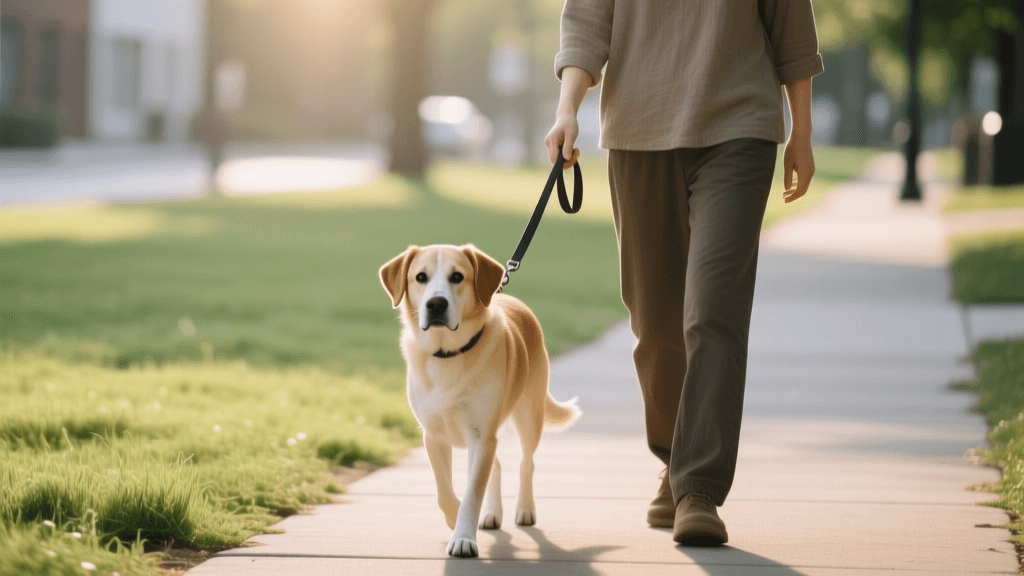
Leash reactivity—characterized by barking, lunging, or growling at triggers like other dogs, humans, or vehicles—is one of the most frustrating behavioral challenges for dog owners. To effectively train your dog, you must first understand the psychology driving this behavior. Reactivity is rarely about true aggression; it is almost always rooted in fear, anxiety, or barrier frustration.
The canine brain processes fear through the amygdala, which can hijack the prefrontal cortex (the area responsible for learning and decision-making). When a dog encounters a perceived threat, their autonomic nervous system triggers a "fight, flight, or freeze" response. In a natural, off-leash environment, a fearful dog will typically choose flight, increasing the distance between themselves and the trigger to feel safe. However, when secured to a leash, the flight option is artificially removed. The dog realizes they are trapped and resorts to fight behaviors in a desperate attempt to make the trigger go away. According to the ASPCA guide on canine aggression and reactivity, understanding this underlying fear is the first step toward rehabilitation, as punishment only exacerbates the anxiety.
When a dog crosses their reactivity threshold, they enter a state of amygdala hijack, making it biologically impossible for them to learn new commands or process corrections. This is why traditional obedience training often fails for reactive dogs; you cannot train a brain that is in survival mode. Barrier frustration, on the other hand, occurs in dogs that are overly social but lack impulse control. When the leash prevents them from rushing up to greet another dog, their excitement morphs into frantic, reactive outbursts.
Reading Canine Calming Signals and Stress Indicators
Before initiating any training protocol, owners must learn to read subtle canine body language. Dogs use calming signals to communicate stress and attempt to de-escalate tense situations. Recognizing these signals allows you to intervene before your dog crosses their threshold.
- Lip Licking and Yawning: When not related to food or tiredness, these are primary indicators of rising cortisol levels and anxiety.
- Whale Eye: When a dog turns their head away but keeps their eyes fixed on the trigger, exposing the whites of their eyes, it signals high discomfort and a potential prelude to lunging.
- Sniffing the Ground: While sniffing is a natural behavior, abruptly sniffing the ground while a trigger approaches is a displacement behavior used to avoid direct confrontation.
- Piloerection: Raised hackles along the spine indicate autonomic nervous system arousal, which can stem from fear, excitement, or frustration.
Essential Gear for Reactivity Training
Before beginning your step-by-step training, you must equip yourself with the right tools. Proper gear ensures safety and allows for precise timing, which is critical for behavioral modification.
- Front-Clip Harness: A harness with a front chest attachment point (e.g., Ruffwear Front Range, approx. $40) gently redirects the dog's momentum toward you if they lunge, preventing tracheal damage associated with standard collars.
- Fixed-Length Leash: Use a 6-foot biothane or leather leash. Biothane is highly recommended as it is weatherproof and easy to clean. Avoid retractable leashes entirely, as they teach dogs that pulling extends the leash and offer poor control in emergency situations.
- Treat Pouch: A pouch with a magnetic closure (e.g., Doggone Good Rapid Rewards, approx. $25) allows for instant access to rewards, which is vital for the 1.5-second marking window.
- High-Value Treats: Standard kibble will not override a dog's adrenaline response. Use soft, pungent treats like freeze-dried beef liver or boiled chicken breast, cut into pea-sized pieces (approx. 1/4 inch) to allow for rapid consumption without filling the dog up.
Step-by-Step Counter-Conditioning Protocol
Counter-conditioning changes your dog's emotional response to a trigger from negative to positive. This must be paired with systematic desensitization, which involves gradual exposure below the dog's reactivity threshold.
Step 1: Identify the Threshold Distance
Your dog's threshold is the exact distance at which they notice a trigger but remain capable of learning and taking treats. If your dog is barking, lunging, or refusing food, you are over threshold. For most reactive dogs, the starting threshold distance is between 30 and 50 feet. Find a controlled environment, such as a quiet park bench or a distance from a fenced dog park, where your dog can observe triggers from 40 feet away.
Step 2: The Engage-Disengage Game
This foundational exercise teaches your dog to look at a trigger and then voluntarily look back at you.
- Engage: Wait for your dog to look at the trigger (e.g., a passing dog at 40 feet).
- Mark: The exact moment they look, use a clicker or a verbal marker like "Yes!" within 1.5 seconds. This precise timing bridges the gap between the behavior and the reward.
- Disengage and Reward: Your dog will turn toward you to get the treat. Deliver the high-value treat immediately. Repeat this 10 to 15 times per session, keeping sessions under 15 minutes to prevent cognitive fatigue.
Step 3: Closing the Gap
Once your dog consistently disengages and looks at you eagerly upon seeing a trigger at 40 feet, you can begin systematic desensitization. Decrease the distance to the trigger by only 2 to 3 feet per training session. If your dog shows signs of stress, immediately increase the distance by 10 feet. Progress is measured in weeks and months, not days.
Step 4: Generalizing to New Environments
Dogs are highly contextual learners. A dog that is perfectly calm at 30 feet in their own neighborhood may still react at 30 feet in a busy downtown area due to compounded environmental stressors. To generalize the behavior, you must systematically change the environment while temporarily increasing your distance from the trigger. If you move from a quiet suburban street to a bustling park, reset your threshold distance back to 50 feet and slowly work your way closer over multiple sessions.
Timing, Distance, and Reward Structure
Understanding how to read your dog's body language at varying distances is crucial for adjusting your training plan in real-time. The American Kennel Club emphasizes that force-free, reward-based training yields the most reliable long-term behavioral changes. Use the table below to gauge your dog's threshold and adjust your actions accordingly.
| Distance to Trigger | Dog's Body Language | Handler Action | Reward Type |
|---|---|---|---|
| 40+ Feet (Under Threshold) | Relaxed ears, soft eyes, willingly takes treats, loose wag. | Play Engage-Disengage game. Mark and reward calm observation. | High-value (e.g., boiled chicken, liver). |
| 20-30 Feet (Approaching Threshold) | Ears pinned back, lip licking, yawning, slower treat intake. | Increase distance immediately by 15 feet. Do not push forward. | Highest-value (e.g., cheese, hot dogs) to counter stress. |
| Under 15 Feet (Over Threshold) | Whale eye, piloerection, lunging, refusing food. | Perform an emergency U-turn. Do not attempt to train or correct. | Scatter treats on the ground to encourage sniffing and decompression. |
Common Training Mistakes to Avoid
When dealing with reactivity, human error can inadvertently reinforce the behavior or deepen the dog's fear. Avoid these common pitfalls:
- Punishing the Growl: Growling is a vital communication tool indicating discomfort. If you punish the growl, the dog learns to skip the warning and go straight to biting. Always address the underlying emotion, not the symptom.
- Flooding: Forcing a dog to interact with their trigger at close range does not cure fear; it induces learned helplessness or triggers a severe aggressive outburst.
- Inconsistent Timing: If you deliver the treat after the dog has already started barking, you may accidentally reinforce the reactive outburst. The marker must happen while the dog is still silent and observing.
When to Seek Professional Help
While many dogs improve with dedicated owner-led counter-conditioning, severe reactivity or a history of biting requires professional intervention. The Certification Council for Professional Dog Trainers (CCPDT) provides a directory of certified behavior consultants who specialize in force-free reactivity protocols. A professional can help you safely manage real-world environments, read subtle canine stress signals, and tailor a behavior modification plan to your dog's unique psychological profile.
By understanding the root causes of your dog's reactivity and applying precise, step-by-step counter-conditioning, you can transform your stressful walks into peaceful, bonding experiences.
jonas-cole
All our authors care for dogs every day — read more of their work on the authors page.