Best Dog Ramps and Home Modifications for Canine OA 2026
Discover the best dog ramps, orthopedic beds, and home modifications to manage canine osteoarthritis in 2026 and improve your senior dog's daily mobility.
Living with Canine Osteoarthritis in 2026
Sharing your life with a dog diagnosed with osteoarthritis (OA) requires a delicate balance of veterinary science, environmental management, and daily empathy. As our canine companions age, the wear and tear on their joints can lead to chronic pain, stiffness, and a decreased quality of life. However, the landscape of canine OA management has evolved dramatically. In 2026, treating osteoarthritis is no longer just about masking pain with traditional NSAIDs; it is about comprehensive, multi-modal care that targets the root causes of joint degradation while optimizing the home environment to prevent unnecessary strain.
According to the American Kennel Club (AKC), osteoarthritis is a degenerative joint disease that affects a significant percentage of senior dogs, but it is increasingly being diagnosed in younger, large-breed dogs as well. Managing this condition at home means rethinking how your dog interacts with their environment. From the angle of the ramp they use to enter your SUV to the traction provided by your living room flooring, every detail matters. This guide explores the most effective, practical home modifications and mobility aids available in 2026 to keep your arthritic dog comfortable, active, and happy.
The Evolution of Canine OA Treatment in 2026
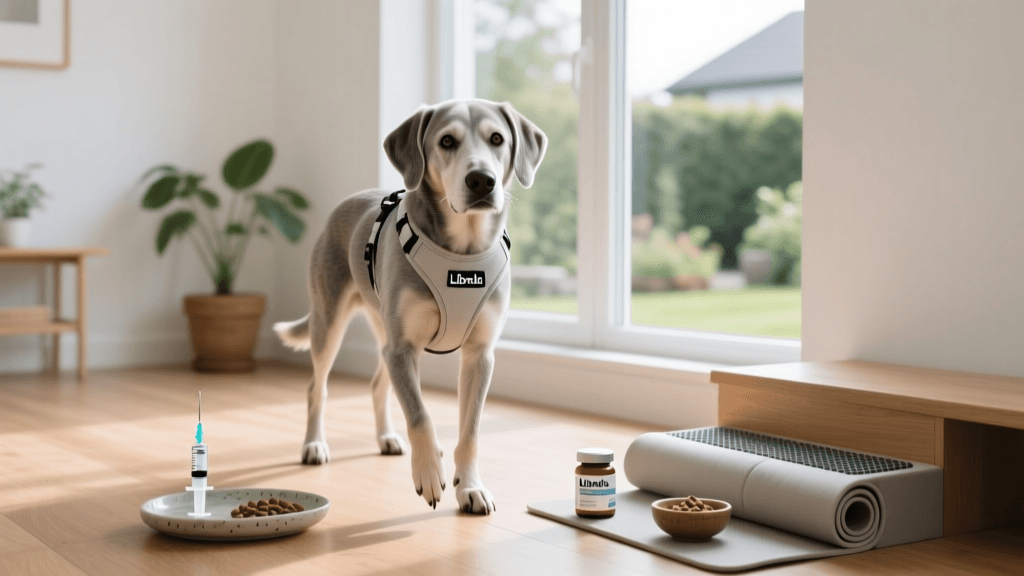
Before diving into home modifications, it is crucial to understand the current medical baseline for canine OA. The gold standard for managing moderate to severe osteoarthritis pain in 2026 involves anti-Nerve Growth Factor (anti-NGF) monoclonal antibodies. Products like bedinvetmab (Librela) have revolutionized pain management by specifically targeting the proteins that transmit pain signals in the nervous system, rather than broadly suppressing inflammation like traditional NSAIDs. As noted by clinical resources on Librela, these monthly injections provide continuous, targeted pain relief with a significantly lower risk of gastrointestinal or renal side effects, making them ideal for long-term use in senior dogs.
Furthermore, the Washington State University Veterinary Teaching Hospital emphasizes that medical management must be paired with environmental modifications. Even the most advanced biologic therapies cannot fully protect a dog’s joints from the mechanical stress of jumping off high furniture or slipping on hardwood floors. Therefore, creating a supportive home environment is the critical second pillar of OA treatment.
Top Orthopedic Ramps to Preserve Joint Health
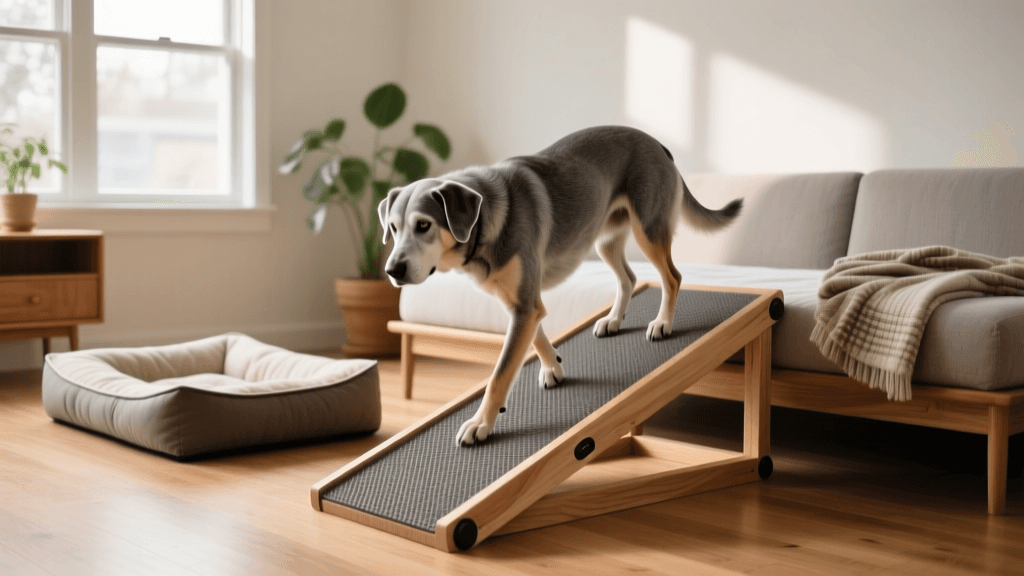
Jumping into a vehicle or onto a bed generates a force equivalent to several times a dog’s body weight upon landing. For a dog with OA, this repetitive impact accelerates cartilage breakdown and triggers severe pain flares. Investing in a high-quality, high-traction ramp is non-negotiable in 2026. When selecting a ramp, you must consider the incline angle (ideally between 18 and 20 degrees for large dogs), the surface traction, and the structural rigidity.
1. Gen7Pets Natural Step Ramp for Pets
The Gen7Pets Natural Step Ramp remains a top choice for dogs who are hesitant to walk on traditional carpeted or plastic ramps. Its surface is made from a durable, grass-like polypropylene material that provides exceptional paw grip, mimicking the feel of outdoor terrain. Weighing only 17 pounds, it is highly portable, yet it supports up to 250 pounds. The ramp folds in half and features an automatic locking mechanism, ensuring it does not accidentally collapse while your dog is mid-ascent. In 2026, the updated model features reinforced side rails, which is vital for dogs with neurological deficits or severe hind-end weakness who may drift sideways while climbing.
2. Pet Gear Tri-Fold Ramp 71 Inch Long
For owners of taller vehicles like SUVs and trucks, a longer ramp is required to maintain a safe, gentle incline. The Pet Gear Tri-Fold Ramp extends to 71 inches, reducing the steepness of the climb. It features a high-traction, skid-resistant surface and a reflective edging for safe loading during evening walks. The tri-fold design makes it compact enough to store in the trunk of a sedan, and it supports dogs up to 200 pounds. The rigid plastic construction prevents the ‘bounce’ effect that often startles arthritic dogs on cheaper, aluminum alternatives.
2026 Dog Ramp Comparison Chart
| Brand & Model | Weight Capacity | Length / Incline | Surface Material | Best Use Case | Est. 2026 Price |
|---|---|---|---|---|---|
| Gen7Pets Natural Step | 250 lbs | 72" / Moderate | Polypropylene Grass | Sedans, Couches, Beds | $110 - $130 |
| Pet Gear Tri-Fold | 200 lbs | 71" / Gentle | Skid-Resistant Grip Tape | SUVs, Trucks, High Tailgates | $85 - $105 |
| Sasche Gentle Rise | 150 lbs | 74" / Very Gentle | High-Density Foam & Carpet | Indoor Furniture, Small Dogs | $140 - $160 |
Essential Home Modifications for Arthritic Dogs
Beyond ramps, the interior of your home can be an obstacle course for a dog with compromised joints. Slippery floors are the leading cause of acute joint injuries and chronic strain in arthritic dogs. When a dog’s paws slide out from under them, the adductor and abductor muscles in their hips and shoulders must work overtime to stabilize the body, leading to severe muscle fatigue and secondary pain.
Flooring Solutions: Traction is Everything
If you have hardwood, tile, or laminate flooring, you must create ‘safe pathways’ throughout your home. In 2026, the most effective and aesthetically pleasing solution is the use of interlocking foam puzzle tiles covered with low-pile, machine-washable rug runners. Alternatively, specialized non-slip dog socks with silicone paw grips (such as those from Walkee Paws) can be used, though many senior dogs resist wearing footwear. For a permanent solution, applying a pet-safe, anti-slip floor coating to high-traffic areas can drastically improve traction without ruining the look of your hardwood floors.
Raised Feeding Stations
Bending down to the floor to eat and drink places unnecessary stress on the cervical spine and shoulder joints. Elevating your dog’s food and water bowls to chest height allows them to maintain a neutral spine posture while eating. Look for adjustable bamboo or stainless-steel stands that can be raised as your dog’s posture changes over time. Ensure the base of the feeder has a heavy, non-slip rubber grip so the bowls do not slide across the floor while your dog is eating.
The Role of Orthopedic Bedding
A standard stuffed dog bed offers zero therapeutic value for a dog with OA. Over time, the poly-fill compresses, allowing the dog’s heavy joints to sink through to the hard floor, which exacerbates morning stiffness. In 2026, veterinary rehabilitation specialists universally recommend therapeutic foam beds, with the Big Barker Orthopedic Dog Bed remaining the industry benchmark.
The Big Barker utilizes a proprietary three-stage foam system: two layers of Comfort Foam sandwiching a core of Support Foam. This design prevents the ‘bottoming out’ effect and ensures that pressure points like the elbows, hips, and hocks are properly cushioned. Furthermore, the bolstered edges provide a place for the dog to rest their head, promoting spinal alignment. While the initial investment (often exceeding $250) is high, the bed comes with a 10-year warranty against flattening, making it a cost-effective, long-term medical necessity for your dog’s joint health.
Adjusting Your Daily Routine and Enrichment
Managing canine OA also requires a shift in how you exercise and enrich your dog’s life. The goal in 2026 is ‘low impact, high engagement.’ Long, repetitive walks on hard pavement should be replaced with shorter, more frequent outings on soft surfaces like grass or dirt trails. Swimming and underwater treadmill therapy remain exceptional forms of exercise, as the buoyancy of the water supports the dog’s weight while the resistance builds muscle mass around the affected joints.
When physical activity must be limited due to a pain flare-up, mental enrichment becomes your best tool to prevent boredom and depression. Utilize snuffle mats, lick mats, and puzzle feeders to engage your dog’s brain. A 15-minute session of scent work or puzzle-solving can tire a dog out just as effectively as a one-mile walk, without placing any mechanical load on their deteriorating joints. Additionally, incorporating veterinary-approved Omega-3 fatty acid supplements (specifically high doses of EPA and DHA) into their daily diet can help modulate joint inflammation naturally.
Conclusion
Life with a dog suffering from osteoarthritis requires patience, adaptation, and a proactive approach to their environment. By leveraging the advanced medical treatments available in 2026 alongside strategic home modifications—such as high-traction ramps, non-slip flooring pathways, and therapeutic orthopedic bedding—you can significantly slow the progression of joint degradation. Remember that OA management is not a one-time fix but a continuous, daily commitment to your dog’s comfort. With the right tools and routines, your senior dog can continue to enjoy a vibrant, comfortable, and deeply fulfilling life by your side.
marcus-aldridge
All our authors care for dogs every day — read more of their work on the authors page.