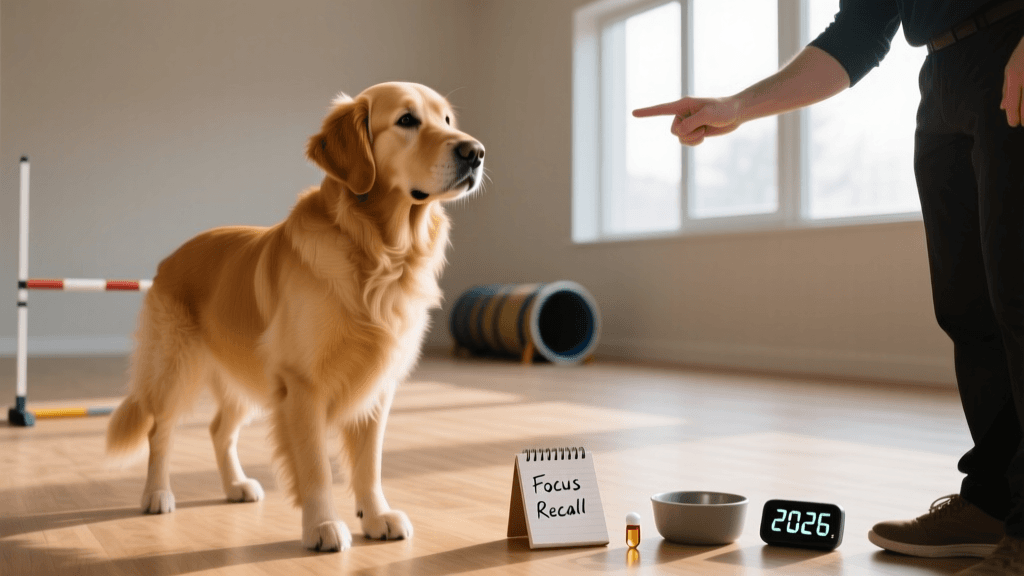
How Omega-3 Supplements Improve Dog Training Focus In 2026
Discover how Omega-3 fatty acids like DHA and EPA boost canine cognitive function, improving focus and trainability during obedience sessions in 2026.
The 2026 Paradigm Shift: Neuro-Nutritional Dog Training
As we navigate the advanced dog training landscape in 2026, the most successful behaviorists, service dog handlers, and obedience competitors are no longer relying solely on mechanical repetition. The modern paradigm of canine behavioral conditioning has shifted toward a holistic, neuro-nutritional model. At the forefront of this movement is the strategic use of Omega-3 fatty acids to enhance canine cognitive function, emotional regulation, and overall trainability. While traditional training guides focus entirely on timing, markers, and reinforcement schedules, today's top-tier trainers understand that a dog's ability to learn is fundamentally limited by their neurochemistry. If your dog struggles with impulse control, short attention spans, or reactivity during socialization, the missing link might not be a better training treat—it might be a targeted Omega-3 supplementation protocol.
The Neuroscience of Obedience: How DHA Shapes the Canine Brain
To understand why Omega-3s are critical for training, we must look at the cellular level of the canine brain. Docosahexaenoic acid (DHA) is a primary structural component of the cerebral cortex, the area of the brain responsible for memory, attention, and complex thought processes. In puppies, DHA is essential for neurogenesis and synaptic plasticity—the brain's ability to form new connections in response to learning. When you are teaching a puppy foundational obedience cues like 'sit', 'stay', or 'leave it', you are literally asking their brain to wire new neural pathways.
A diet rich in DHA ensures that these pathways are insulated and efficient, allowing for faster neurotransmitter firing. This translates directly to training outcomes: puppies with adequate DHA levels show significantly faster acquisition of new skills, better problem-solving abilities in shaping exercises, and improved spatial awareness during agility or scent work introductions. According to the U.S. Food and Drug Administration, Omega-3 fatty acids are essential components of a pet's diet that support critical developmental and maintenance functions, yet many commercial kibbles processed at high heat degrade these delicate fats, leaving a nutritional gap that directly impacts trainability.
EPA vs. DHA: Which Fatty Acid Drives Trainability?
While DHA is the architect of the brain's physical structure, Eicosapentaenoic acid (EPA) is the brain's peacekeeper. EPA is renowned for its potent anti-inflammatory properties, particularly in managing neuro-inflammation. In the context of dog training, EPA is your primary tool for behavioral modification in reactive, anxious, or easily overstimulated dogs.
When a dog encounters a trigger—such as a strange dog, a loud noise, or a chaotic environment—their sympathetic nervous system triggers a fight-or-flight response. During this state, the amygdala hijacks the brain, and the prefrontal cortex (the learning center) essentially shuts down. You cannot train a dog that is over threshold. By maintaining high systemic levels of EPA, you help lower baseline neuro-inflammation and modulate the stress response. This keeps your dog's arousal levels manageable, allowing them to remain under threshold and continue accepting reinforcement during desensitization and counter-conditioning protocols. In 2026, veterinary behaviorists routinely recommend high-EPA fish oil regimens as a foundational support system alongside behavior modification plans for canine anxiety.
Choosing the Right Omega-3 Source for Your Training Goals
Not all Omega-3 supplements are created equal. The source of the oil dictates the ratio of EPA to DHA, the bioavailability of the fatty acids, and the presence of supporting nutrients. Below is a comparison chart to help you select the best Omega-3 profile for your specific training objectives.
| Source | EPA/DHA Profile | Best Training Application | Bioavailability |
|---|---|---|---|
| Wild Alaskan Salmon Oil | High EPA, Moderate DHA | Reactivity management, anxiety reduction, and impulse control training. | High (Triglyceride form) |
| Antarctic Krill Oil | Balanced EPA/DHA + Astaxanthin | Senior dog cognitive maintenance and sustained focus during long trials. | Very High (Phospholipid bound) |
| Microalgae Oil | Extremely High DHA, Low EPA | Puppy brain development, early socialization, and rapid skill acquisition. | High (Plant-based triglyceride) |
| Green-Lipped Mussel Oil | Moderate EPA/DHA + ETA | Working dogs requiring joint support alongside cognitive focus (e.g., agility, IPO). | High (Contains unique ETA) |
Strategic Dosing and Timing for Peak Training Performance
A common mistake among novice handlers is treating Omega-3 like a pre-workout supplement, expecting immediate results right before a training session. Omega-3 fatty acids do not work acutely; they work cumulatively. It takes approximately four to six weeks of consistent daily supplementation to alter the lipid composition of the canine brain's cell membranes. Therefore, if you are preparing for a 2026 obedience trial or bringing a new rescue dog home, you must begin the supplementation protocol well in advance.
The Veterinary Information Network (VIN) emphasizes that dosing should be based on the combined EPA and DHA content, not the total volume of fish oil. A standard pump of generic fish oil might yield 1,000mg of oil, but only 300mg of combined EPA/DHA. For therapeutic behavioral support, veterinary nutritionists generally recommend between 50mg to 75mg of combined EPA/DHA per kilogram of your dog's metabolic body weight. Always consult your veterinarian to establish the precise dosage, as excessive amounts can lead to gastrointestinal upset or interfere with blood clotting.
Integrating Omega-3 into Your Training Treat Rotation
Beyond liquid oils and soft chews, you can leverage whole-food sources of Omega-3 directly as high-value training rewards. When shaping complex behaviors or working in high-distraction environments, you need reinforcement that holds your dog's attention. Dehydrated sardines, freeze-dried mackerel, and raw green-lipped mussels are incredibly potent, aromatic rewards that simultaneously deliver a micro-dose of brain-boosting fatty acids.
By rotating these marine-based treats into your reward hierarchy, you create a positive feedback loop. The dog receives the immediate dopamine hit of a high-value food reward for performing a behavior, while simultaneously ingesting the raw materials required to repair and build the neural pathways that make performing that behavior easier in the future. Just be mindful of the caloric density of these treats; adjust your dog's baseline meals accordingly to maintain a lean, athletic working weight.
Senior Dogs: Reversing Cognitive Decline to Maintain Trainability
Training does not stop when a dog reaches their senior years. In fact, continued mental stimulation is vital for staving off canine cognitive dysfunction. However, older dogs often experience a decline in focus, altered sleep-wake cycles, and a decreased ability to retain new information. This is where the neuro-protective qualities of Omega-3s become indispensable.
The ASPCA highlights that cognitive issues in older dogs can manifest as disorientation, changes in interaction, and house soiling—all of which can look like a sudden 'forgetting' of obedience training. High-dose EPA and DHA protocols, often combined with medium-chain triglycerides (MCTs) and antioxidants, have been shown to improve blood flow to the brain and reduce the oxidative stress that damages aging neurons. For senior dogs participating in low-impact sports like nose work or trick training, a robust Omega-3 regimen can extend their trainable years, keeping their minds sharp and their engagement with their handlers strong.
Storage and Freshness: Protecting the Integrity of Your Supplements
The efficacy of Omega-3 fatty acids in 2026 is highly dependent on proper storage. These polyunsaturated fats are incredibly unstable and prone to oxidation when exposed to heat, light, and oxygen. Oxidized (rancid) fish oil is not only ineffective; it is pro-inflammatory and can actively harm your dog's cellular health, negating any training benefits.
To ensure your dog is receiving the cognitive support they need, purchase liquid oils in dark, opaque bottles or UV-protected pumps. Store the bottle in the refrigerator immediately after opening, and always perform a 'sniff test'. Fresh fish oil should smell mildly of the ocean or be completely odorless; if it smells sharply of rotting fish or old paint, it has oxidized and must be discarded. For convenience and freshness preservation, many top trainers in 2026 are switching to single-dose, nitrogen-flushed Omega-3 capsules or freeze-dried marine powders that are rehydrated only at mealtime.
Conclusion: Building a Better Learner from the Inside Out
Ultimately, dog training is a partnership that requires clear communication, patience, and biological readiness. While no supplement can replace the necessity of consistent, force-free, science-based training methodologies, Omega-3 fatty acids provide the neurological hardware required for your dog to succeed. By optimizing your dog's DHA and EPA intake, you are reducing the friction of learning, lowering the barrier to emotional regulation, and setting the stage for a lifetime of joyful, focused cooperation. As you plan your training goals for the rest of 2026, look beyond the treat pouch and evaluate your dog's nutritional foundation—their brain will thank you.
aaron-whyte
All our authors care for dogs every day — read more of their work on the authors page.