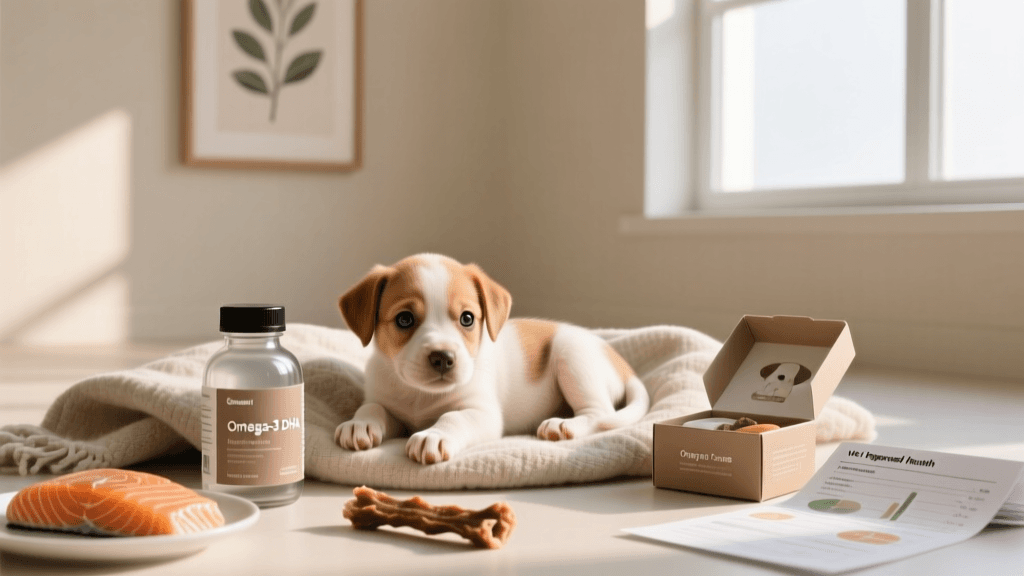
Best Omega-3 Puppy Supplements for 2026: First-Day Essentials Guide
Discover the best Omega-3 DHA and EPA supplements for your new puppy's first-day kit in 2026. Support brain and joint development with our expert guide.
Building the Ultimate 2026 First-Day Puppy Kit
Bringing a new puppy home is one of the most exciting milestones in a dog owner's life. As you prepare your home for the new arrival, your shopping list likely includes an orthopedic bed, a smart-feeder, enzymatic toothpaste, and a sturdy crate. However, one of the most critical first-day essentials often overlooked by new owners is a high-quality Omega-3 fatty acid supplement. In 2026, veterinary nutritionists heavily emphasize the role of early nutritional intervention in shaping a puppy's long-term cognitive function, immune resilience, and joint health. Whether you are adopting a rescue mix or bringing home a purebred from a breeder, integrating Omega-3s into your puppy's diet from day one can provide a profound developmental advantage.
The transition from a litter or shelter environment to your home is inherently stressful. This stress can trigger systemic inflammation and temporarily suppress a young puppy's immune system. Omega-3 fatty acids act as powerful natural modulators, helping to soothe inflammation, support skin and coat health during environmental changes, and lay the neurological groundwork for the training sessions you will begin in the coming weeks. This comprehensive guide will walk you through the science of Omega-3s, how to choose the right product in the current 2026 market, and exactly how to introduce it on your puppy's very first day.
The Science of Puppy Neurodevelopment
During the first sixteen weeks of a puppy's life, their brain undergoes rapid and massive structural development. The cerebral cortex, which governs learning, memory, and complex behaviors, is highly dependent on specific dietary fats to build cellular membranes. Docosahexaenoic acid (DHA), a specific type of Omega-3 fatty acid, is the primary structural fat found in the brain and retina. Puppies that receive adequate DHA during this critical developmental window consistently demonstrate superior trainability, better focus, and enhanced problem-solving skills compared to those on DHA-deficient diets.
While mother's milk naturally contains DHA, weaning abruptly halts this supply. Many commercial puppy foods in 2026 are fortified with baseline levels of DHA, but the concentrations are often geared toward basic survival rather than optimal cognitive enhancement. Supplementing with a dedicated, bioavailable Omega-3 source ensures your puppy's brain has an uninterrupted supply of the building blocks it needs during the crucial socialization and early obedience training phases.
Understanding DHA, EPA, and ALA
Not all Omega fatty acids are created equal, and understanding the difference is vital for your first-day kit. There are three primary types of Omega-3s:
- DHA (Docosahexaenoic Acid): The superstar for brain and eye development. This is the most critical Omega-3 for puppies under six months of age.
- EPA (Eicosapentaenoic Acid): Primarily responsible for modulating inflammation, supporting joint health, and maintaining cardiovascular function. While secondary to DHA for brain growth, EPA is vital for large-breed puppies prone to rapid growth-related joint stress.
- ALA (Alpha-Linolenic Acid): Found in plant sources like flaxseed and chia. While healthy, puppies lack the efficient enzymatic pathways required to convert ALA into usable DHA and EPA. Therefore, plant-based Omega-3s are largely ineffective for targeted puppy neurodevelopment.
Because of this conversion inefficiency, your first-day supplement must be derived from marine sources (fish oil or krill oil) or marine algae to provide direct, pre-formed DHA and EPA.
2026 Market Trends: Marine Fish Oil vs. Algal DHA
The pet supplement industry has evolved significantly, and in 2026, owners have more sustainable and potent options than ever before. Traditional wild-caught fish oils (like salmon, sardine, and anchovy blends) remain highly effective and popular. They offer a robust profile of both DHA and EPA, along with naturally occurring antioxidants like astaxanthin when sourced from krill.
However, 2026 has seen a massive surge in the popularity of Algal DHA. Algae is the original source of Omega-3s in the marine food chain (fish get their Omega-3s by eating algae). Algal oil provides a direct, plant-based, and highly sustainable source of DHA without the risk of ocean-borne heavy metals or the environmental concerns associated with overfishing. For eco-conscious owners or puppies with sensitive stomachs who find fish oil too rich, algal DHA chews and liquids have become a top-tier recommendation in modern veterinary nutrition.
Comparing Omega-3 Delivery Methods for Puppies
Choosing the right format is essential for a smooth first-day introduction. Puppies can be notoriously picky, and the wrong texture or smell can create long-term food aversions. Below is a comparison of the primary delivery methods available in 2026:
| Format | Pros | Cons | Best For |
|---|---|---|---|
| Liquid Pump Oil | Highly bioavailable; easy to adjust exact dosage; masks kibble smell. | Requires refrigeration after opening; can be messy; fishy odor. | Owners of large breeds needing high EPA/DHA volumes; picky eaters who need food enticement. |
| Soft Chews | Treat-like appeal; convenient for travel; no mess or smell. | Fixed dosage per chew; may contain extra calories or binders. | Small to medium breeds; owners prioritizing convenience and positive reinforcement training. |
| Puncture Capsules | Maximum freshness; zero oxidation before use; precise dosing. | Requires piercing the capsule; gelatin shell may be hard to digest for very young pups. | Owners highly concerned with oil oxidation and rancidity; raw feeders. |
Your First-Week Introduction Protocol
Gastrointestinal upset is the most common side effect when introducing any new fat source to a puppy's diet. To avoid diarrhea or vomiting on your puppy's first week home, you must introduce Omega-3s gradually. Follow this 2026 veterinary-recommended step-by-step protocol:
- Day 1 to Day 2 (The Micro-Dose): Administer exactly 25% of the recommended daily dose based on your puppy's current weight. If using a liquid pump, this might just be a single drop or a partial pump mixed thoroughly into wet food or a kibble topper. Monitor their stool consistency closely.
- Day 3 to Day 4 (The Half-Dose): If stools remain firm and the puppy is eating enthusiastically, increase the dosage to 50%. Introduce it at a different mealtime to see how their digestion handles the fat load across the day.
- Day 5 to Day 6 (The Transition): Move up to 75% of the target dose. At this stage, you should begin noticing a slight improvement in coat softness and a reduction in any minor skin flaking caused by the stress of relocation.
- Day 7 and Beyond (Full Dose): Reach the full recommended dosage. Ensure you are storing liquid oils in the refrigerator and keeping chews in a cool, dark place to prevent the delicate fatty acids from oxidizing and turning rancid.
Reading the Label: Safety and Quality Standards
The pet supplement market is vast, and quality control is paramount. When shopping for your first-day kit, you must look beyond the marketing claims on the front of the bottle. According to the U.S. Food and Drug Administration, pet supplements are not subject to the same rigorous pre-market approval processes as pharmaceuticals, making it the owner's responsibility to verify product integrity and manufacturing standards.
First, look for the triglyceride form of Omega-3 on the ingredient panel. Many cheaper supplements use the ethyl ester form, which is a synthetic byproduct of concentration that is much harder for a puppy's developing digestive system to absorb. The triglyceride form is natural and offers vastly superior bioavailability.
Second, verify third-party testing. In 2026, the gold standard for marine oil purity is the IFOS (International Fish Oil Standards) 5-star rating. This certification guarantees that the oil has been rigorously tested for heavy metals (like mercury and lead), PCBs, and dioxins, and that it meets strict limits for oxidation (rancidity). Feeding rancid oil to a puppy will actually increase cellular inflammation, completely defeating the purpose of the supplement.
Furthermore, the American Kennel Club advises owners to consult with their primary veterinarian before starting any new supplement regimen, especially if the puppy has a pre-existing condition, is on a prescription diet, or has a known allergy to specific marine proteins. Your vet can provide an exact milligram target based on your puppy's specific breed trajectory and expected adult weight.
Final Thoughts on Puppy Nutrition
Preparing your home for a new dog is a multifaceted process that extends far beyond puppy-proofing your living room and buying toys. By prioritizing cognitive and physical development through targeted nutrition, you are setting your puppy up for a lifetime of health, focus, and vitality. Including a high-quality, third-party tested Omega-3 DHA and EPA supplement in your first-day essentials kit is one of the most impactful, science-backed decisions you can make as a new pet parent in 2026. Start slow, choose a sustainable and bioavailable source, and watch your new companion thrive from the inside out.
aaron-whyte
All our authors care for dogs every day — read more of their work on the authors page.