Omega-3 for Puppies in 2026: DHA Dosage & Brain Development
Discover how Omega-3 DHA and EPA boost your puppy's brain and joint health in 2026. Learn exact dosages, top supplement picks, and safe feeding tips.
The Critical Role of Omega-3 in Early Canine Development
Welcoming a new puppy into your home is an exciting milestone, but it also comes with a profound responsibility to ensure their foundational health is optimized. The first twelve months of a dog's life are characterized by rapid neurological, skeletal, and immunological growth. As we navigate the nutritional landscape of 2026, veterinary science continues to underscore the irreplaceable role of Omega-3 fatty acids in supporting these crucial developmental phases. Unlike some vitamins that the body can synthesize on its own, Omega-3s are essential fatty acids, meaning they must be obtained directly through your puppy's diet.
While many commercial puppy foods claim to be 'complete and balanced,' the processing methods used in kibble manufacturing can often degrade the delicate lipid structures of Omega-3s. Furthermore, the ratio of Omega-6 to Omega-3 in standard commercial diets is frequently skewed toward inflammatory Omega-6s. Supplementing your puppy's diet with high-quality, targeted Omega-3 sources is one of the most effective strategies to promote cognitive sharpness, joint resilience, and a lustrous coat. According to the American Kennel Club, integrating fish oil or specialized Omega-3 supplements can significantly mitigate systemic inflammation and support long-term vitality in growing dogs.
DHA and the Architecture of the Puppy Brain
When discussing Omega-3s for puppies, Docosahexaenoic Acid (DHA) is the undisputed star. DHA is a primary structural component of the mammalian brain and the cerebral cortex. During the first few months of life, a puppy's brain undergoes explosive growth, forming billions of neural connections that will dictate their learning capacity, trainability, and behavioral stability for the rest of their life.
Research highlighted by the Tufts Cummings Veterinary Medical Center indicates that puppies supplemented with adequate levels of DHA during their formative weeks demonstrate superior cognitive function compared to those on DHA-deficient diets. These puppies often exhibit faster problem-solving skills, better memory retention during obedience training, and improved visual acuity. Because a mother's milk is naturally rich in DHA, the transition to solid food often results in a sudden drop in this vital nutrient. Bridging this gap with a dedicated DHA supplement ensures that your puppy's neurological development remains uninterrupted during the critical socialization and training windows of their first year.
EPA for Joint, Bone, and Immune Support
While DHA takes the spotlight for brain health, Eicosapentaenoic Acid (EPA) is equally vital for the physical framework of your growing puppy. Large and giant breed puppies, in particular, are highly susceptible to developmental orthopedic diseases such as hip dysplasia and osteochondrosis. EPA acts as a powerful modulator of the inflammatory response, helping to protect the delicate cartilage and joint tissues as your puppy's skeletal structure rapidly expands.
Furthermore, EPA plays a significant role in supporting the immune system. Puppies are naturally immunocompromised as their adaptive immune systems mature. The anti-inflammatory properties of EPA help regulate immune responses, reducing the severity of allergic reactions, environmental sensitivities, and skin conditions like puppy pyoderma. Together, DHA and EPA create a synergistic effect that fortifies your puppy from the inside out.
2026 Puppy Omega-3 Dosage Chart by Weight
Determining the correct dosage of Omega-3s is crucial. Too little will fail to provide therapeutic benefits, while too much can lead to gastrointestinal distress or altered blood clotting. In 2026, veterinary nutritionists recommend dosing based on the puppy's current weight, adjusting as they grow. Below is a general guideline for combined EPA and DHA daily intake for growing puppies. Always consult your primary veterinarian before starting any new supplement regimen.
| Puppy Weight (lbs) | Puppy Weight (kg) | Combined EPA/DHA (mg/day) | Typical Fish Oil Volume (approx.) |
|---|---|---|---|
| 5 - 10 lbs | 2.2 - 4.5 kg | 100 - 150 mg | 1/4 teaspoon |
| 11 - 20 lbs | 5.0 - 9.0 kg | 150 - 250 mg | 1/2 teaspoon |
| 21 - 40 lbs | 9.5 - 18.0 kg | 250 - 400 mg | 1 teaspoon |
| 41 - 60 lbs | 18.5 - 27.0 kg | 400 - 600 mg | 1.5 teaspoons |
| 61+ lbs | 27.5+ kg | 600 - 800 mg | 2 teaspoons |
Note: The volume of fish oil varies significantly by brand and concentration. Always read the label to determine the exact milligram count of EPA and DHA per pump or teaspoon, rather than relying solely on volume measurements.
Best Sources of Omega-3 for Puppies in 2026
The source of your Omega-3 supplement dictates its bioavailability, purity, and environmental impact. In 2026, pet parents have access to several high-quality options tailored specifically for canine digestion.
1. Wild-Caught Small Fish Oils (Anchovy, Sardine, Mackerel)
Oils derived from small, cold-water, wild-caught fish are the gold standard for canine Omega-3s. Because these fish are lower on the food chain, they accumulate significantly fewer heavy metals and environmental toxins like mercury compared to larger fish such as salmon. Look for oils that are molecularly distilled and packaged in dark, UV-protective glass or opaque pump bottles to prevent oxidation.
2. Krill Oil
Krill oil has surged in popularity due to its unique phospholipid structure. Unlike the triglyceride form found in standard fish oil, the Omega-3s in krill oil are bound to phospholipids, which some studies suggest may offer superior absorption rates in the canine gut. Additionally, krill oil naturally contains astaxanthin, a potent antioxidant that protects the oil from going rancid and provides extra cellular support for your puppy.
3. Algal Oil (The Vegan Alternative)
For pet parents concerned about marine sustainability or puppies with specific seafood protein allergies, algal oil is the premier alternative in 2026. Algae is the original source of DHA and EPA in the marine food web. Modern algal extracts are grown in controlled, sterile environments, completely eliminating the risk of ocean-borne contaminants or heavy metals, making it an exceptionally pure choice for developing puppies.
How to Safely Introduce Omega-3 to Your Puppy's Diet
A puppy's gastrointestinal tract is notoriously sensitive during the first year. Introducing a rich, fatty supplement too quickly is a common mistake that leads to diarrhea, vomiting, or steatorrhea (fatty stools). To avoid this, you must employ a gradual transition strategy.
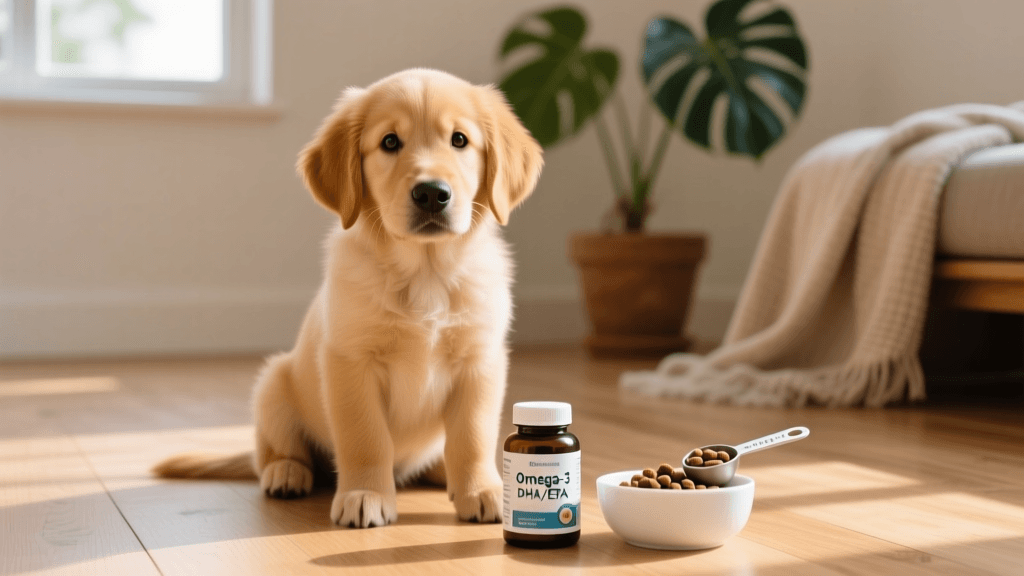
Begin by introducing one-quarter of the recommended daily dose for the first three to four days. Mix the oil thoroughly into their wet food or use it as a topper on their kibble. If your puppy's stool remains firm and they show no signs of nausea, increase the dosage to half for another four days. Finally, transition to the full recommended dose. If at any point your puppy experiences loose stools, scale back to the previous tolerated dose and maintain it for a week before attempting to increase it again. Storing your liquid Omega-3 supplements in the refrigerator not only preserves the delicate fatty acids but also makes the oil more viscous and easier to measure accurately.
Reading the Label: Quality Standards and Third-Party Testing
The pet supplement market is vast, and not all products are created equal. When shopping for an Omega-3 supplement for your puppy in 2026, transparency and third-party validation are non-negotiable. The World Small Animal Veterinary Association (WSAVA) consistently advocates for diets and supplements that meet rigorous global nutritional and safety guidelines.
Look for the National Animal Supplement Council (NASC) Quality Seal on the packaging. This seal indicates that the manufacturer has undergone a rigorous facility audit, adheres to strict labeling guidelines, and participates in a random product testing program. Furthermore, check the label for the specific milligram breakdown of EPA and DHA. If a label simply lists 'Fish Oil 1000mg' without specifying the active Omega-3 content, the product is likely diluted with inactive filler oils that offer no developmental benefits to your puppy. Finally, ensure the product is explicitly formulated for dogs, as human supplements may contain flavorings like xylitol or citrus extracts that are highly toxic to canines.
Signs of Over-Supplementation and Safety Precautions
While Omega-3s are incredibly beneficial, the adage 'more is better' does not apply. Excessive intake of EPA and DHA can lead to a condition known as hypervitaminosis or lipid overload. In puppies, the most immediate sign of Omega-3 toxicity is severe gastrointestinal upset, including oily diarrhea and vomiting. Over the long term, excessively high doses of Omega-3s can suppress the immune system and alter platelet function, leading to prolonged bleeding times if your puppy sustains an injury or requires surgery.
If your puppy is scheduled for any surgical procedures, including routine spaying or neutering, veterinarians typically recommend discontinuing all Omega-3 supplements at least seven to ten days prior to the operation to ensure normal blood clotting. Always calculate the total Omega-3 intake by factoring in both the supplement and the baseline levels already present in your puppy's commercial food to avoid accidental over-supplementation.
Conclusion: Investing in Your Puppy's Future
The decisions you make regarding your puppy's nutrition during their first year will echo throughout their entire life. By strategically incorporating high-quality, appropriately dosed Omega-3 fatty acids into their daily routine, you are actively investing in their cognitive sharpness, joint mobility, and overall vitality. As veterinary nutritional science continues to advance in 2026, leveraging these essential lipids remains one of the most proven, effective ways to give your growing companion the strongest possible start. Monitor their progress, consult with your veterinary team, and watch your puppy thrive into a healthy, vibrant adult dog.
aaron-whyte
All our authors care for dogs every day — read more of their work on the authors page.