OA-Safe Trick Training and Mental Games for Dogs 2026
Discover 2026's best low-impact trick training and mental stimulation games for dogs undergoing osteoarthritis treatment. Keep your senior pup engaged safely!
The Intersection of OA Treatment and Canine Training
Osteoarthritis (OA) is one of the most common chronic conditions affecting senior and large-breed dogs. As we navigate the veterinary landscape in 2026, treatments for canine OA have advanced remarkably. From monthly anti-NGF injections like Librela to advanced Class IV laser therapy and regenerative stem-cell therapies, managing physical pain is more effective than ever. However, treating the physical symptoms is only half the battle. Dogs are intelligent, active creatures that require mental stimulation and structured routines to thrive. When a dog is undergoing treatment for OA, their physical capabilities change, but their need for training, engagement, and a sense of purpose does not.
As a core pillar of dog ownership, training must evolve alongside your dog's health profile. According to the American Kennel Club (AKC), maintaining a dog's mental acuity and providing low-impact enrichment is just as critical as managing their joint inflammation. In this comprehensive guide, we will explore how to adapt your training regimen for a dog receiving OA treatment, focusing on low-impact tricks, cognitive games, and cooperative care techniques that keep your dog's mind sharp without compromising their joints.
Why Traditional Obedience Must Be Modified in 2026
Traditional obedience training often relies heavily on repetitive physical movements. Commands like 'sit-stand' repetitions, 'down-stand' transitions, and jumping over agility hurdles are excellent for building muscle memory in healthy dogs. However, for a dog with OA, these repetitive joint flexions can exacerbate cartilage wear and trigger pain flare-ups, even if they are currently receiving pharmaceutical interventions.
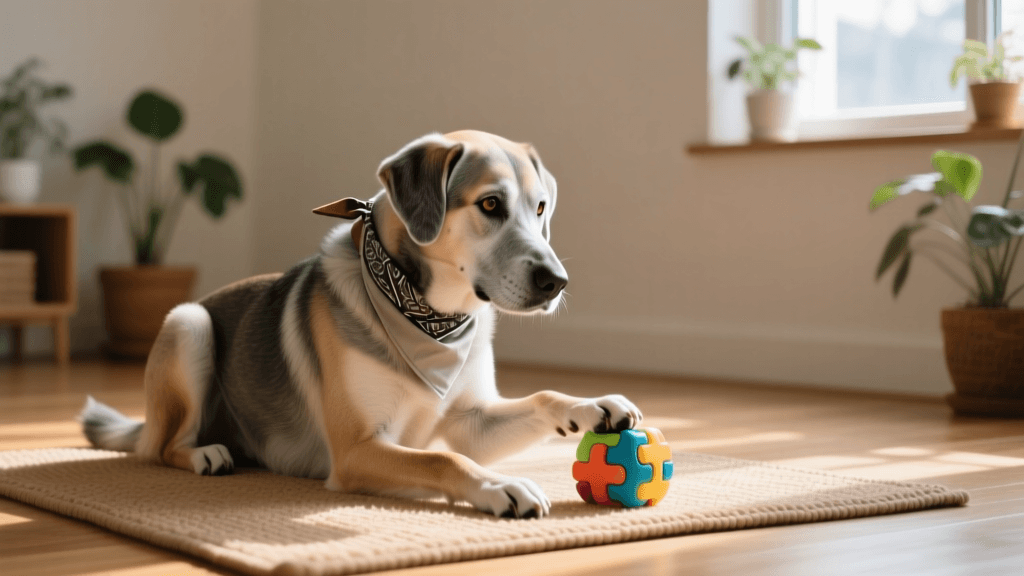
The VCA Hospitals veterinary guidelines emphasize that while controlled, low-impact exercise (like leash walking or swimming) is vital for maintaining muscle mass, repetitive high-impact or deep-flexion movements should be strictly avoided. Therefore, the goal of training a dog with OA shifts from physical compliance and endurance to cognitive fatigue and cooperative care. Mental stimulation tires a dog out just as effectively as physical exercise. Fifteen minutes of intensive scent work or problem-solving can provide the same caloric burn and mental satisfaction as an hour of brisk walking, all while your dog remains comfortably seated on an orthopedic mat.
Top 4 Low-Impact Tricks for Dogs Undergoing OA Therapy
Transitioning to an OA-safe training routine means teaching tricks that can be performed from a stationary, comfortable position. Here are four highly effective, low-impact tricks to teach your dog in 2026.
1. Seated Scent Detection (Nosework)
Nosework is arguably the greatest tool in the senior dog trainer's arsenal. A dog's olfactory system is directly connected to the emotional and cognitive centers of their brain. To teach seated scent detection:
- Step 1: Introduce a specific target scent, such as birch or anise essential oil, applied to a cotton swab and placed inside a ventilated tin.
- Step 2: While your dog is comfortably seated or lying on a supportive orthopedic bed, present the scent tin near their nose. Mark and reward any sniffing behavior.
- Step 3: Gradually hide the tin within a small, reachable radius (e.g., behind a nearby chair leg or under a low-lying snuffle mat) where the dog only needs to turn their head or stretch their neck, rather than stand or walk, to find it.
- Step 4: Build up to 'scent cones' placed on low tables or stools, allowing the dog to remain seated while searching.
2. The Cooperative Care Chin Rest
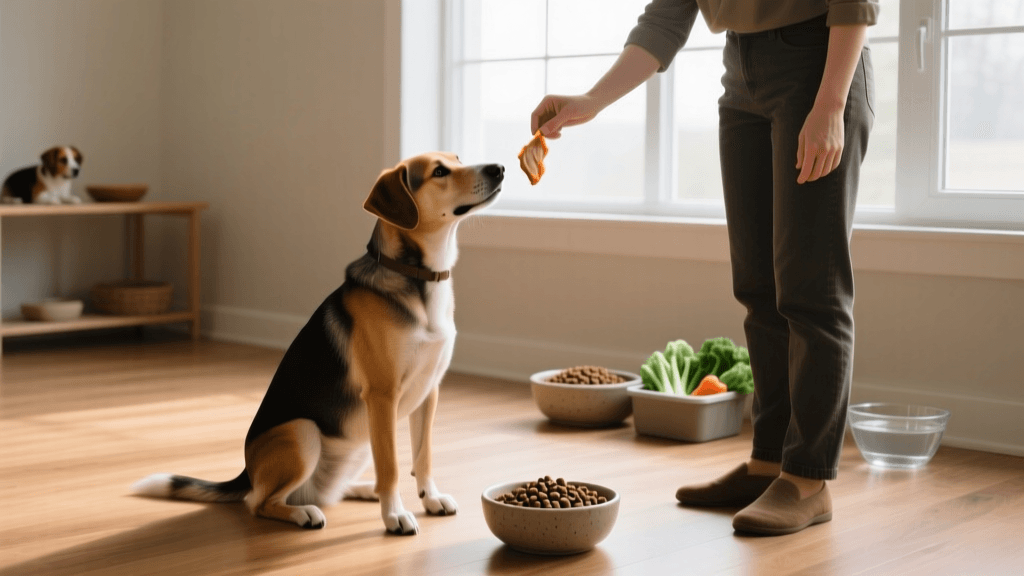
The chin rest is a foundational cooperative care behavior that is invaluable for senior dogs. It allows you to examine their eyes, clean their ears, or administer eye drops for age-related conditions without forcing them to stand or be physically restrained.
- Step 1: Sit in front of your dog while they are lying down or sitting comfortably. Hold a small, soft target (like a yoga block or a specialized chin rest pad) at their head level.
- Step 2: Lure their chin onto the pad using a high-value treat. The moment their chin makes contact, use a clicker or a verbal marker ('Yes!') and reward.
- Step 3: Gradually increase the duration they must hold their chin on the pad before receiving the reward.
- Step 4: Once the behavior is solid, use this stationary position to gently simulate grooming, wiping their face, or administering oral medications.
3. Seated Paw Targeting
Paw targeting builds spatial awareness and strengthens the mind-paw connection without requiring the dog to bear weight on their hindquarters or jump.
- Step 1: Place a small, textured mat or a silicone paw target directly in front of your seated dog.
- Step 2: Wait for any movement toward the mat. If they lift a paw even slightly in the mat's direction, mark and reward.
- Step 3: Shape the behavior until the dog confidently places one front paw onto the target and holds it there.
- Step 4: This trick is excellent for keeping their front limbs engaged and promoting mild, supported range-of-motion without stressing the hips or spine.
4. 'Look at That' (LAT) Cognitive Focus
The 'Look at That' game, originally developed for reactive dogs, is a brilliant cognitive exercise for senior dogs. It teaches emotional regulation and focus.
- Step 1: Sit with your dog in a comfortable environment. When they look at a specific distraction (e.g., a toy placed across the room or a person walking by the window), mark the exact moment they look at it.
- Step 2: When they turn back to you for their reward, deliver a high-value treat.
- Step 3: This teaches the dog to observe their environment calmly and check in with you, providing intense mental processing without any physical exertion.
Structuring Your 2026 OA-Safe Training Sessions
When designing a training curriculum for a dog with OA, session length, environment, and physical setup are paramount. Below is a comparison chart detailing how to adjust your training approach.
| Training Element | Traditional Approach (Healthy Dog) | OA-Safe Approach (2026 Standard) |
|---|---|---|
| Session Duration | 15-20 minutes of active movement | 3-5 minute micro-sessions to prevent joint stiffness |
| Surface | Grass, carpet, or agility mats | High-density orthopedic memory foam or non-slip yoga mats |
| Treat Delivery | Tossing treats to encourage fetching/retrieving | Hand-feeding or using elevated, slow-feeder lick mats |
| Primary Focus | Physical compliance, speed, and endurance | Cognitive fatigue, cooperative care, and scent processing |
| Positioning | Frequent sit-stand-down transitions | Stationary seated or sphynx-lie (down with paws forward) |
Timing Training Around Modern OA Treatments
In 2026, the timing of your training sessions should be strategically aligned with your dog's medical treatments to maximize their comfort and learning capacity. For example, if your dog receives Class IV therapeutic laser treatments at the veterinary clinic, schedule your mental training sessions approximately two to three hours post-treatment. This is when the anti-inflammatory effects of the laser therapy are peaking, and your dog's joints will feel their most mobile and pain-free.
Similarly, if your dog is on a monthly anti-NGF injection protocol, you may notice a 'wear-off' effect in the final week before their next dose. During this week, scale back the complexity of the tricks and focus purely on passive enrichment, such as frozen bone broth lick mats or gentle massage, rather than active learning. Pushing a dog to learn new cognitive tasks when their pain levels are subtly rising can lead to frustration and a negative association with training.
Essential Low-Impact Training Gear for 2026
To facilitate OA-safe training, investing in the right gear is essential. Modern pet tech and ergonomic designs have made it easier than ever to accommodate senior dogs.
- Ergonomic Elevated Treat Bowls: Bending down to floor level places immense strain on a senior dog's cervical spine and front shoulders. Use adjustable, elevated treat stations during nosework and targeting exercises to keep their neck in a neutral, aligned position.
- Smart Snuffle Mats with Variable Resistance: The latest snuffle mats feature adjustable felt density, allowing you to increase the cognitive difficulty of finding treats without requiring the dog to dig aggressively with their paws.
- Supportive Harnesses with Handling Handles: While not a 'trick' tool, a well-fitted support harness allows you to gently guide your dog into position or assist them in standing up after a training session, preventing slips on hardwood floors that could undo weeks of OA rehabilitation.
Conclusion: Empathy and Adaptation in Senior Dog Training
A diagnosis of osteoarthritis does not mean the end of your dog's training journey; it simply marks the beginning of a new, more empathetic chapter. By shifting your focus from physical endurance to cognitive engagement, you can provide your dog with the mental stimulation they crave while respecting the physical limitations imposed by OA. The low-impact tricks and mental games outlined above ensure that your senior companion remains an active, engaged, and happy participant in your daily life. Always consult with your veterinary rehabilitation therapist or primary care veterinarian before starting a new training regimen, ensuring that every trick and game is perfectly tailored to your dog's unique orthopedic profile in 2026 and beyond.
beth-carrasco
All our authors care for dogs every day — read more of their work on the authors page.