Fueling Focus: Nutrition and Treat Management for Dog Training
Discover how to balance your dog's diet and choose the right training treats to maintain focus, prevent obesity, and support joint health during sessions.
The Intersection of Canine Nutrition and Behavioral Training
When dog owners and professional handlers think about obedience training, agility conditioning, or behavioral modification, the focus is almost exclusively on timing, marker words, and repetition. However, one of the most critical yet frequently overlooked components of a successful training program is canine nutrition. Training is not just a physical exercise; it is an intense cognitive workout. The canine brain consumes a significant amount of glucose to process new commands, build neural pathways, and maintain focus in high-distraction environments. If a dog's diet is not optimized for cognitive function, or if their caloric intake is mismanaged through excessive treat feeding, training progress can stall entirely.
At Paws-Tales, we believe that a holistic approach to dog ownership requires bridging the gap between the training field and the food bowl. In this deep dive, we will explore the science of fueling a working or training dog, how to mathematically manage your dog's caloric budget to prevent obesity, and how to protect their joint health during repetitive obedience drills.
The Science of Canine Cognition and Brain Food
Learning new behaviors requires synaptic plasticity, which is heavily supported by specific nutrients. Diets rich in Omega-3 fatty acids, particularly DHA (docosahexaenoic acid) and EPA (eicosapentaenoic acid), are essential for brain health. Studies have consistently shown that puppies and adult dogs fed diets supplemented with high-quality Omega-3s demonstrate improved trainability, better memory retention, and faster problem-solving skills. Furthermore, antioxidants like Vitamin E and Vitamin C help combat the oxidative stress that occurs during intense physical and mental exertion. When selecting a base diet for a dog undergoing intensive training, look for formulations that list whole fish, fish oil, or flaxseed high in the ingredient panel to ensure adequate DHA levels for sustained mental stamina.
Calculating Your Dog's Training Caloric Budget
One of the most common pitfalls in positive reinforcement training is the overuse of high-calorie treats, leading to rapid weight gain. Canine obesity is a leading cause of preventable diseases, including diabetes, cardiovascular strain, and exacerbated joint issues. According to veterinary nutritionists at the Tufts University Cummings School of Veterinary Medicine, treats and training rewards should never make up more than 10% of your dog's total daily caloric intake. The remaining 90% must come from a complete and balanced commercial or carefully formulated homemade diet.
To implement the 10% rule effectively, you must first calculate your dog's Resting Energy Requirement (RER) and Maintenance Energy Requirement (MER). The standard veterinary formula for RER is: RER = 70 x (body weight in kg)^0.75.
A Practical Caloric Example
Let us look at a 50-pound (22.7 kg) neutered adult dog with a normal activity level.
- Step 1 (RER): 70 x (22.7)^0.75 = approximately 727 kcal/day.
- Step 2 (MER): For a typical neutered adult, multiply the RER by 1.6. (727 x 1.6 = 1,163 kcal/day).
- Step 3 (The 10% Treat Budget): 10% of 1,163 kcal is roughly 116 calories per day allocated for training treats.
If you are using standard grocery-store hot dog slices (which can contain up to 35 calories per slice), your entire training budget is exhausted in just three rewards. However, if you use purpose-baked training treats like Zuke's Mini Naturals (approximately 3 calories each), you can deliver up to 38 individual rewards within your daily limit. This mathematical reality dictates that for high-repetition obedience training, low-calorie, high-palatability treats are not just a preference; they are a metabolic necessity.
The Treat Hierarchy: Low, Medium, and High-Value Rewards
Effective behavioral conditioning relies on a structured treat hierarchy. Dogs assign different levels of motivation to different foods based on scent, texture, fat content, and novelty. Below is a structured comparison chart to help you budget and select the right reward for the right training environment.
| Treat Tier | Example Product | Calories (Avg) | Cost per Ounce | Best Training Use Case |
|---|---|---|---|---|
| Low-Value | Dog's Regular Kibble | 2 - 5 kcal | $0.15 | Basic obedience in zero-distraction environments (e.g., living room). |
| Medium-Value | Zuke's Mini Naturals | 3 - 4 kcal | $1.20 | Heelwork, loose-leash walking, and recall in moderate-distraction areas. |
| High-Value | Stella & Chewy's Freeze-Dried Raw | 5 - 8 kcal | $3.50 | Reactive dog threshold training, agility motivation, and novel environments. |
| Ultra-High | Boiled Chicken Breast / Beef Liver | 10 - 15 kcal | $0.80 | Emergency recall, veterinary conditioning, and severe fear-rehabilitation. |
Actionable Advice: To prevent 'treat fatigue' and maintain high motivation without blowing your caloric budget, utilize a 'treat fading' protocol. Begin teaching a new, complex behavior (like a retrieve or a place command) using Ultra-High or High-Value treats. Once the dog reliably offers the behavior with an 80% success rate, downgrade the reward to Medium-Value. Finally, move to Low-Value kibble for maintenance, reserving the high-value meats exclusively for proofing the behavior in highly distracting public environments.
Timing, Digestion, and Bloat Prevention
Nutrition in training is not just about what you feed, but when you feed it. Intensive training, especially active recall, agility, or vigorous play, requires careful timing around meals to avoid catastrophic health emergencies. Feeding a large meal right before a rigorous training session significantly increases the risk of Gastric Dilatation-Volvulus (GDV), commonly known as bloat. The American Kennel Club (AKC) notes that GDV is a life-threatening emergency where the stomach fills with gas and twists on itself, most commonly affecting deep-chested breeds like German Shepherds, Great Danes, and Standard Poodles.
To mitigate this risk, establish a strict fasting window around your training schedule. Feed your dog their primary meals at least two hours before an intensive training session, and wait at least one hour after the session concludes before offering their next full meal. During the training window, rely solely on your pre-measured, small-sized training treats. Furthermore, always provide ample fresh water, but discourage the dog from gulping massive amounts of water immediately after high-exertion drills, as rapid water consumption on an empty, stressed stomach can also contribute to gastric distress.
Joint Health and Supplements for Active Training Dogs
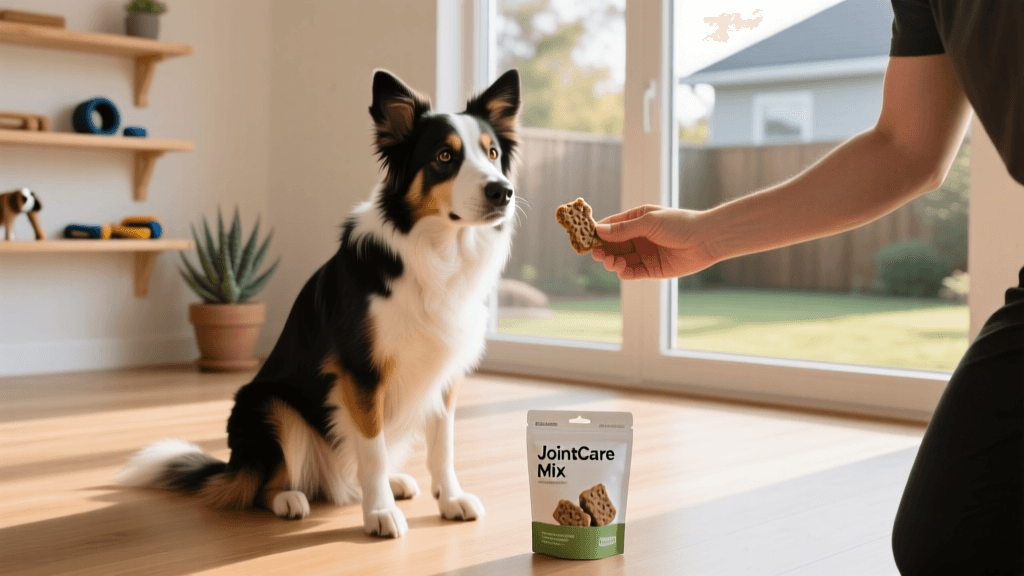
Obedience training takes a hidden toll on a dog's musculoskeletal system. Commands that seem simple, such as repeated 'sits', 'downs', or the 'sit-pretty' trick, place repetitive mechanical stress on the hips, stifles (knees), and lumbar spine. For dogs involved in agility, flyball, or competitive obedience, the impact forces on their joints are exponentially higher. Proactive nutritional support is vital to ensure that your dog's physical health does not become the limiting factor in their training career.
Incorporating targeted joint supplements into your dog's daily routine can help preserve cartilage and reduce synovial inflammation. According to AKC guidelines on joint supplements, the most effective, scientifically backed ingredients to look for include:
- Glucosamine Hydrochloride & Chondroitin Sulfate: These are the building blocks of cartilage. They help inhibit the enzymes that break down joint tissue and promote the synthesis of new synovial fluid.
- Green-Lipped Mussel (GLM): A natural powerhouse containing a unique profile of Omega-3s, glycosaminoglycans, and vitamins that work synergistically to reduce joint stiffness.
- MSM (Methylsulfonylmethane): An organic sulfur compound that aids in reducing oxidative stress and cellular inflammation following intense physical conditioning.
Cost and Sourcing Tip: While many commercial 'joint treats' exist, they often contain high levels of fillers and sugars. It is far more cost-effective and healthier to purchase a high-quality, unflavored joint powder (such as Dasuquin or GlycoFlex) and sprinkle the measured dose over your dog's regular, low-fat evening meal. This ensures accurate dosing without adding unnecessary training-day calories.
Conclusion: The Balanced Approach to Canine Success
Exceptional dog training is a partnership built on clear communication, trust, and mutual physical well-being. By viewing your dog's diet and training rewards through the lens of nutritional science, you can dramatically enhance their cognitive focus while safeguarding their long-term health. Remember to calculate your 10% treat budget, utilize a strategic hierarchy of rewards, respect the critical fasting windows to prevent bloat, and proactively support their joints against the repetitive wear and tear of obedience work. When you fuel your dog correctly, you are not just training a pet; you are cultivating a vibrant, healthy, and highly capable canine athlete ready to tackle any challenge you set before them.
aaron-whyte
All our authors care for dogs every day — read more of their work on the authors page.