2026 Guide To Puppy Noise Reactivity: Adaptil & Desensitization
Discover how to manage puppy noise reactivity during fear periods in 2026 using the Adaptil Calm diffuser and the engage-disengage training protocol.
Understanding Puppy Fear Periods and Noise Reactivity
Raising a puppy is a profoundly rewarding experience, but it comes with unique behavioral challenges, particularly when your young dog begins to exhibit signs of noise reactivity or environmental anxiety. In 2026, veterinary behaviorists emphasize that early intervention during a puppy's developmental windows is critical for long-term emotional stability. Puppies typically navigate two primary fear periods: the first occurs between 8 and 11 weeks of age, and the second, often more pronounced period, happens between 6 and 14 months. During these windows, a previously confident puppy may suddenly exhibit trembling, hiding, or reactive barking in response to everyday sounds like garbage trucks, doorbells, or distant sirens.
Noise reactivity in puppies is not merely a phase to be ignored; it is a neurological response to novel or overwhelming stimuli. According to the ASPCA, early intervention and structured desensitization are paramount to preventing these acute fear responses from solidifying into chronic noise phobias in adulthood. As a puppy owner, your goal is not to force your dog to 'tough it out,' but rather to systematically alter their emotional response to triggers using a combination of environmental management, pheromone therapy, and evidence-based behavioral protocols.
Pheromone Therapy: The Role of Adaptil Calm in 2026
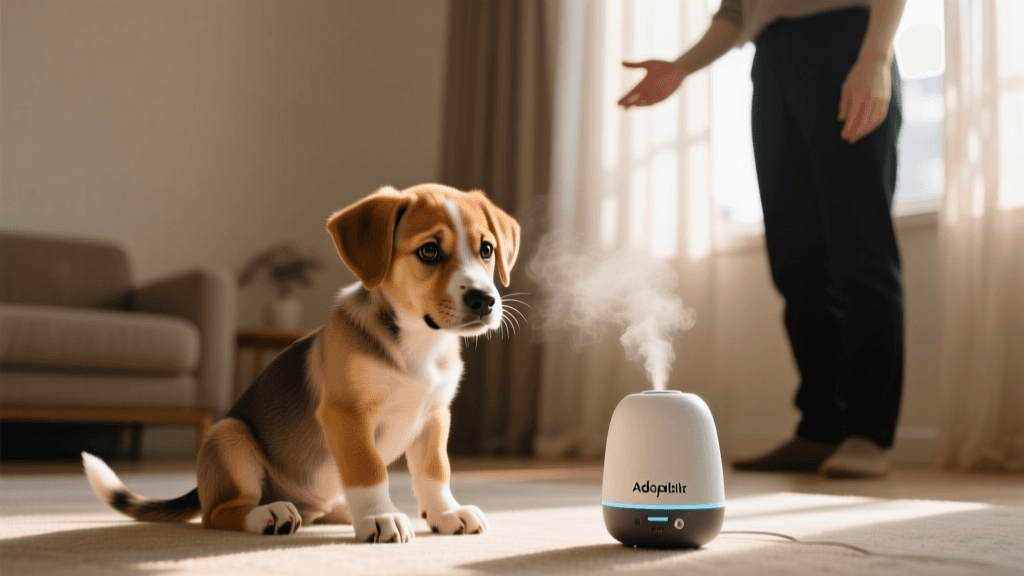
One of the most effective, non-invasive tools for managing baseline anxiety in reactive puppies is synthetic pheromone therapy. The Adaptil Calm Home Diffuser remains a gold standard in 2026 for creating a chemically soothing environment. This device releases a synthetic copy of the Dog Appeasing Pheromone (DAP), which is naturally produced by a nursing mother dog to reassure her puppies. When inhaled by your puppy, these pheromones bind to the vomeronasal organ, sending a signal to the brain that the environment is safe.
For puppies struggling with noise reactivity, placing an Adaptil Calm diffuser in the room where the puppy spends the most time—or specifically in their designated 'safe haven' room—can significantly lower their overall arousal levels. In 2026, the latest Adaptil models feature smart-home integration, allowing you to schedule diffusion times via your smartphone. For example, if you know that neighborhood construction begins at 8:00 AM, or if a thunderstorm is forecasted for the evening, you can program the diffuser to activate an hour prior to the event, ensuring the pheromones are fully dispersed before the auditory trigger occurs. A standard 48ml refill typically covers up to 700 square feet and costs between $30 and $45, making it an accessible first line of defense against environmental stress.
The Engage-Disengage Protocol for Reactive Puppies
While pheromones help lower baseline stress, active behavioral modification is required to change how your puppy feels about specific noise triggers. The Engage-Disengage game, developed by certified dog behavior consultants, is a highly effective counter-conditioning protocol designed for reactive dogs. The objective is to teach the puppy that hearing a scary noise predicts the arrival of a high-value reward, thereby shifting their emotional state from fear to anticipation.
Phase 1: Engage (Mark and Reward)
In this initial phase, you will need a clicker or a consistent marker word like 'Yes!', along with ultra-high-value treats such as freeze-dried beef liver or Vital Essentials minnows. The key to this phase is managing the 'threshold'—the distance or volume at which your puppy notices the trigger but does not react with panic or barking. If the trigger is the sound of a passing truck, you might need to play a recorded sound effect of a truck on your smartphone at a very low volume.
- The Trigger Occurs: The puppy hears the low-volume truck sound (Engages with the trigger).
- Mark the Behavior: Within half a second, click your clicker or say 'Yes!'.
- Deliver the Reward: Immediately feed the high-value treat. The puppy does not need to look away from the trigger; you are simply pairing the sound with the treat.
- Repeat: Do this 10 to 15 times per session, keeping sessions under 5 minutes to prevent cognitive fatigue.
Phase 2: Disengage (The Choice)
Once your puppy begins to anticipate the treat upon hearing the sound, you move to Phase 2. Now, when the trigger occurs, you wait. You do not mark immediately. Instead, you wait for the puppy to voluntarily disengage from the sound and look up at you. The moment they make eye contact, mark and reward. This phase builds a default behavior: when the puppy hears something scary, their instinct becomes to look to their owner for guidance and comfort rather than reacting with fear or aggression.
Pro Tip for 2026: Utilize smart treat-dispensing cameras like the Petcube Bites 3 to practice the Engage-Disengage game remotely. This allows you to trigger low-level sounds and dispense treats even when you are in another room, helping your puppy learn to self-soothe and disengage without your immediate physical presence.
2026 Anxiety Management Tools Comparison
Managing a reactive puppy often requires a multi-modal approach. Below is a comparison of the most trusted anxiety management tools recommended by veterinary behaviorists this year.
| Product / Method | Type | Best For | Estimated 2026 Cost |
|---|---|---|---|
| Adaptil Calm Smart Diffuser | Pheromone | Baseline environmental anxiety and fear periods | $35 - $45 (Starter Kit) |
| ThunderShirt Classic | Wearable Pressure | Acute noise events (thunder, fireworks, sirens) | $45 - $55 |
| Zylkene Canine Supplement | Nutraceutical | Travel, vet visits, and short-term stressors | $35 - $50 |
| Engage-Disengage Protocol | Behavioral Training | Leash reactivity and specific noise triggers | Cost of high-value treats |
| Hatch Restore 3 White Noise | Acoustic Masking | Blocking outdoor neighborhood noise at night | $130 - $150 |
When combining these tools, it is vital to consult with your veterinarian, especially before introducing nutraceuticals like Zylkene, which contains a milk protein derivative (casein) that promotes relaxation. The American Veterinary Medical Association (AVMA) advises that supplements and pheromones should be used in tandem with structured behavioral modification, rather than as standalone cures for severe anxiety.
Designing a Sensory-Safe Haven
For a noise-reactive puppy, the physical environment plays a massive role in their daily stress levels. Creating a 'sensory-safe haven' gives your puppy a designated retreat where the auditory and visual inputs of the household are heavily dampened. This is particularly crucial during the second fear period (6 to 14 months), when puppies may suddenly become hyper-vigilant about their surroundings.
Start by selecting an interior room or a large, covered wire crate placed in a quiet corner of your home. Drape the crate with a heavy, breathable acoustic blanket to block visual triggers like passing cars or pedestrians. To manage auditory triggers, introduce a white noise machine. In 2026, devices like the Hatch Restore 3 allow you to play 'pink noise' or 'brown noise,' which are lower-frequency soundscapes that are far more effective at masking the low rumble of thunder or distant traffic than standard high-pitched white noise. Play this ambient sound at a volume just loud enough to soften the edges of sudden household noises, ensuring it does not become overwhelming itself.
Additionally, incorporate a snuffle mat or a frozen Kong filled with plain pumpkin puree and low-sodium bone broth into this safe space. Licking and foraging are naturally soothing behaviors that release endorphins in a dog's brain, actively lowering their heart rate and promoting a state of calm. If your puppy retreats to this space on their own, never force them out or allow children to disturb them; it must remain a guaranteed sanctuary.
When to Seek Professional Veterinary Behaviorist Help
While mild to moderate noise reactivity can often be managed at home with patience and the protocols outlined above, severe anxiety requires professional intervention. If your puppy exhibits extreme panic responses—such as frantic escape attempts, self-injury, prolonged refusal to eat, or involuntary elimination when exposed to a trigger—you must consult a board-certified veterinary behaviorist immediately.
Ignoring severe reactivity during a puppy's developmental stages can lead to lifelong phobias that severely diminish their quality of life. A professional can assess whether your puppy requires short-term anti-anxiety medication, such as fluoxetine or trazodone, to lower their neurochemical arousal enough for the Engage-Disengage training to actually take hold. Remember, medication in 2026 is not viewed as a 'last resort' or a failure of training; it is a vital veterinary tool that alters brain chemistry to facilitate learning and emotional regulation.
Conclusion
Navigating puppy noise reactivity requires empathy, consistency, and a proactive approach to environmental management. By leveraging modern tools like the Adaptil Calm smart diffuser, utilizing acoustic masking, and diligently practicing the Engage-Disengage protocol, you can guide your anxious puppy through their fear periods with confidence. Celebrate the small victories—like your puppy choosing to look at you instead of barking at the doorbell—and trust the science of positive reinforcement to build a resilient, well-adjusted adult dog.
aaron-whyte
All our authors care for dogs every day — read more of their work on the authors page.