The Psychology of Pulling: No-Pull Harness Training in 2026
Discover the canine psychology behind leash pulling and how front-clip no-pull harnesses redirect the oppositional reflex for better walks in 2026.
The Neurological Reward of Pulling
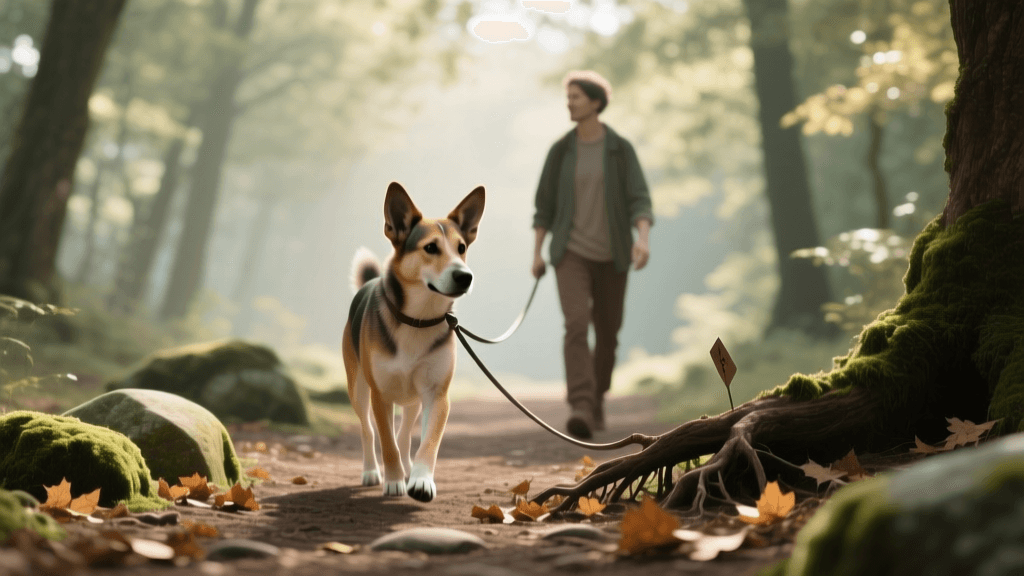
Every dog owner is familiar with the 'sled dog' experience: you step outside, and your dog immediately hits the end of the leash, dragging you down the sidewalk. To understand how to effectively use a no-pull dog harness in 2026, we must first look at the canine brain. Pulling is not an act of dominance or stubbornness; it is a highly reinforced, dopamine-driven behavior. When a dog spots an interesting scent, a squirrel, or a neighboring dog, their brain releases dopamine in anticipation of the reward. If pulling successfully gets them to that reward, the neural pathway is strengthened. The leash becomes a mere physical tether rather than a communication tool. By understanding this dopamine loop, we can shift our training from frustration to strategic behavioral modification.
Thigmotaxis: The Oppositional Reflex Explained
The primary reason traditional collars and back-clip harnesses fail to stop pulling lies in a biological phenomenon known as the oppositional reflex, or thigmotaxis. Dogs are hardwired to push against physical pressure. If you pull back on a leash attached to the back of a harness, your dog's instinctual response is to lean forward and pull harder to maintain their balance and momentum. This reflex is deeply embedded in canine biomechanics. When a dog feels pressure on their chest or shoulders from a back-clip attachment, their brain signals their hindquarters to engage and drive forward. You are essentially fighting millions of years of evolutionary biology every time you try to physically restrain a pulling dog using a back-clip setup.
How Front-Clip Harnesses Hack the Reflex
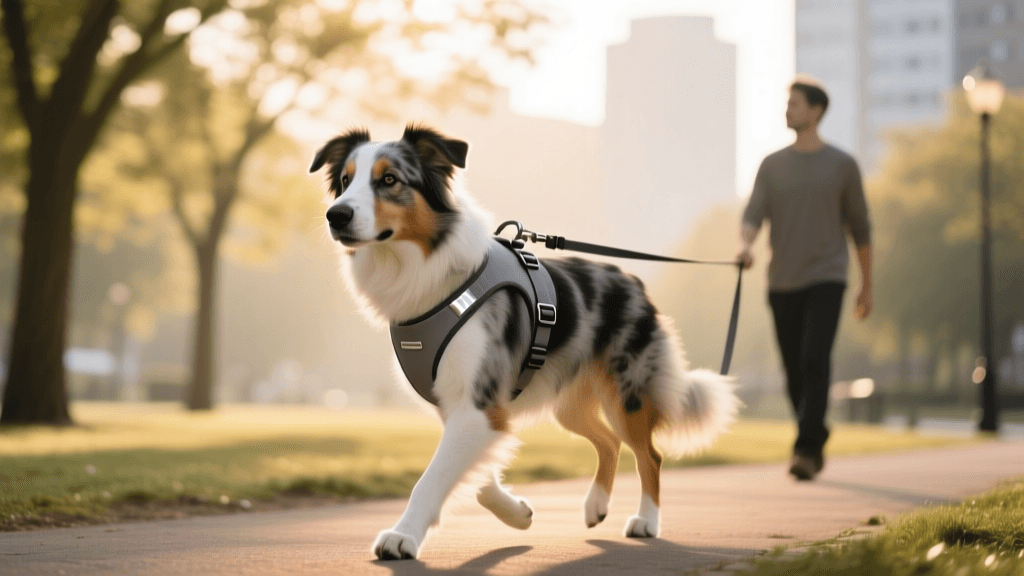
The modern front-clip no-pull harness, which has seen significant ergonomic refinements leading into 2026, bypasses the oppositional reflex entirely by altering the dog's center of gravity. When the leash is attached to the sternum ring and the dog pulls forward, the tension gently rotates the dog's chest and shoulders toward the handler. Instead of meeting resistance that they can push against, the dog finds themselves turned sideways, facing you. This biomechanical shift achieves two crucial psychological goals: first, it physically prevents the forward momentum required to pull; second, and more importantly, it breaks the dog's visual fixation on the trigger (the squirrel, the trash can, the other dog). By turning the dog toward you, it creates a natural window of opportunity to reward eye contact and re-engage their brain in the training process.
Reading Body Language: Frustration vs. Engagement
A no-pull harness is a management tool, not a magic cure. To truly understand your dog, you must learn to read their body language while on the leash. In 2026, certified behaviorists emphasize the importance of recognizing 'trigger stacking'—the cumulative effect of stressors that lead to a reactive outburst.
- Signs of Pulling/Fixation: Forward-pinned ears, hard staring, closed mouth, leaning forward, and a stiff, high tail. The dog is 'over threshold' and unable to process food rewards.
- Signs of Disengagement/Calming: Ears swiveling backward toward the handler, soft eyes, a relaxed or slightly open mouth, and a loose, sweeping tail wag. This is the exact moment the front-clip harness has successfully redirected them, and it is when you must deliver a high-value reward.
2026 Equipment Comparison Chart
Choosing the right equipment requires matching the tool to your dog's specific psychological and biomechanical needs. Below is a comparison of common walking tools based on current veterinary and behavioral consensus.
| Equipment Type | Biomechanical Impact | Psychological Effect | Best Use Case |
|---|---|---|---|
| Back-Clip Harness | Encourages forward momentum and pulling leverage. | Triggers the oppositional reflex; increases drive. | Scent work, tracking, and canine sports. |
| Front-Clip No-Pull Harness | Redirects center of gravity; rotates shoulders inward. | Breaks visual fixation; encourages handler engagement. | Reactive dogs, heavy pullers, loose-leash training. |
| Head Halter | Controls muzzle direction and spinal alignment. | Can cause anxiety or neck strain if unconditioned. | Massive breeds, emergency vet visits, severe reactivity. |
| Flat Collar | Places pressure directly on the trachea and thyroid. | Can cause pain-induced aggression or choking panic. | Holding ID tags only; not recommended for walking. |
Implementing the LIMA Protocol with Your Harness
The American Veterinary Society of Animal Behavior (AVSAB) strongly advocates for the LIMA (Least Intrusive, Minimally Aversive) approach to dog training. Using a no-pull harness aligns perfectly with LIMA because it relies on negative punishment (removing the dog's ability to move forward toward the reward) and positive reinforcement (rewarding the dog when they turn back to you) rather than positive punishment (jerking the leash or causing pain). When your dog hits the end of the leash and the front-clip harness turns them toward you, simply mark the behavior with a 'yes' or a click, and reward them near your knee. This teaches the dog that the leash pressure is a cue to check in with you, rather than a signal to brace for impact.
Step-by-Step Harness Desensitization
Many dogs exhibit 'harness sensitivity,' displaying avoidance behaviors like ducking their head, freezing, or biting at the clips. This is often due to classical conditioning where the harness predicts the frustration of the walk. To counter this in 2026, trainers recommend a desensitization protocol before ever stepping outside:
- The Choice Game: Hold the harness open and let the dog sniff it. Reward any interaction.
- Targeting: Lure the dog's head through the neck hole using a high-value treat (like freeze-dried liver). Do not force it over their ears.
- Duration Building: Clip the harness, feed a continuous stream of treats for 10 seconds, then unclip. Repeat until the dog shows excitement when the harness appears.
- Indoor Walking: Attach the leash and practice walking in your living room. This removes the environmental triggers and allows the dog to understand the mechanics of the front-clip in a low-stress environment.
The Retractable Leash Mistake
According to the ASPCA, proper equipment pairing is vital for safe walks. One of the most common mistakes handlers make is pairing a front-clip no-pull harness with a retractable leash. Retractable leashes maintain constant, light tension on the leash to keep the cord from tangling. However, this constant tension completely confuses the dog's psychological understanding of leash pressure. The dog learns that tension is the 'default' state of walking, rendering the front-clip redirection useless. For effective no-pull training, always use a standard 4-to-6-foot biothane or leather leash to ensure there is a clear, distinct difference between a loose leash (reward) and a tight leash (redirection).
Consistency and the Path Forward
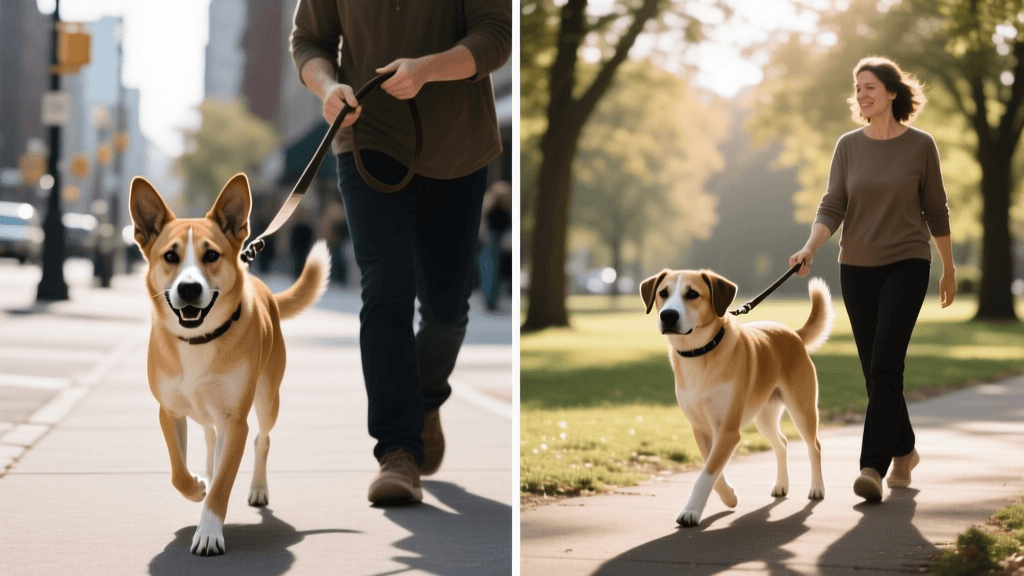
Ultimately, the American Kennel Club (AKC) notes that consistency in rewarding loose-leash walking is paramount to long-term success. A no-pull harness is a sophisticated piece of 2026 canine engineering designed to give you the time and physical leverage needed to communicate with your dog. It removes the physical struggle, lowers the dog's frustration levels, and opens the door for cognitive engagement. By understanding the oppositional reflex, reading your dog's subtle body language, and pairing your front-clip harness with positive reinforcement, you transform the daily walk from a battle of wills into a cooperative, psychologically enriching experience for both you and your dog.
marcus-aldridge
All our authors care for dogs every day — read more of their work on the authors page.