Understanding Your Dog's Stress Signals During a Home Move in 2026
Learn how to decode your dog's stress signals during a residential move in 2026. Expert tips on canine psychology, packing routines, and settling in.
The Canine Brain and Environmental Mapping
For humans, moving to a new home is a logistical hurdle. For dogs, it is a profound psychological disruption. To understand your dog's behavior during a residential move, we must first look at how canines process their environment. Dogs rely heavily on spatial memory and olfactory mapping to feel secure. The canine hippocampus is highly adept at creating a 'cognitive map' of their territory, noting where resources are located, where the family sleeps, and which areas carry familiar scent markers.
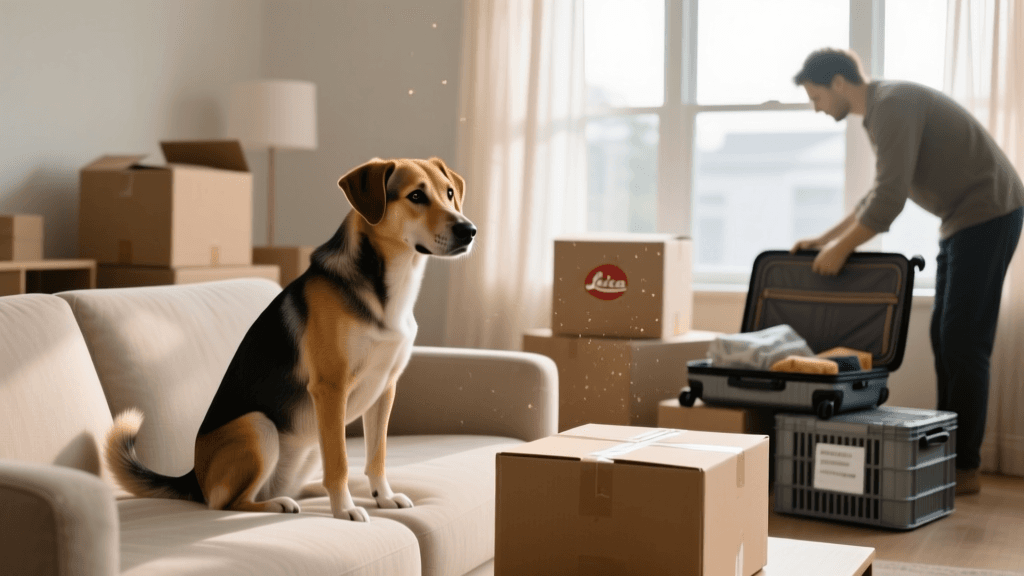
When you begin packing boxes, rearranging furniture, and introducing the chaotic energy of movers, you are systematically dismantling your dog's cognitive map. According to the ASPCA, changes in the physical environment are among the top triggers for canine anxiety. In 2026, veterinary behaviorists emphasize that recognizing the early, subtle signs of this environmental grief is critical to preventing long-term behavioral issues like resource guarding, inappropriate elimination, or noise phobias in the new home.
Decoding Canine Stress Signals During Packing
Many pet owners only recognize stress when their dog is panting heavily, whining, or destroying furniture. However, by the time these overt behaviors appear, the dog's stress threshold has already been breached. Understanding the nuanced body language of a stressed dog allows you to intervene before panic sets in. The American Kennel Club (AKC) categorizes stress signals into subtle, moderate, and severe manifestations.
| Signal Category | Physical Manifestation | Psychological Meaning |
|---|---|---|
| Subtle (Early Warning) | Lip licking, yawning out of context, whale eye (showing whites of eyes), sudden scratching. | The dog is processing mild confusion or discomfort and is attempting to self-soothe or signal appeasement. |
| Moderate (Escalation) | Pacing, refusal to eat treats, excessive shedding, trembling, hiding under furniture. | The dog's cognitive map is failing them. They feel a loss of control and are actively seeking a safe haven. |
| Severe (Threshold Breach) | Frantic barking, destructive chewing, inappropriate elimination, snapping, diarrhea. | The dog is in a state of fight-or-flight. Rational learning is impossible; immediate environmental decompression is required. |
The 2026 Relocation Timeline for Dog Owners
Successfully transitioning your dog requires a phased approach that prioritizes their psychological need for predictability. Here is a modern, actionable timeline to guide your move.
Phase 1: 30 Days Out (Box Desensitization)
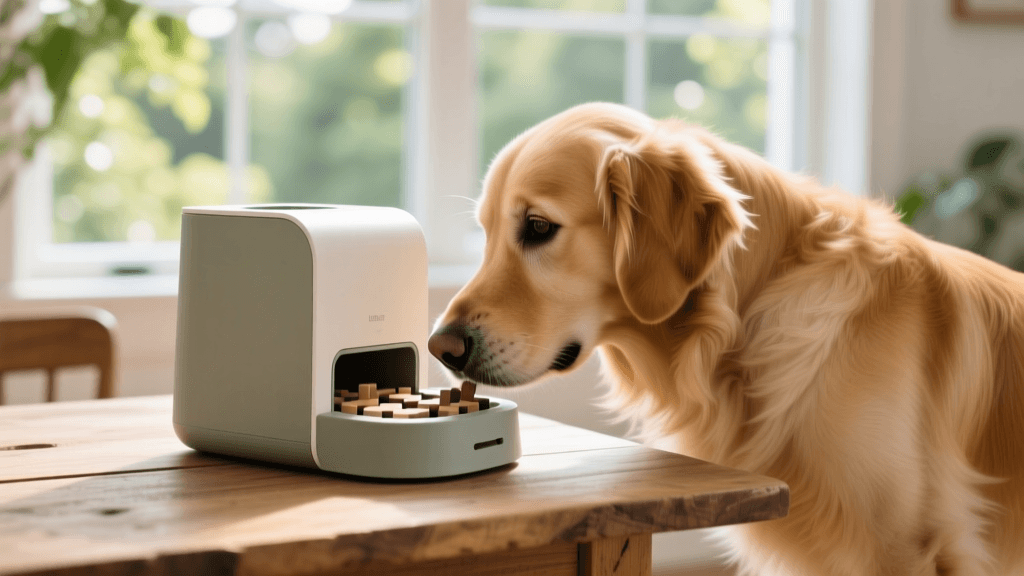
Do not bring all your moving boxes into the house at once. Introduce one or two flattened boxes into the living space and allow your dog to investigate them on their own terms. Pair the presence of boxes with high-value rewards, such as lick mats filled with frozen bone broth or interactive puzzle toys. This classical conditioning helps reframe the visual cue of 'packing' from a predictor of abandonment to a predictor of positive engagement.
Phase 2: 14 Days Out (Olfactory Anchoring and Pheromones)
As your home begins to look unfamiliar, you must anchor your dog's sense of security through scent. Do not wash their primary bedding or favorite plush toys before the move; the accumulation of their natural sebum and dander is a vital comfort mechanism. Additionally, plug in an Adaptil Optimum diffuser in the rooms where your dog spends the most time. The latest 2026 formulations of these synthetic dog-appeasing pheromones have been clinically shown to reduce environmental anxiety by mimicking the calming messages a nursing mother sends to her puppies.
Phase 3: Moving Day (The Safe Zone and Tech)
Moving day is chaotic, and doors will be left open. The Humane Society of the United States strongly advises setting up a 'safe room' or using a secure crate for your dog while movers are actively hauling furniture. Place a clear sign on the door instructing movers not to enter. Furthermore, ensure your dog is wearing a modern GPS tracker. In 2026, devices like the Fi Series 4 GPS Collar or the latest Apple AirTags integrated into breakaway collar sleeves provide real-time location tracking, ensuring that if a spooked dog bolts through an open door, you can recover them within minutes.
Phase 4: The First 72 Hours (Decompression)
When you arrive at the new home, do not give your dog free roam of the entire property. This can lead to sensory overload and territorial anxiety. Instead, set up a 'base camp' in one quiet room, complete with their unwashed bedding, water, and familiar toys. Allow them to decompress in this single room for the first 24 to 48 hours, taking them outside on a long line for sniffari walks to map the new outdoor perimeter. Gradually introduce them to the rest of the house one room at a time over the next few days.
Navigating Multi-Dog Household Relocations
If you share your home with multiple dogs, a move can temporarily destabilize the established pack hierarchy. In a familiar environment, dogs have implicit agreements about who sleeps where and who gets access to which resources. A new home erases these boundaries, which can trigger sudden resource guarding or spatial aggression. To mitigate this, feed your dogs in separate, closed rooms during the first two weeks in the new house. Provide multiple, widely spaced water stations and resting areas to eliminate competition. Supervise all interactions closely, and be prepared to separate them with baby gates if you notice stiff body language or hard staring over prime resting spots.
When to Seek Professional Behavioral Help
Most dogs will exhibit mild to moderate stress during a move and will naturally decompress within two to four weeks. However, if your dog exhibits severe stress signals—such as refusing to eat for more than 24 hours, displaying uncharacteristic aggression, or engaging in compulsive behaviors like flank sucking or shadow chasing—it is time to consult a professional. In 2026, the average cost for a consultation with a Certified Applied Animal Behaviorist (CAAB) or a Veterinary Behaviorist ranges from $250 to $450. Many of these experts now offer comprehensive virtual environmental assessments via high-definition video calls, allowing them to evaluate your new home's layout and provide tailored spatial management plans without adding the stress of an in-person visit to your dog's already overwhelmed schedule.
Ultimately, understanding your dog's stress signals during a home move is about empathy and proactive management. By respecting their cognitive need for routine, anchoring them with familiar scents, and utilizing modern tracking and calming technology, you can transform a potentially traumatic life transition into a manageable adventure for your best friend.
priya-sutaria
All our authors care for dogs every day — read more of their work on the authors page.