No Pull Dog Harness Psychology: Stop Pulling in 2026
Discover the canine psychology behind leash pulling and how a front-clip no pull dog harness disrupts the opposition reflex for better 2026 walks.
The Canine Opposition Reflex: Why Your Dog Pulls
If you have ever felt like your dog is trying to tow you down the street like a sled dog, you are not alone. Leash pulling is one of the most common behavioral challenges reported by dog owners in 2026. However, to truly understand why dogs pull, we must look beyond the outdated concept of 'stubbornness' or 'dominance.' The root cause lies in a deeply ingrained psychological and physiological phenomenon known as the opposition reflex (or thigmotaxis).
The opposition reflex is an instinctive survival mechanism. When a dog feels pressure against its chest or back, its natural, hardwired response is to push forward against that pressure. This is the exact same instinct that allows sled dogs to pull heavy loads across the snow. When you attach a leash to a traditional back-clip harness or a collar, any tension on the leash applies pressure to the dog's body, triggering the reflex to lean in and pull harder. According to the American Kennel Club, this reflex is completely involuntary, meaning your dog isn't necessarily trying to defy you; their nervous system is simply reacting to physical tension.
Biomechanics vs. Psychology: How No Pull Dog Harnesses Work
To overcome the opposition reflex without resorting to aversive, pain-based tools, modern canine behavioral science relies on biomechanical redirection. This is where the front-clip no pull dog harness becomes an essential tool in your behavioral toolkit.
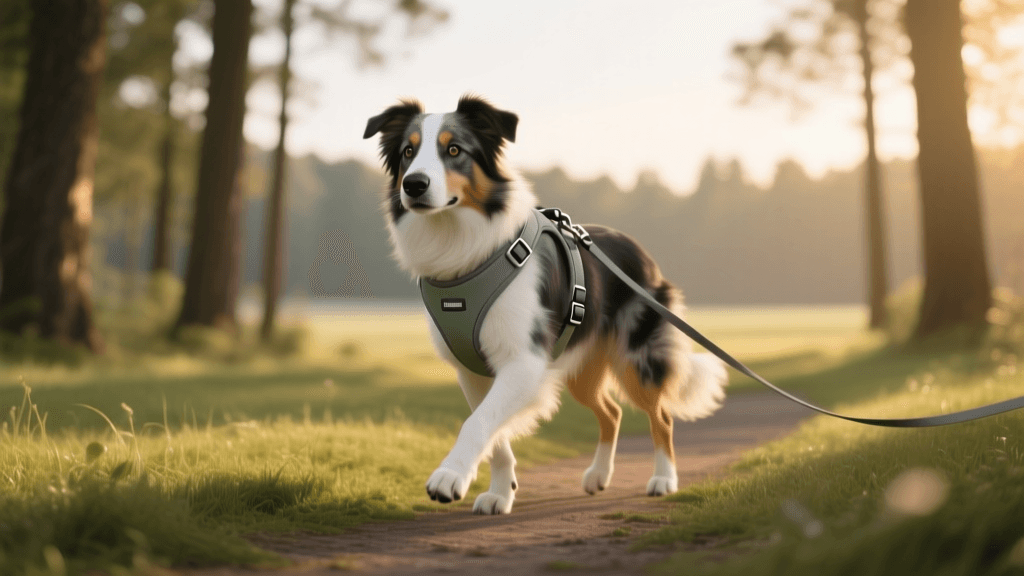
Unlike back-clip harnesses that distribute pressure across the sternum and encourage forward momentum, a front-clip harness features a D-ring located on the dog's chest strap. When the dog pulls forward and the leash catches, the pressure is applied to the front of the shoulder and chest. Because the pivot point is now in front of the dog's center of gravity, the physical tension gently turns the dog's body back toward the handler.
Psychologically, this breaks the dog's forward focus. The opposition reflex is neutralized because pushing forward results in turning sideways, which is biomechanically inefficient and confusing to the canine brain. By pairing this physical redirection with positive reinforcement, you can rewire your dog's walking behavior safely and humanely, aligning with the American Veterinary Society of Animal Behavior (AVSAB) guidelines on reward-based training methods.
Top Front-Clip No Pull Dog Harnesses for 2026
Not all harnesses are created equal. In 2026, the best no pull dog harnesses prioritize anatomical freedom, breathable materials, and dual-clip functionality for transitional training. Here are the top models currently recommended by canine behaviorists:
1. 2 Hounds Design Freedom No-Pull Harness (2026 Edition)
- Price: $42.99
- Best For: Strong pullers and escape artists
- Behavioral Feature: Features a patented Swiss velvet-lined chest strap that prevents chafing, reducing the anxiety and irritation that can exacerbate reactive pulling. The dual-clip design allows you to attach the leash to both the front and back rings simultaneously, offering nuanced steering control.
2. Rabbitgoo 3M Reflective No-Pull Harness
- Price: $24.99
- Best For: Broad-chested breeds (Boxers, Bulldogs) and budget-conscious owners
- Behavioral Feature: The Y-shaped chest design ensures the harness sits below the trachea, avoiding the gag reflex that can trigger panic-pulling in brachycephalic breeds. The lightweight mesh reduces sensory overload for dogs sensitive to heavy gear.
3. Kurgo Tru-Fit Smart Harness (Crash-Tested 2026 Update)
- Price: $89.99
- Best For: Active hiking dogs and car travel
- Behavioral Feature: The padded chest plate distributes pressure evenly across the sternum during sudden stops or lunges. This prevents the startle response that often leads to leash reactivity when a dog spots a squirrel and hits the end of the leash.
Comparison Chart: Harness Types and Behavioral Impact
Understanding how different equipment affects your dog's psychology and anatomy is crucial for long-term behavioral modification.
| Harness Style | Opposition Reflex Trigger | Gait Restriction Risk | Best Behavioral Use Case |
|---|---|---|---|
| Back-Clip Harness | High (Encourages pulling) | Low (If fitted properly) | Scent work, tracking, and relaxed sniffaris |
| Front-Clip Harness | Low (Redirects momentum) | Moderate (Can alter shoulder extension) | Loose-leash walking training, reactive dog management |
| Head Halter | None (Controls the snout) | None (Does not affect body gait) | Severe lunging, extreme leash reactivity (requires desensitization) |
| Prong/Choke Collar | High (Pain overrides reflex) | N/A (Neck injury risk) | Not recommended (Increases fear and aggression) |
Step-by-Step Training Protocol: Pairing the Harness with Positive Reinforcement
A no pull dog harness is a management tool, not a magic cure. To achieve permanent behavioral change in 2026, you must pair the harness with a structured training protocol. The goal is to teach your dog that a loose leash equals forward movement, while a tight leash equals a pause.
The 'U-Turn' Method for Leash Reactivity
- The Setup: Attach a 6-foot biothane or leather leash to the front D-ring of the harness. Avoid retractable leashes, as they teach dogs that pulling extends the line.
- The Trigger: As soon as your dog surges forward and you feel tension on the leash, immediately stop walking. Do not yank the leash back.
- The Redirect: Cheerfully say 'Let's go!' and pivot 180 degrees, walking in the opposite direction. The front-clip will naturally turn your dog's body toward you.
- The Reward: The moment your dog catches up to you and the leash forms a 'J' shape (loose), mark the behavior with a 'Yes!' and deliver a high-value treat (like freeze-dried liver or chicken) directly at your pant seam. This reinforces the 'heel' position.
- Timing is Everything: The treat must be delivered within 0.5 seconds of the leash going slack. Delayed rewards confuse the canine brain and reinforce the wrong behavior.
Common Fitting Mistakes That Trigger Pulling
Even the best behavioral tools will fail if they cause physical discomfort. According to veterinary experts at VCA Animal Hospitals, improper harness fitting can lead to chafing, restricted shoulder extension, and altered canine gait. If a dog is in pain, they will pull forward to escape the discomfort of the gear.
The Two-Finger Rule
When fitting your no pull dog harness, you should be able to slide exactly two fingers under any strap (neck, chest, and belly). If you can fit more, the harness is too loose and risks the dog slipping out during a startle response. If you can fit fewer, the harness is restricting blood flow and lymphatic drainage, causing anxiety and pulling.
Checking Shoulder Clearance
Many cheap harnesses feature a horizontal strap that cuts directly across the dog's scapula (shoulder blade). This restricts the natural forward reach of the front legs. Over time, the dog will alter their gait, taking shorter, choppier steps, which shifts their weight backward and makes them feel unbalanced. To compensate, they pull forward on the leash. Always opt for a Y-shaped front harness that sits clear of the shoulder joints, allowing full biomechanical extension.
Conclusion: Building a Bond Based on Understanding
Addressing leash pulling requires empathy and an understanding of canine biomechanics. By recognizing the opposition reflex and utilizing a well-fitted front-clip no pull dog harness, you remove the physical trigger that causes your dog to pull. Combine this with consistent, reward-based training, and your daily walks in 2026 will transform from a frustrating tug-of-war into a harmonious, bonding experience. Remember, the goal is not just to stop the pulling, but to help your dog feel secure, balanced, and connected to you on the other end of the leash.
robin-maitland
All our authors care for dogs every day — read more of their work on the authors page.