Top 5 Interactive Puzzle Feeders for Rescue Dogs 2026
Discover the top Nina Ottosson puzzle feeders to mentally enrich and calm your newly adopted rescue dog. Expert tips for 2026 setups and training.
The Science of Mental Enrichment for New Dogs
Bringing a new dog home is one of the most exciting milestones in life, but it can also be a period of immense stress for your new companion. When getting a dog, most new owners immediately focus on physical exercise, assuming that a long walk or a vigorous game of fetch will settle their new pet. However, modern veterinary behaviorists emphasize that mental enrichment is just as critical as physical exertion, especially during the transition period. According to training experts at the American Kennel Club, just fifteen minutes of focused mental stimulation and scent work can be as tiring for a dog as a mile-long run. Cognitive fatigue helps lower cortisol levels, promotes restful sleep, and builds a foundation of confidence in a brand-new environment.
Interactive puzzle feeders are not merely toys; they are essential tools for canine cognitive development. By requiring your dog to manipulate levers, slide blocks, or lift flaps to access their daily kibble or high-value treats, you are tapping into their natural foraging instincts. In 2026, the market for canine enrichment has evolved significantly, offering highly durable, BPA-free, and scientifically designed puzzles that cater to every skill level. Investing in the right puzzle feeders before your dog arrives is one of the smartest preparations you can make.
The Decompression Phase: Using Puzzles to Build Confidence
When adopting a rescue or transitioning a dog from a breeder, you must navigate the well-known "3-3-3 Rule" of decompression. The first three days are about decompressing, the first three weeks are about learning your routine, and the first three months are about building deep trust. During those critical first 72 hours, your dog may feel overwhelmed by new sounds, smells, and spaces. The ASPCA recommends providing safe, quiet spaces where dogs can engage in independent, low-stress activities.
Puzzle games are perfect for this decompression phase. Unlike high-arousal games like tug-of-war or chasing a ball, which can sometimes overstimulate a nervous dog, puzzle feeders encourage quiet focus and licking behaviors. Licking and sniffing release endorphins in the canine brain, acting as a natural self-soothing mechanism. By introducing a low-level puzzle feeder in their designated "safe zone" or crate, you allow your new dog to build confidence through problem-solving without the pressure of direct human interaction.
Top 5 Interactive Puzzle Feeders for Your New Arrival
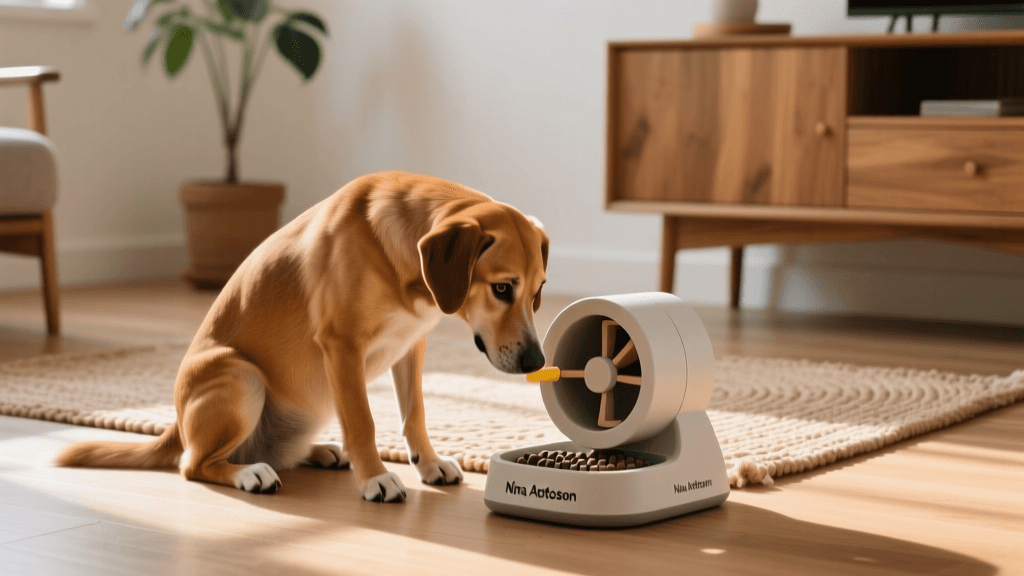
To help you prepare your home, we have evaluated the most effective puzzle feeders available in 2026. The Nina Ottosson line remains the gold standard for durable, progressive cognitive enrichment, while a few other specialized tools round out a complete enrichment kit.
| Product Name | Difficulty Level | Best For | 2026 Est. Price |
|---|---|---|---|
| Nina Ottosson Dog Brick | Level 2 (Intermediate) | Dogs with basic puzzle experience | $32.99 |
| Nina Ottosson Treat Tumble | Level 1 (Beginner) | First-time puzzle solvers and puppies | $18.99 |
| KONG Classic (Red/Black) | Variable (Stuffable) | Independent soothing and crate training | $16.50 |
| Outward Hound Hide-A-Squirrel | Level 1 (Plush) | Prey-drive engagement and gentle play | $21.99 |
| Nina Ottosson MultiPuzzle | Level 4 (Expert) | Highly intelligent, easily bored breeds | $49.99 |
1. Nina Ottosson Dog Brick (Level 2)
The Dog Brick is a staple in the canine enrichment community. It features a combination of flip lids, sliding blocks, and removable bone covers. For a newly adopted dog that has never seen a puzzle before, you can start by leaving all the lids open and simply placing treats in the wells. As your dog gains confidence over the first few weeks, you can begin closing the lids and requiring them to use their paws and snouts to slide the blocks. The 2026 manufacturing updates have made the plastic even more resistant to heavy chewing, though supervision is always required.
2. Nina Ottosson Treat Tumble (Level 1)
If your new dog is hesitant or easily frustrated, the Treat Tumble is the perfect entry point. It features internal ramps and pegs that require the dog to nudge and tilt the toy to release kibble. It is incredibly easy to clean and does not have any removable parts, making it a highly safe option for dogs that might be prone to swallowing small pieces when stressed.
3. KONG Classic (Red or Black Rubber)
While technically a stuffable toy rather than a rigid puzzle, the KONG Classic is indispensable for mental enrichment. By stuffing it with a mixture of wet food, plain pumpkin puree, and kibble, then freezing it overnight, you create a long-lasting licking puzzle. This is exceptionally useful for keeping a new dog occupied in their crate while you work or cook dinner, preventing separation anxiety from taking root early on.
4. Outward Hound Hide-A-Squirrel
For dogs that are highly motivated by prey drive rather than food, plush puzzles offer a different type of mental stimulation. The dog must figure out how to extract the squeaky squirrels from the plush tree trunk. This satisfies their natural hunting instincts in a controlled, indoor environment and can be a great bonding game to play together on the rug during the first week home.
5. Nina Ottosson MultiPuzzle (Level 4)
If you are adopting a highly intelligent working breed like a Border Collie, Belgian Malinois, or a Poodle mix, basic puzzles will quickly bore them. The MultiPuzzle features multiple layers of spinning wheels, sliding covers, and locking mechanisms. While you will not use this on day one, having it in your enrichment toolkit ensures you can scale up the cognitive challenge as your dog settles in and masters easier games.
Setting Up Your Day-One Enrichment Zone
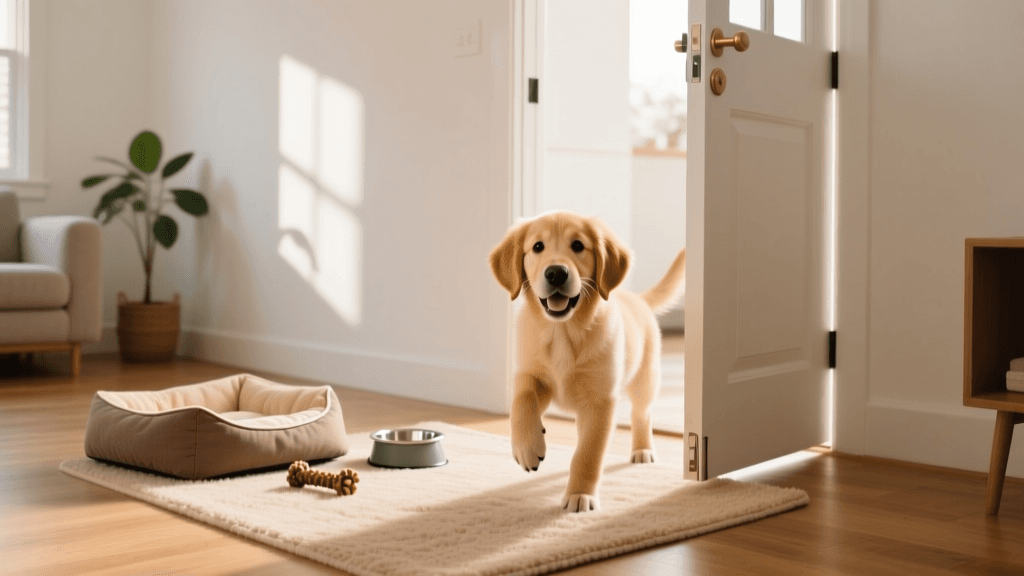
How you introduce these tools is just as important as the tools themselves. When your dog first arrives, set up a dedicated "Enrichment Zone" in a quiet corner of your living room or their designated pen. Follow these steps for a successful introduction:
- Start Easy: Never frustrate a new dog. On day one, make the puzzle incredibly easy to solve. Place high-value treats directly on top of the puzzle or in open compartments so they immediately understand that the toy yields food.
- Use High-Value Currency: Dry kibble might not be motivating enough in a stressful new environment. Use boiled chicken breast, freeze-dried beef liver, or small pieces of string cheese to make the puzzle irresistible.
- Supervise Closely: Always watch your dog during their first few puzzle sessions. Some dogs may try to chew through the plastic rather than solve the puzzle. If they become frustrated or destructive, calmly remove the toy and try again later with an easier setup.
- Praise Problem Solving: When your dog successfully slides a block or lifts a lid, offer calm, verbal praise. Avoid overly excited clapping, which might startle a decompressing rescue dog.
High-Value Treat Recipes for 2026
To keep your puzzle feeders exciting, rotate the fillings. Here are three veterinarian-approved, easily digestible recipes perfect for stuffing KONGs or smearing onto lick mats alongside your puzzle games:
- The Calming Blend: Mix plain, unsweetened Greek yogurt with a spoonful of pureed pumpkin and a dash of chamomile tea (cooled and brewed weakly). Freeze inside a KONG for a soothing, gut-friendly treat.
- The High-Protein Forage: Combine your dog's regular kibble with low-sodium bone broth and a spoonful of unsalted peanut butter (ensure it is 100% xylitol-free). Pour into puzzle wells and freeze.
- The Fishy Focus: Mash canned sardines (packed in water, no salt added) with a little plain mashed sweet potato. The strong scent is highly stimulating for a dog's olfactory senses, encouraging deep sniffing and engagement.
Safety, Hygiene, and Supervision Protocols
As the pet care industry has advanced, so have safety standards. In 2026, reputable brands like Nina Ottosson and KONG strictly adhere to non-toxic, BPA-free, and phthalate-free manufacturing processes. However, hygiene remains a vital responsibility for the owner. Puzzle feeders with deep crevices can harbor bacteria and mold if not cleaned properly after every use.
Most hard plastic puzzles are now top-rack dishwasher safe, but hand washing with warm, soapy water and a dedicated bottle brush ensures that no food particles are left behind in the sliding tracks. Always inspect the plastic for deep teeth marks or cracking. If a puzzle becomes heavily chewed, discard it immediately to prevent your dog from ingesting sharp plastic shards.
"Mental enrichment is not a luxury; it is a biological necessity for dogs. Providing structured puzzle games during the transition into a new home dramatically reduces the incidence of destructive behaviors and accelerates the bonding process between dog and owner." - Fear Free Pets Certified Behavior Guidelines.
By thoughtfully selecting and introducing the right interactive puzzle feeders, you are doing more than just feeding your new dog. You are communicating with them in their native language of scent and foraging, building a foundation of trust, and setting the stage for a happy, well-adjusted life together in their forever home.
anouk-beaumont
All our authors care for dogs every day — read more of their work on the authors page.