The First 24 Hours With a New Dog: Top Questions Answered
Discover answers to Google's most-asked questions about the first 24 hours with a new dog. Learn essential tips on feeding, sleeping, and potty training.
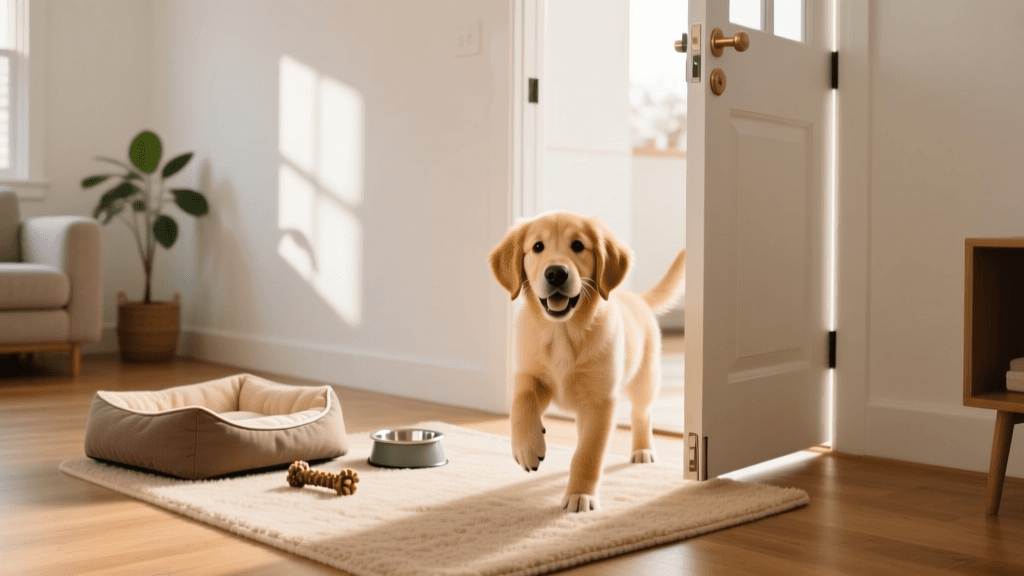
Bringing a new dog home is one of the most exciting milestones in life, but it can also be incredibly overwhelming. As you prepare to welcome your new furry friend, it is completely normal to feel a flurry of anxiety. In fact, thousands of new pet parents turn to search engines every single day looking for immediate guidance. To help you navigate this monumental transition, we have analyzed Google's 'People Also Ask' and top search queries to compile the ultimate FAQ for the first 24 hours with your new dog. From potty training schedules to midnight whining, here are the most-asked questions about day one, answered by experts.
What Should I Do the Moment We Get Home?
The biggest mistake new owners make on day one is treating the dog's arrival like a major social event. The first 24 hours should be quiet, calm, and highly structured. When you first pull into your driveway, do not carry your dog inside immediately. Instead, leash them and take them directly to their designated outdoor potty spot. This sets an immediate expectation and allows them to relieve themselves after a stressful car ride.
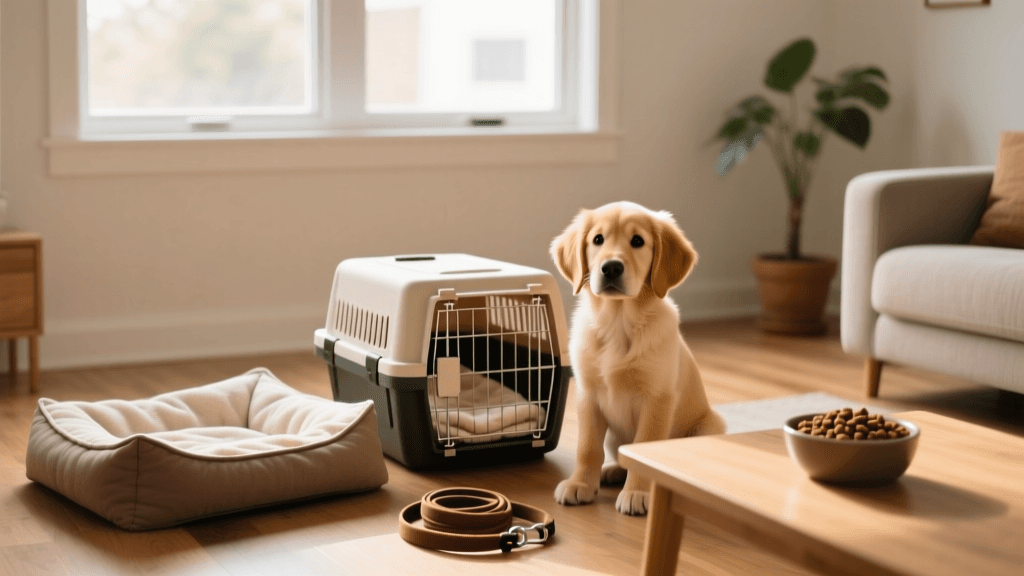
Once they have done their business, bring them inside and lead them straight to their 'safe space'—a quiet room or a properly sized crate equipped with water and a comfortable bed. According to The Humane Society, allowing a new dog to roam the entire house on day one can lead to overstimulation, anxiety, and unwanted potty accidents. Keep the environment low-key, limit introductions to immediate household members, and resist the urge to invite friends and neighbors over to meet the new pup until they have fully decompressed.
How Often Should a New Puppy or Dog Go Potty on Day One?
Potty training begins the second your dog's paws touch your property. The frequency of potty breaks depends heavily on the age of your new dog. For young puppies (8 to 12 weeks old), their bladder control is minimal. You will need to take them outside every 1 to 2 hours, as well as immediately after they eat, drink, wake up from a nap, or finish a play session. For adult dogs or older rescues, a potty break every 4 to 6 hours is generally sufficient on the first day, though you should still take them out after every major transition or meal.
Accidents will happen, and how you handle them on day one sets the tone for the future. Never rub a dog's nose in an accident or yell at them, as this only teaches them to hide from you when they need to eliminate. Instead, interrupt the act with a neutral 'oops,' carry or lead them outside to finish, and reward them heavily with high-value treats like boiled chicken or freeze-dried liver when they finish outdoors. Always clean indoor accidents with an enzymatic cleaner like Nature's Miracle Advanced Stain and Odor Eliminator to completely break down the uric acid crystals and prevent repeat offenses.
What and When Should I Feed My New Dog?
One of the most Googled questions revolves around a dog's diet on day one. The golden rule of bringing a new dog home is to maintain their current diet for at least the first week. Sudden changes in food, combined with the immense stress of moving to a new environment, is a recipe for severe gastrointestinal upset, including diarrhea and vomiting. Ask the shelter, rescue, or breeder for a small bag of the exact food the dog has been eating, and feed them their normal portion size on their regular schedule.
If you plan to switch to a higher-quality or different brand of food, you must do so gradually over a 7-day period. Below is the veterinarian-recommended transition schedule to ensure your dog's digestive system adapts smoothly, a method heavily supported by the ASPCA.
| Transition Day | Old Food Ratio | New Food Ratio |
|---|---|---|
| Days 1-2 | 75% | 25% |
| Days 3-4 | 50% | 50% |
| Days 5-6 | 25% | 75% |
| Day 7 | 0% | 100% |
On the first night, feed your dog their dinner at least three hours before bedtime. This gives them ample time to digest their meal and eliminate before settling in for the night, reducing the likelihood of midnight potty emergencies.
Where Should My New Dog Sleep the First Night?
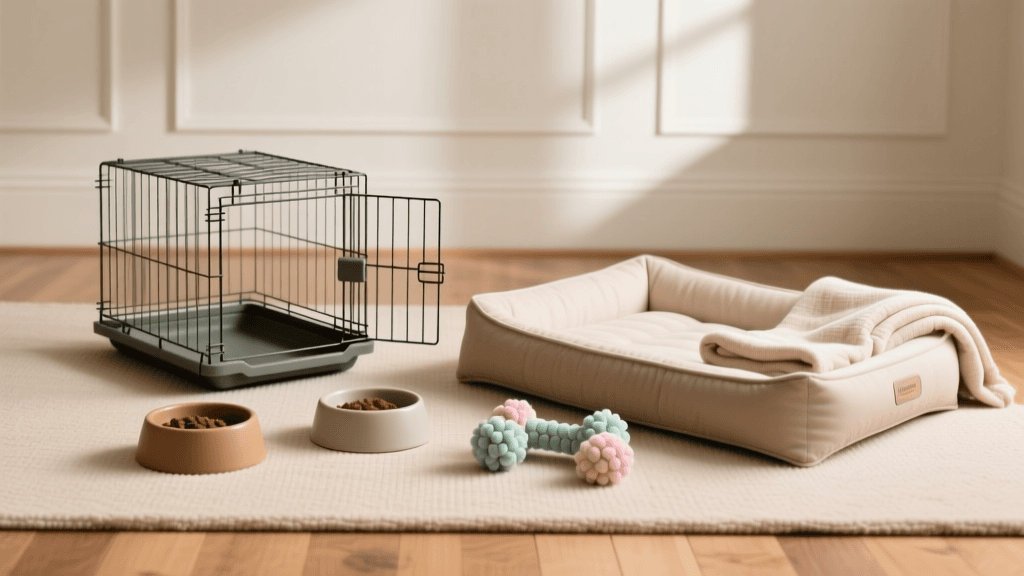
Where your dog sleeps on the first night is a highly debated topic, but the consensus among professional trainers is that a crate is the safest and most effective option. A crate mimics a den-like environment, providing security while preventing the dog from wandering into hazardous areas or chewing on baseboards while you sleep. According to the American Kennel Club (AKC), the crate should be large enough for the dog to stand up, turn around, and lie down comfortably, but not so large that they can designate one corner for sleeping and another for eliminating. If you have a large crate for a growing puppy, use a movable divider panel to adjust the space.
Place the crate in your bedroom for the first few nights. Your dog has just been separated from their littermates or previous family, and being isolated in a dark laundry room will trigger severe separation anxiety and panic. To soothe them, consider using a product like the Snuggle Puppy Behavioral Aid, which includes a simulated heartbeat and heat pack to mimic the feeling of sleeping next to a mother. If your dog whines in the middle of the night, wait a few moments to see if they settle. If the whining persists, take them outside for a boring, silent potty break, and then return them immediately to the crate.
When Should I Introduce My New Dog to Other Pets or Kids?
Patience is your greatest asset when integrating a new dog into a busy household. Animal behaviorists widely advocate for the '3-3-3 Rule' of rescue dog adoption: 3 days to decompress, 3 weeks to learn your routine, and 3 months to truly feel at home. During the first 3 days, your dog is in survival mode. They are overwhelmed by new smells, sounds, and expectations.
Because of this, you should avoid introducing your new dog to resident pets or young children on day one. Instead, utilize 'scent swapping.' Rub a clean towel on your new dog and let your resident cat or dog sniff it, and vice versa. This allows them to become familiar with each other's scent without the pressure of a face-to-face encounter. When you do decide to introduce them to children, enforce strict boundaries: children must remain seated and calm, and the dog should always have a clear escape route to their safe space. Never force an interaction, and always supervise closely.
Should I Bathe My Dog on the First Day?
Unless your new dog has arrived with a severe flea infestation, has been sprayed by a skunk, or is covered in a hazardous substance, you should absolutely not bathe them on the first day. Bathing is a highly stressful experience for many dogs, and adding a forced bath to the trauma of relocating will severely damage the trust you are trying to build. Furthermore, shelter dogs often have compromised immune systems or dry, irritated skin from stress; stripping their coat of natural oils with shampoo on day one can exacerbate dermatological issues. Wait at least one to two weeks until your dog feels secure in their new environment before attempting their first bath.
The Ultimate First-Day Shopping Checklist
To ensure you are fully prepared before your dog crosses the threshold, verify that you have the following essentials ready in your home. Expect to spend between $150 and $300 on these initial day-one necessities:
- Properly Sized Crate: A wire or plastic crate (e.g., MidWest iCrate) with a divider for growing puppies.
- Enzymatic Cleaner: Nature's Miracle or Rocco & Roxie to completely erase indoor potty mistakes.
- Chew Toys: A Kong Classic stuffed with dog-safe peanut butter to keep them occupied and relieve teething pain.
- Escape-Proof Harness: A front-clip or dual-clip harness (e.g., Ruffwear Front Range) to prevent slipping and pulling on the leash.
- Long Training Lead: A 15-to-30-foot lightweight leash to practice recall in your yard safely.
- Calming Aids: Adaptil pheromone diffusers or a Snuggle Puppy to ease the transition into the new home.
By anticipating these common questions and preparing your home accordingly, you set the foundation for a lifetime of trust, love, and excellent behavior with your new canine companion.
priya-sutaria
All our authors care for dogs every day — read more of their work on the authors page.