Puppy Bonding 2026: Hand-Feeding & Nina Ottosson Puzzle Play
Discover how hand-feeding and the Nina Ottosson Puppy Brick build deep trust and focus during your puppy's critical first months in 2026.
The Science of Puppy Bonding in the First 16 Weeks
Welcoming a new puppy into your home is one of life’s greatest joys, but building a profound, unbreakable bond requires more than just cuddles on the couch. In 2026, modern canine behaviorists emphasize that true relationship building is rooted in cooperative engagement, trust, and clear communication. The first 16 weeks of a puppy’s life represent a critical developmental window where their neural pathways are highly plastic. During this time, every interaction shapes how they perceive the world and, most importantly, how they perceive you.
According to the American Veterinary Society of Animal Behavior (AVSAB), early positive experiences are paramount for behavioral health. When you actively participate in your puppy's enrichment and feeding routines, you trigger the release of oxytocin—the 'bonding hormone'—in both the canine and human brain. This neurochemical response transforms you from a mere provider of resources into a trusted partner and secure base from which your puppy can confidently explore the world.
Why Hand-Feeding is the Ultimate Trust Builder in 2026
One of the most outdated practices in puppy rearing is the concept of 'free-feeding' or simply dropping a bowl of kibble on the floor and walking away. In 2026, top-tier dog trainers and veterinary behaviorists advocate for hand-feeding, especially during the first few months. By utilizing your puppy's daily caloric intake as a training and bonding currency, you establish yourself as the source of all good things. This does not mean your puppy will become overly dependent; rather, it builds a foundation of eager engagement and focus.
Step 1: The Name and Eye-Contact Game
Begin your hand-feeding journey in a low-distraction environment. Measure out your puppy’s daily ration of high-quality, age-appropriate kibble. Hold a single piece of kibble near your face, right between your eyes. The moment your puppy looks up and makes eye contact, mark the behavior with a gentle 'yes' or a clicker, and immediately deliver the food. This simple exercise teaches your puppy that checking in with you is highly rewarding, laying the groundwork for reliable recall and leash manners later in life.
Step 2: Luring and Shaping Basic Behaviors
Use your kibble to lure your puppy into foundational positions like 'sit,' 'down,' and 'settle.' Because the food is coming directly from your hand, your puppy learns to follow your physical cues with precision. Over time, you can transition from luring to rewarding, where the puppy performs the behavior on a hand signal or verbal cue before receiving the kibble from your treat pouch. This shift from bribery to cooperative working is a massive milestone in your relationship.
Cooperative Play with the Nina Ottosson Puppy Brick
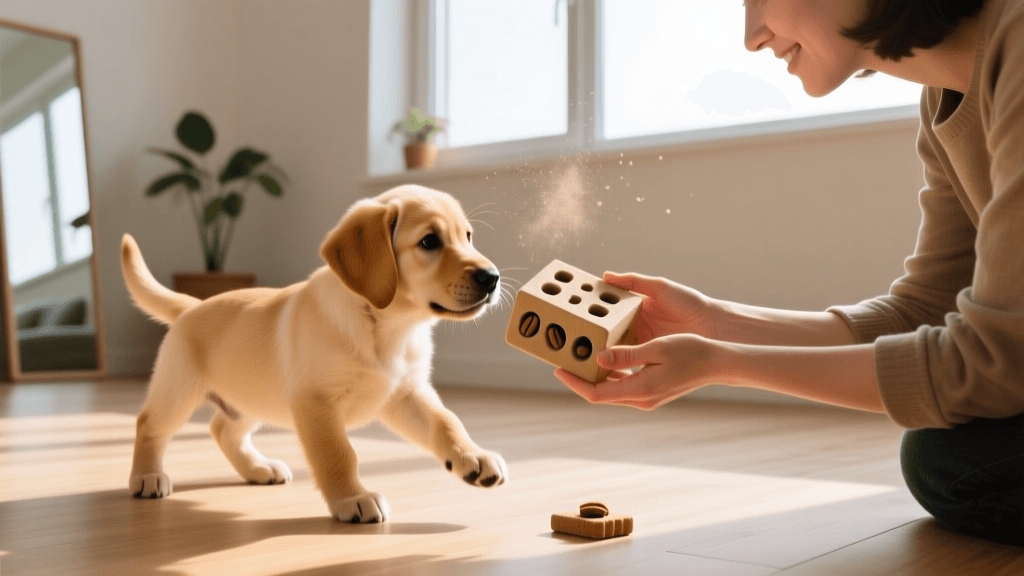
While hand-feeding builds focus, cooperative puzzle play builds confidence and problem-solving skills. The Nina Ottosson Dog Brick Interactive Puzzle is widely considered the gold standard for early canine enrichment. However, a common mistake new owners make is handing the puzzle to the puppy and leaving the room to 'keep them busy.' To use the Puppy Brick as a bonding tool, you must engage in scaffolding—a cooperative learning technique where you actively help your puppy succeed.
Setting Up the Puppy Brick for Success
The Dog Brick features three types of interactive compartments: flip lids, sliding bone covers, and removable white bone blocks. For an 8-to-12-week-old puppy, the puzzle should be set to the easiest difficulty. Leave the sliding compartments completely open and only place the removable white bones halfway over the treat wells. Sit on the floor with your puppy. When they sniff and paw at the bone, offer gentle verbal encouragement. If they struggle, gently nudge the bone yourself to show them the mechanics, then let them complete the final movement to access the high-value reward (like a dab of puppy-safe peanut butter or a piece of boiled chicken).
Celebrating the 'Aha!' Moment
When your puppy successfully removes a block or slides a lid, celebrate with genuine enthusiasm. Your positive emotional response reinforces their confidence. By playing with them rather than just giving them the toy, you become associated with the thrill of the hunt and the satisfaction of the reward. As your puppy matures into the 14-to-16-week range, you can increase the difficulty by fully covering the wells and utilizing the flip lids, always stepping in to offer a hint if they show signs of frustration.
Reading Canine Consent and Calming Signals
A vital component of relationship building is respecting your puppy's boundaries. Puppies communicate stress and overstimulation through 'calming signals'—subtle body language cues designed to de-escalate tension. During bonding sessions, watch for lip licking, yawning when not tired, turning the head away, or a sudden urge to scratch. If your puppy displays these signals during hand-feeding or puzzle play, it is a polite request for a break. Respecting these signals by ending the session and giving them space builds immense trust. They learn that you listen to their communication, which drastically reduces anxiety and fear-based behaviors.
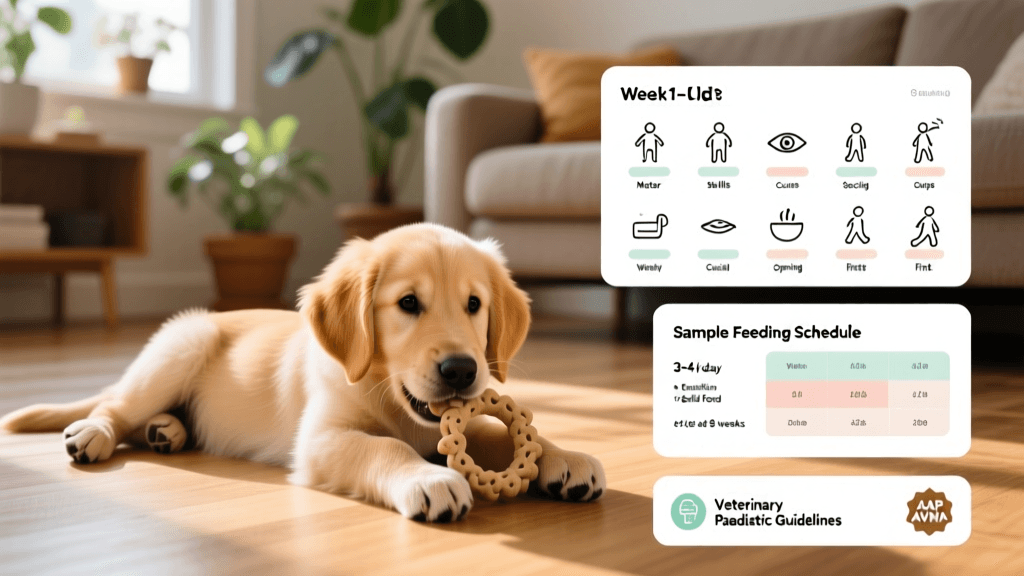
8-Week to 16-Week Bonding & Enrichment Schedule
Consistency is the bedrock of trust. Below is a structured weekly schedule designed to integrate hand-feeding and cooperative puzzle play into your daily routine, ensuring steady developmental progress.
| Age (Weeks) | Bonding Focus | Hand-Feeding Goal | Puzzle Play Goal (Nina Ottosson Brick) |
|---|---|---|---|
| 8 - 9 Weeks | Building Security & Name Recognition | 100% of meals fed by hand for eye contact and name games. | Easiest setting. No sliding blocks. Remove white bones together. High-value treats only. |
| 10 - 11 Weeks | Introduction to Luring & Shaping | Use kibble to lure 'sit' and 'down'. Reward checking in on walks. | Introduce sliding bone covers (leave half open). Praise heavily for pawing/nosing. |
| 12 - 13 Weeks | Impulse Control & Focus | Practice 'wait' before releasing to eat kibble from an open palm. | Full sliding covers. Introduce flip lids. Scaffold if frustration occurs. |
| 14 - 16 Weeks | Environmental Proofing | Hand-feed in new environments (yard, quiet park) to maintain focus. | Maximum difficulty. Use kibble instead of high-value treats to encourage foraging. |
Common Bonding Mistakes to Avoid
- Overstimulation: Puppies need up to 18-20 hours of sleep a day. Forcing play when they are exhausted damages trust. Always let a sleeping puppy lie.
- Using Punishment: Scolding a puppy for chewing the wrong item or having a potty accident creates fear, not respect. In 2026, force-free, positive reinforcement is the undisputed standard for behavioral health.
- Inconsistency: If you allow your puppy on the furniture one day but scold them the next, you create confusion. Establish clear, consistent household rules from day one.
- Ignoring Mental Fatigue: Fifteen minutes of cooperative puzzle play with the Nina Ottosson Brick is as tiring for a puppy's brain as an hour of physical walking. Do not over-exercise their developing joints; prioritize mental enrichment.
Final Thoughts on Building a Lifelong Relationship
The effort you invest during your puppy's first few months will pay dividends for the next decade or more. By ditching the food bowl in favor of intentional hand-feeding, and by transforming solitary toys into cooperative games with tools like the Nina Ottosson Puppy Brick, you are doing more than just training a dog—you are forging a partnership. As highlighted by the ASPCA's comprehensive puppy care guidelines, early positive interactions, proper socialization, and mental enrichment are the keys to raising a well-adjusted, confident, and deeply bonded companion. Embrace the journey, celebrate the small victories, and enjoy the profound connection that only a dedicated puppy parent can experience.
priya-sutaria
All our authors care for dogs every day — read more of their work on the authors page.