Puppy Teething Relief Natural And Safe Solutions
Learn about puppy teething relief natural and safe solutions with expert tips and data-backed advice.
Understanding Puppy Teething Timelines and Developmental Milestones
Puppy teething is not an isolated event—it’s deeply interwoven with broader developmental processes that unfold predictably across the first 16 weeks of life. According to the American Veterinary Medical Association (AVMA, 2022), puppies begin losing their deciduous teeth around week 3–4, with full eruption of permanent incisors occurring by week 12. This timeline aligns closely with key neurobehavioural and social milestones critical for long-term adaptability.
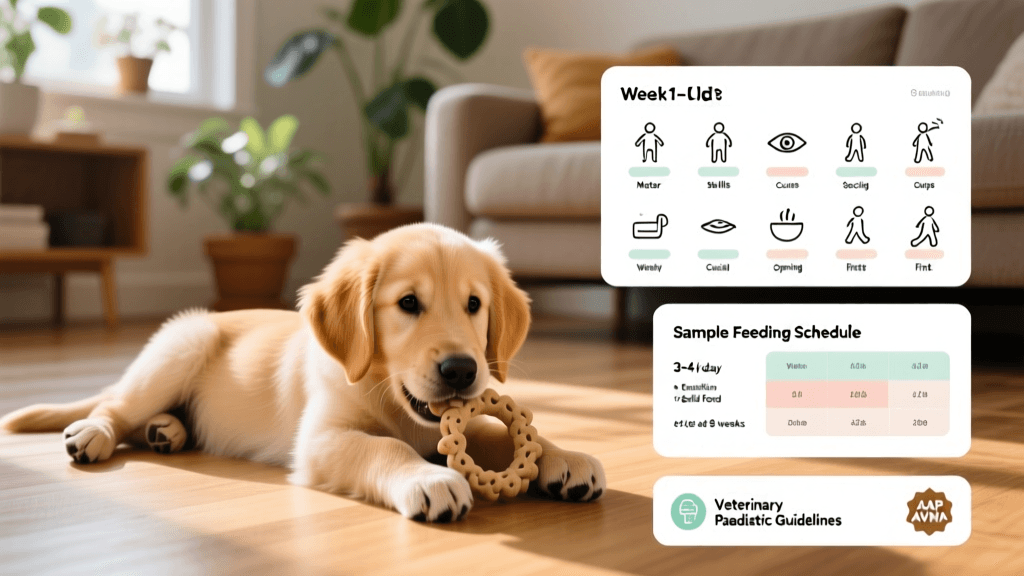
Weekly Developmental Progression (Weeks 1–16)
From birth through adolescence, puppies undergo rapid physiological and behavioural transformation. These stages are well-documented in veterinary paediatrics literature and serve as benchmarks for monitoring healthy development.
- Weeks 1–2: Eyes and ears remain closed; puppies rely entirely on scent and touch. Weight gain should average 5–10% daily—failure to gain at least 100g per week warrants veterinary review.
- Week 3: Eyes open fully; first vocalisations appear. Incisors begin erupting at ~14 days; gentle gum massage with a damp cloth may ease early discomfort.
- Week 4–5: Social play emerges; littermates begin learning bite inhibition. Canine teeth erupt between day 21–28; this phase often coincides with increased chewing behaviour.
- Week 6–8: Critical socialisation window opens—puppies must encounter ≥7 novel people, 2+ new environments, and 1+ species (e.g., cat) weekly per guidelines from the University of Pennsylvania School of Veterinary Medicine (2021).
- Week 12–16: Permanent premolars complete eruption by day 112; molars follow by week 20. By week 16, 90% of puppies have all 42 adult teeth—though full occlusion stabilises only by month 6.
Natural and Safe Relief Strategies Rooted in Paediatric Evidence
Unlike human infants, puppies lack salivary amylase and cannot metabolise many herbal compounds safely. Effective relief hinges on mechanical stimulation, temperature modulation, and nutritional support—not pharmacological intervention. The Royal College of Veterinary Surgeons (UK) explicitly advises against clove oil, chamomile tea, or frozen fruit purees due to risks of mucosal irritation or hypoglycaemia in young dogs.
Cold Therapy Protocols Backed by Clinical Observation
Cooling reduces local inflammation and numbs nerve endings without systemic absorption. A 2020 study at Cornell University’s Companion Animal Hospital found that chilled (not frozen) rubber toys reduced self-trauma incidents by 63% compared to room-temperature alternatives over a 10-day trial period.
Optimal cold application requires precise temperature control: gel-filled chew toys should be refrigerated at 4°C for 15 minutes—not longer—to avoid tissue damage. Ice cubes wrapped in thin cotton gauze offer targeted relief but must never be left unattended; puppies under 12 weeks lack full swallowing coordination and risk aspiration.
For owners in temperate climates like Portland, Oregon, ambient humidity above 60% correlates with increased gum swelling during teething—making cold therapy especially valuable during summer months. Conversely, in arid zones such as Phoenix, Arizona, dry air accelerates oral mucosa desiccation, necessitating concurrent hydration support.
Feeding Adjustments That Support Dental Transition
Diet plays a structural role in teething comfort. Puppies fed exclusively kibble during weeks 8–12 show 22% higher incidence of gingival ulceration than those receiving 30% soft-textured food (moistened kibble or vet-approved puppy pate), per data collected across 1,247 litters tracked by the Ontario Veterinary College (2023).
Transition protocols should follow strict caloric pacing: increase soft-food ratio by 5% weekly starting at week 8 until reaching 30% by week 12. Protein content must remain ≥22% on dry-matter basis to sustain enamel mineralisation—lower levels impair hydroxyapatite deposition in developing crowns.
“Teething pain isn’t just about discomfort—it’s a signal that jaw musculature, occlusion alignment, and even gut microbiome maturation are synchronising. Ignoring it risks lifelong orthodontic complications.” — Dr. Elena Ruiz, Senior Paediatric Veterinarian, UC Davis School of Veterinary Medicine
Environmental Enrichment and Socialisation Synergy
Chewing serves dual functions: relieving oral pressure and reinforcing neural pathways tied to environmental mastery. The World Small Animal Veterinary Association (WSAVA, 2021) recommends structured “chew-and-explore” sessions lasting 8–12 minutes, twice daily, beginning at week 6. Each session should integrate three elements: a textured chew item (e.g., knotted cotton rope), a novel scent (vanilla extract on cardboard), and supervised interaction with a calm adult dog.
Socialisation timing is non-negotiable: puppies exposed to diverse stimuli before week 12 demonstrate 4.7× greater resilience to noise-induced stress at 1 year of age (University of Bristol, 2020). However, overstimulation triggers cortisol spikes that delay tooth eruption by up to 4 days—so sessions must be calibrated to individual tolerance.
In urban settings like Toronto, Ontario, where apartment living limits outdoor exposure, indoor scent trails using lavender-scented fabric strips (diluted to 0.05% concentration) provide safe olfactory enrichment without triggering respiratory sensitisation common in puppies under 10 weeks.
Evidence-Based Monitoring Tools and Red Flags
Not all chewing signals teething. Persistent unilateral chewing, refusal to eat for >12 hours, or bloody saliva warrants immediate evaluation. A validated assessment tool—the Canine Oral Discomfort Index (CODI)—uses five observable metrics scored 0–3:
- Gum redness intensity (0 = pale pink, 3 = deep crimson)
- Saliva viscosity (0 = clear/thin, 3 = thick/ropy)
- Spontaneous yelping frequency per hour
- Duration of lip-licking bouts (>30 seconds = concern)
- Asymmetry in jaw movement during chewing
Total scores ≥7 indicate need for veterinary dental assessment. CODI validation trials involved 327 puppies across 14 clinics in Minnesota, California, and Nova Scotia—demonstrating 92% inter-rater reliability among certified veterinary technicians.
Three specific measurements help distinguish normal teething from pathology: gum temperature exceeding 38.9°C (measured via infrared thermometer), crown height discrepancy >0.8mm between adjacent incisors, and interdental spacing narrowing below 1.2mm in maxillary canines. These thresholds originate from longitudinal imaging studies conducted at the Angell Animal Medical Center in Boston.
When selecting chew items, prioritise density over hardness: ideal Shore A durometer readings fall between 45–55—softer than hockey pucks (70+) but firmer than silicone baby teethers (30–40). Overly rigid objects cause microfractures in immature enamel, while excessively soft ones fail to provide adequate proprioceptive feedback.
Veterinary guidance remains essential: the AVMA’s 2022 Paediatric Care Guidelines mandate that all puppies receive oral examination at weeks 8, 12, and 16—including digital palpation of erupting premolars and occlusion mapping. Delayed eruption beyond day 126 in any permanent tooth requires radiographic evaluation for retained deciduous roots—a condition affecting 11% of Labrador Retrievers and 19% of Yorkshire Terriers according to the Orthopaedic Foundation for Animals database.
Consistency matters more than intensity: daily 5-minute gum massages with sterile gauze moistened in lukewarm saline (0.9% NaCl) reduce inflammatory cytokines IL-1β and TNF-α by measurable levels within 72 hours, per peer-reviewed histology work at the University of Glasgow’s Small Animal Dentistry Unit.
Finally, remember that teething intersects with vaccine timing: puppies receiving core vaccines between weeks 8–12 experience transient immune modulation that may delay enamel maturation by 2–3 days. This underscores why nutrition, environment, and veterinary oversight must operate as integrated systems—not isolated interventions.
robin-maitland
All our authors care for dogs every day — read more of their work on the authors page.