Nina Ottosson Dog Brick: 2026 Mental Enrichment Guide
Discover the ultimate 2026 mental enrichment routine using the Nina Ottosson Dog Brick. Learn a 5-day puzzle rotation strategy to boost canine cognition.
The Cognitive Shift in 2026 Canine Care
As we navigate 2026, the landscape of canine care has shifted dramatically from a purely physical exercise model to a holistic approach that heavily prioritizes cognitive health. Veterinary behaviorists and certified dog trainers now universally agree that mental stimulation is just as critical as physical exertion for a balanced, happy dog. In fact, modern canine science shows that 15 minutes of focused mental enrichment can tire a dog out as much as a one-hour walk. For pet parents looking to elevate their daily routines, interactive puzzle toys have moved from being a niche novelty to an absolute household essential.
According to the Humane Society of the United States, providing dogs with mental enrichment and foraging opportunities significantly reduces destructive behaviors, separation anxiety, and general boredom. When dogs are allowed to engage in natural scavenging and problem-solving behaviors, their overall stress levels drop, and their bond with their owners deepens. This is where structured puzzle play comes into the picture.
Why the Nina Ottosson Dog Brick Remains a Gold Standard
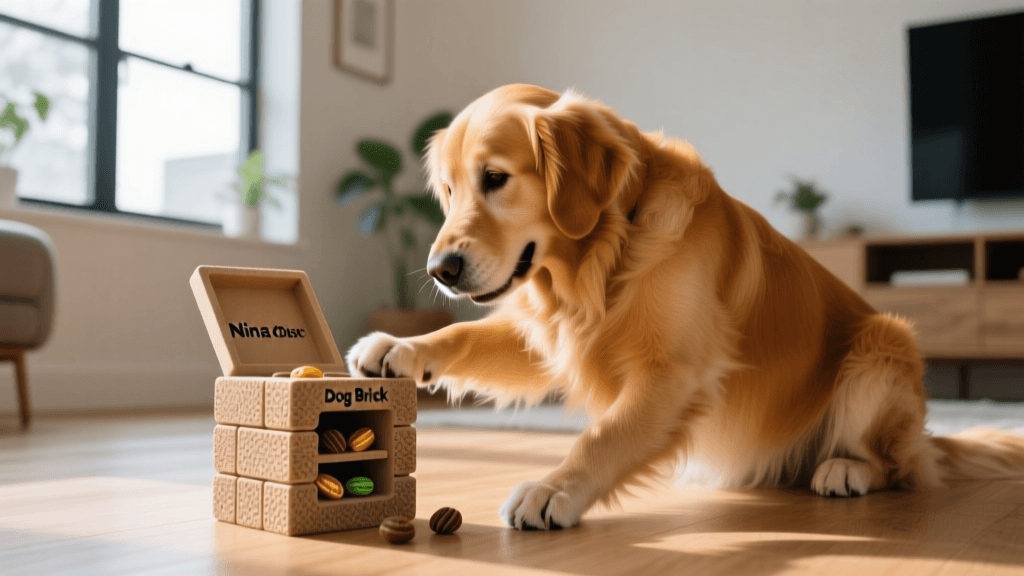
Among the myriad of puzzle toys available in 2026, the Nina Ottosson Dog Brick Interactive Treat Puzzle remains a steadfast favorite for intermediate learners. Classified as a Level 2 puzzle, it offers the perfect bridge between basic snuffle mats and highly complex, multi-step locking mechanisms. The Dog Brick features a sturdy, BPA-free, phthalate-free, and PVC-free plastic construction, ensuring it is safe for your dog's daily use.
Measuring approximately 12.5 x 9.25 x 2 inches, the board is heavy enough to resist casual sliding but light enough to be easily stored. It features multiple flip lids, sliding bone covers, and removable white bone-shaped pegs that act as obstacles. This multi-mechanism design requires your dog to utilize different paw and nose techniques to access the hidden rewards, engaging multiple neural pathways simultaneously.
The 5-Day Puzzle Rotation Strategy
Leaving a puzzle toy on the floor 24/7 is a recipe for boredom. To maximize cognitive engagement, we recommend a structured 5-day rotation protocol. This method prevents habituation and keeps your dog's problem-solving skills sharp.
Day 1: The Baseline Introduction
On the first day, set the Dog Brick up for success. Remove all the white bone-shaped pegs and leave the sliding compartments completely open. Place high-value, strongly scented treats (such as single-ingredient freeze-dried beef liver or roasted chicken) in the recessed treat wells. Encourage your dog to investigate. The goal today is simply to build a positive association with the board and teach them that the toy yields rewards.
Day 2: Introducing the Sliding Mechanisms
Now, push the sliding brick covers over the treats. Your dog must now use their paws or nose to slide the bricks out of the way. If your dog struggles, only cover the treats halfway so they can see and smell the reward while figuring out the physical mechanics of the slide.
Day 3: Adding the Bone Cover Obstacles
Introduce the removable white bone pegs. Place them in their designated holes over the flip lids and sliding tracks. Your dog must now learn a two-step process: first, remove the bone peg with their teeth or paws, and second, flip the lid or slide the brick. This requires impulse control and sequential problem-solving.
Day 4: The Scent Work Integration
Instead of using large, obvious treats, use low-value kibble or finely crumbled treats. Rub a high-value treat (like a dab of dog-safe peanut butter) on the outside of the plastic bricks to encourage sniffing, but hide the actual rewards underneath. This forces your dog to rely on their olfactory senses rather than their vision, mimicking natural foraging behaviors in the wild.
Day 5: The Frozen Master Challenge
For the ultimate 2026 summer enrichment hack, fill the treat wells with plain, unsweetened Greek yogurt or low-sodium bone broth. Place the sliding covers and bone pegs in their slots, then put the entire Dog Brick in the freezer for two hours. Handing your dog a frozen puzzle toy not only extends the playtime significantly but also provides a soothing, cooling activity that is excellent for teething puppies or dogs with mild anxiety.
Puzzle Toy Difficulty Comparison Chart
Understanding where the Dog Brick fits into your dog's cognitive journey is vital. If your dog masters the Dog Brick too quickly, or if they find it too frustrating, refer to the table below to adjust your enrichment strategy.
| Puzzle Level | Example Model | Ideal Candidate | Cognitive Load |
|---|---|---|---|
| Level 1 | Dog Smart | Puppies, Senior Dogs, Beginners | Low (Simple lifting) |
| Level 2 | Dog Brick | Intermediate, Food-Motivated Dogs | Medium (Sliding & Flipping) |
| Level 3 | Dog Casino | Advanced, High-Energy Breeds | High (Multi-step locking) |
The American Veterinary Medical Association (AVMA) notes that matching the cognitive load of a toy to the dog's current mental stamina is crucial to prevent learned helplessness. Always progress through the levels at your dog's unique pace.
Troubleshooting Common Puzzle Toy Frustrations
Even the smartest dogs can experience frustration when learning a new game. Here is how to troubleshoot the most common issues encountered with the Dog Brick:
- The Board Flipper: Some strong, eager dogs will simply bite the edge of the board and flip it upside down to dump the treats out. To combat this, utilize the non-slip rubber feet on the bottom of the board. If necessary, place the puzzle on a textured yoga mat or hold the base steady with your hand during the initial learning phases.
- The Frustrated Quitter: If your dog barks at the toy, paws frantically without success, and walks away, the difficulty is too high. Immediately step back to Day 1 mechanics. Use higher-value rewards and offer verbal encouragement to rebuild their confidence.
- The Destructive Chewer: While the Dog Brick is made of durable composite materials, it is not a chew toy. If your dog attempts to gnaw on the plastic bones, redirect them to an appropriate chew toy (like a solid rubber Kong) and only bring the puzzle out for supervised, active training sessions.
"Enrichment is not about making a dog work for their food; it is about giving them the agency to engage with their environment in a species-appropriate, rewarding way."
Hygiene and Maintenance in 2026
Because the Dog Brick is frequently used with wet treats, peanut butter, and frozen broths, proper hygiene is non-negotiable. While some modern plastics claim to be dishwasher safe, the high heat of dishwashers can warp the precise sliding tracks of the Dog Brick over time, rendering the puzzle useless.
Instead, hand-wash the board after every use using warm water and a mild, pet-safe dish soap. Use a small brush or an old toothbrush to clean out the treat wells and the tracks where the bricks slide. Allow the puzzle to air-dry completely on a wire rack before storing it away. By maintaining the toy properly, the Nina Ottosson Dog Brick will easily remain a staple in your mental enrichment rotation for years to come.
Conclusion
Incorporating the Nina Ottosson Dog Brick into your 2026 daily routine is one of the most effective, affordable, and scientifically backed ways to improve your dog's quality of life. By utilizing the 5-day rotation strategy, you ensure that your dog remains challenged, engaged, and mentally fulfilled. Remember that the goal of puzzle play is not just to dispense treats, but to build a confident, thinking, and happy companion.
tom-renshaw
All our authors care for dogs every day — read more of their work on the authors page.