Best Dog Puzzle Toys 2026: Nina Ottosson Brick vs Snuffle Mats
Compare the Nina Ottosson Dog Brick and snuffle mats for canine mental enrichment in 2026. Discover which puzzle toy best suits your dog's cognitive needs.
The Evolution of Canine Cognitive Enrichment in 2026
As we navigate through 2026, the paradigm of dog ownership has fundamentally shifted. Veterinarians and certified animal behaviorists now universally agree that a physical walk around the block is no longer sufficient for a healthy, balanced dog. Mental fatigue is just as critical as physical exhaustion, particularly for working breeds, terriers, and high-energy mixes. When dogs lack cognitive outlets, they often develop destructive behaviors, anxiety, and hyperactivity. To combat this, the pet industry has seen a massive surge in interactive puzzle feeders and foraging tools. But with countless options on the market, how do you choose the right one for your dog's specific psychological profile?
In this comprehensive guide, we are putting two of the most popular mental enrichment tools head-to-head: the mechanical Nina Ottosson Dog Brick and the tactile Snuffle Mat. By understanding the psychology behind how these tools engage your dog's brain, you can make an informed decision that will elevate your dog's daily routine and promote long-term cognitive health.
The Neurology of Canine Problem Solving and Scent Work
Before comparing specific products, it is essential to understand what happens inside your dog's brain during mental enrichment. A dog's primary interface with the world is olfactory. While humans have about 6 million olfactory receptors, dogs possess up to 300 million, depending on the breed. The part of a dog's brain devoted to analyzing odors is proportionally 40 times greater than ours.
When a dog engages in scent-based foraging or mechanical problem-solving, their brain releases a cascade of dopamine. This neurotransmitter is associated with pleasure, motivation, and reward-seeking behavior. According to behavioral guidelines published by the American Kennel Club (AKC), interactive puzzle toys mimic the natural hunting and foraging sequences that domestic dogs still harbor in their genetic code. By making your dog 'work' for their kibble, you are satisfying a deep-seated biological imperative, which lowers their resting heart rate and reduces cortisol (stress hormone) levels.
Furthermore, the American Veterinary Medical Association (AVMA) notes that cognitive enrichment is a vital component of preventative veterinary care, helping to delay the onset of Canine Cognitive Dysfunction (CCD) in senior dogs by keeping neural pathways active and engaged.
Deep Dive: The Nina Ottosson Dog Brick (Level 2)
The Nina Ottosson Dog Brick is a classic, intermediate-level mechanical puzzle toy that has remained a staple in the dog training community for years, with updated, pet-safe materials dominating the 2026 market. Priced affordably at approximately $16.99, it is an accessible entry point for dogs transitioning from basic open bowls to interactive feeders.
How It Works
The Dog Brick features three distinct types of mechanical challenges designed to test your dog's paw-eye coordination and spatial reasoning:
- Flip Lids: Hinged covers that the dog must use their nose or paws to flip open.
- Sliding Blocks: Bone-shaped covers that sit in grooves and must be slid horizontally to reveal hidden treat compartments.
- Removable Bone Covers: Pegs that sit inside hollow bones, requiring the dog to grasp and lift them out (though many trainers recommend removing these for beginners to prevent frustration).
Pros and Cons
The primary advantage of the Dog Brick is its structured, logical progression. It teaches dogs cause-and-effect relationships. If I push this block, food appears. However, because it is made of rigid, BPA-free composite plastics, it is not suitable for aggressive chewers who might try to crack the sliding pieces rather than solve the puzzle. Additionally, it requires active supervision to ensure the dog does not ingest any small, removable parts.
Deep Dive: The Modern Snuffle Mat (e.g., Paw5 Wooly Mat)
On the opposite end of the enrichment spectrum is the Snuffle Mat. Originating from the professional scent-work community, snuffle mats have become a household staple by 2026. Premium models, like the Paw5 Wooly Snuffle Mat, retail for around $45.00 to $55.00, reflecting the cost of high-density, hand-tied, machine-washable fleece strips.
How It Works
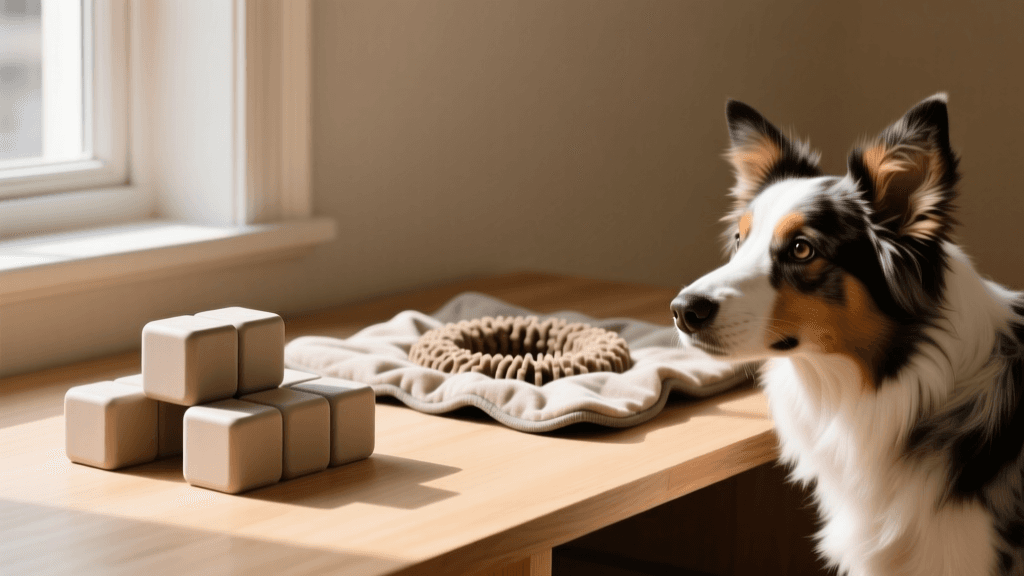
A snuffle mat is essentially a dense, shaggy rug designed to mimic a patch of tall grass. You scatter dry kibble or small, high-value treats deep into the fabric strips. The dog must use their nose to snuffle, snort, and root through the mat to locate the food. There are no mechanical levers or sliding blocks; the challenge is purely olfactory and tactile.
Pros and Cons
Snuffle mats are incredibly versatile and virtually indestructible for most dogs, as there are no hard plastic parts to chew or break. They are excellent for fast eaters, turning a two-minute meal into a 15-minute foraging expedition. The main drawback is the cleaning process; while premium mats are machine washable, they take a long time to air dry and can harbor bacteria if not washed frequently after holding raw or moist treats.
Head-to-Head Comparison: Dog Brick vs. Snuffle Mat
To help you decide which tool belongs in your 2026 enrichment arsenal, we have broken down their core features in the comparison table below.
| Feature | Nina Ottosson Dog Brick | Premium Snuffle Mat |
|---|---|---|
| 2026 Average Price | $16.99 | $45.00 - $55.00 |
| Primary Sense Engaged | Sight, Touch, Spatial Reasoning | Olfactory (Scent), Touch |
| Difficulty Level | Intermediate (Level 2) | Beginner to Intermediate |
| Best For | Problem-solving, paw coordination | Slowing eating, calming anxiety |
| Cleaning Method | Quick wipe or top-rack dishwasher | Machine wash (long air-dry time) |
| Durability for Chewers | Low (Requires supervision) | High (Soft fabric, no hard parts) |
| Ideal Breed Type | Herders, Poodles, Terriers | Hounds, Retrievers, Senior Dogs |
Step-by-Step Training Protocol for Puzzle Introduction
A common mistake dog owners make is purchasing a complex puzzle, filling it with kibble, and walking away. This often leads to canine frustration, resulting in the dog flipping the toy over or giving up entirely. To ensure success, follow this shaping protocol recommended by modern force-free trainers.
Introducing the Dog Brick
- Stage 1: The Open Book. For the first three sessions, leave all flip lids open and slide the blocks completely away from the treat holes. Let your dog eat the food directly from the exposed compartments. This builds confidence and teaches them that the toy equals food.
- Stage 2: Partial Cover. Slide the blocks halfway over the treat holes. Your dog will easily bump them with their nose to get the reward. Praise heavily.
- Stage 3: Full Engagement. Close the blocks and lids completely. If your dog struggles, point to the compartment or gently slide it a millimeter to show them the mechanics. Never let them struggle for more than 30 seconds without offering a hint.
Introducing the Snuffle Mat
- Stage 1: Surface Scattering. Place the kibble directly on top of the fleece strips where the dog can easily see it.
- Stage 2: Shallow Burying. Drop the treats just an inch or two into the top layer of the fabric.
- Stage 3: Deep Foraging. Bury the treats deep at the base of the mat. Encourage your dog with a cue word like 'Find it!' or 'Search!' to trigger their prey drive and scent-tracking instincts.
Breed-Specific Enrichment Strategies
Understanding your dog's breed history is crucial when selecting between mechanical puzzles and scent-based foraging. In 2026, applied ethology continues to emphasize matching the enrichment tool to the dog's genetic predispositions.
- Scent Hounds (Beagles, Bloodhounds, Coonhounds): These breeds are hardwired to follow their noses to the ends of the earth. A Snuffle Mat is arguably the best daily enrichment tool for hounds, as it allows them to perform the very behavior they were bred for. Mechanical puzzles can sometimes frustrate hounds if they cannot smell the food through thick plastic.
- Herding Breeds (Border Collies, Australian Shepherds): Herders are the 'mathletes' of the dog world. They thrive on complex, multi-step mechanical problems. The Nina Ottosson Dog Brick is excellent for them, but they will master it quickly. Owners of herders should plan to upgrade to Level 3 and Level 4 puzzles rapidly to keep their brilliant minds occupied.
- Terriers (Jack Russells, Rat Terriers): Terriers are tactile and use their paws extensively. They will love the sliding and flipping mechanics of the Dog Brick, but be warned: their high prey drive and strong jaws mean they might try to destroy the plastic if left unsupervised.
- Brachycephalic & Senior Dogs (Pugs, Bulldogs, Golden Retrievers): Dogs with shortened snouts or older dogs suffering from arthritis or early-stage cognitive decline benefit immensely from Snuffle Mats. The soft fabric is gentle on their joints and noses, providing low-impact, high-reward mental stimulation.
Advanced 2026 Enrichment Techniques
Once your dog has mastered the basics of both tools, you can elevate their enrichment routine using advanced techniques that are trending among veterinary behaviorists this year.
The Frozen Brick
During the hot summer months, prepare a mixture of plain kefir, low-sodium bone broth, and mashed pumpkin. Pour this mixture into the compartments of the Dog Brick (leaving the sliding blocks removed) and freeze it solid. Once frozen, reinsert the blocks. Your dog will have to lick, chew, and manipulate the toy to get to the frozen treat, providing hours of cooling, soothing enrichment that also promotes dental health.
Scent Discrimination Matting
For highly advanced dogs, use two separate snuffle mats. Scent one mat with a specific safe essential oil (like sweet birch or anise, properly diluted) and hide high-value treats (like freeze-dried liver) only in that mat. Hide standard kibble in the unscented mat. This teaches the dog to target specific odors, bridging the gap between casual home enrichment and professional competitive nosework.
Conclusion: Building a Balanced Cognitive Diet
Ultimately, the choice between the Nina Ottosson Dog Brick and a Snuffle Mat does not have to be mutually exclusive. The most well-adjusted dogs in 2026 are those that receive a 'balanced cognitive diet.' Use the Snuffle Mat for daily meal-feeding to slow down consumption and engage their olfactory senses. Reserve the Dog Brick for targeted training sessions, rainy days when physical exercise is limited, or when you need your dog to engage in quiet, independent problem-solving while you work from home.
By investing in your dog's mental health through structured puzzle play, you are not just preventing destructive behavior; you are actively enhancing their quality of life, deepening your bond, and honoring the brilliant, complex predator that lives in your living room. Assess your dog's unique personality, start with the training protocols outlined above, and watch as their confidence and focus transform in the weeks ahead.
marcus-aldridge
All our authors care for dogs every day — read more of their work on the authors page.