2026 Guide: Moving Homes & GPS Recall Training for Anxious Dogs
Master your 2026 home move with your dog. Learn GPS recall training, boundary setup with the Halo Collar 4, and anxiety desensitization techniques.
The Psychology of Relocation Stress in Dogs
Moving to a new home is consistently ranked as one of the most stressful life events for humans, but for dogs, the disruption of their established territory can trigger profound anxiety. In 2026, with the continued rise of flexible living arrangements and remote work, more families are relocating with their pets than ever before. However, a change in environment strips away the familiar scent markers, visual cues, and spatial boundaries that your dog relies on to feel secure.
When a dog experiences relocation stress, the first casualty is often their obedience. A dog with a flawless recall in their old apartment may suddenly become easily distracted, reactive, or prone to bolting in a new, unfenced yard. According to the ASPCA's guidelines on moving with pets, maintaining strict routines and utilizing modern behavioral conditioning tools are critical to preventing this regression. The transition from a leash-only urban environment to a suburban home with a yard requires a complete recalibration of your dog's spatial awareness and recall reliability.
Pre-Move Desensitization: 4 Weeks Before Packing
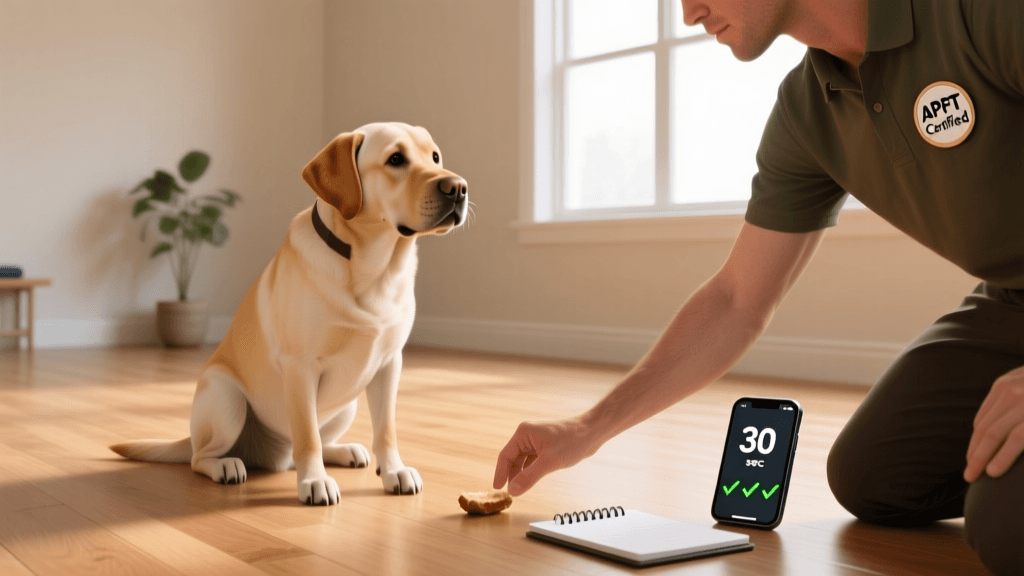
The training process for a successful move begins a full month before the moving trucks arrive. The sight of cardboard boxes and the disruption of furniture placement are primary triggers for canine anxiety. To combat this, implement a structured desensitization protocol.
1. The 'Box is Boring' Protocol
Bring out empty moving boxes four weeks prior to your move. Leave them in the center of the living room. Do not pack anything in them for the first week. Instead, feed your dog their daily meals inside or immediately next to the open boxes. The goal is to reframe the cardboard boxes from 'harbingers of change' to 'predictors of positive outcomes.' By week three, begin slowly packing non-essential items while engaging your dog in a high-focus obedience game, such as 'find it' with low-value kibble scattered away from the packing zone.
2. Pheromone and Supplement Integration
In 2026, veterinary behaviorists highly recommend preemptive chemical support for transition anxiety. Plug in an Adaptil Optimum Calming Diffuser in the rooms where your dog spends the most time. Priced around $49.99, this 2026 formulation utilizes an enhanced pheromone complex that mimics the comforting messages of a nursing mother dog. Additionally, begin administering a daily joint and anxiety supplement like Solliquin or Zylkene 14 days before the move to build up a baseline of calm neurochemistry.
Setting Up Boundaries: The 2026 Halo Collar 4 Integration
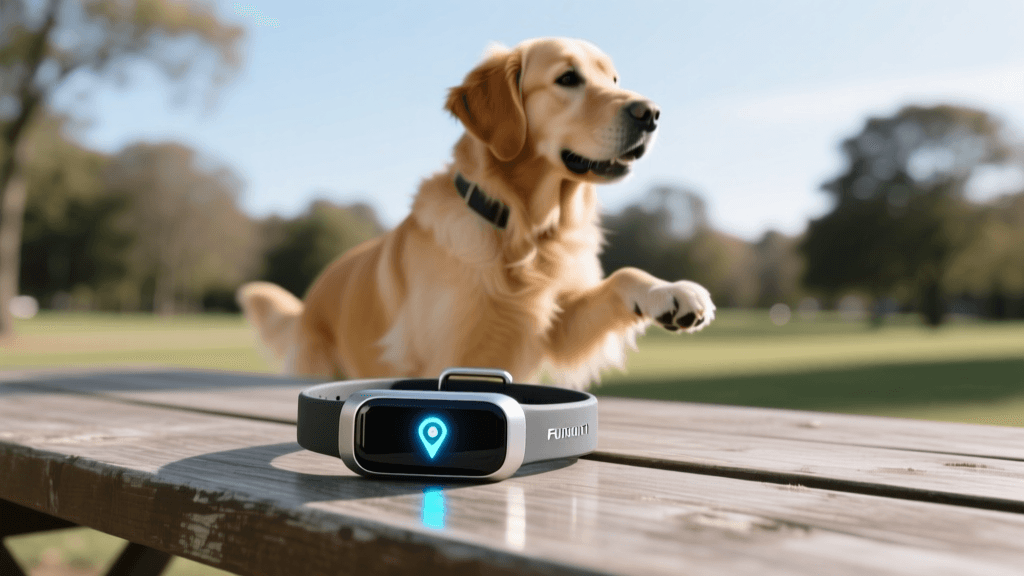
If your new home features a yard without physical fencing, or if you want to establish custom play zones without installing expensive timber or vinyl fences, GPS smart collars are the industry standard. The Halo Collar 4, the flagship model for 2026, represents a massive leap forward in boundary training for relocating dogs.
Unlike older models that relied on standard GPS (which could drift by 10 to 15 feet), the Halo Collar 4 utilizes RTK (Real-Time Kinematic) satellite technology, offering 1-inch accuracy. This is crucial for anxious dogs, as inconsistent boundary feedback from older GPS collars often caused confusion and heightened reactivity.
Mapping Your New Safe Zones
- Step 1: Walk the perimeter of your new property with the collar and your smartphone. The 2026 Halo app allows you to map 'Keep Out' zones (like garden beds or pools) and 'Safe Play' zones with pinpoint accuracy.
- Step 2: Set the feedback to haptic-only (vibration) for the first two weeks. Anxious dogs should never be introduced to static correction while simultaneously processing the stress of a new environment.
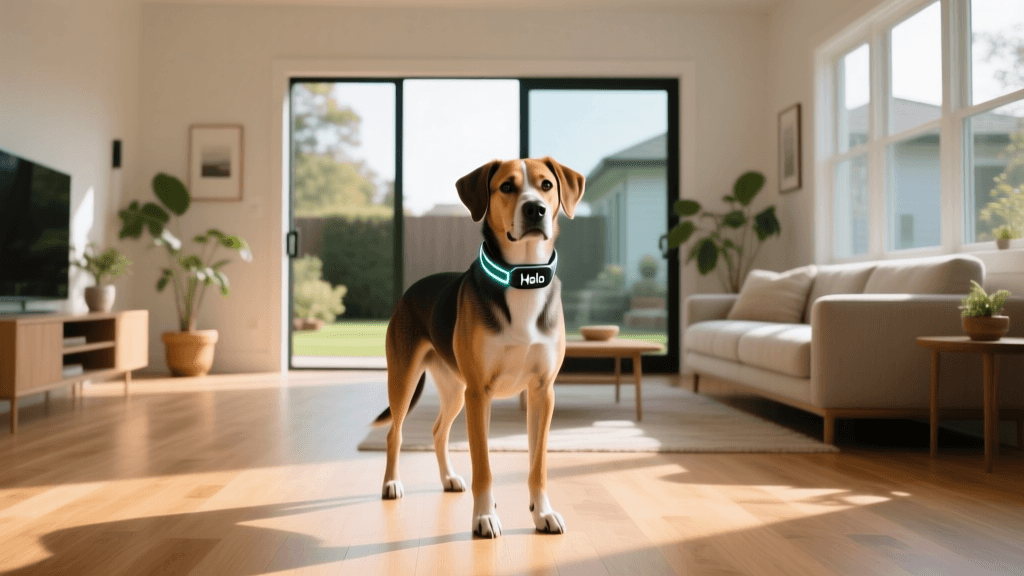
- Step 3: Use the Halo Beacons ($29.99 each) to mark indoor boundaries, such as keeping the dog out of the new nursery or away from the front door to prevent door-darting during the chaotic moving period.
The 3-Phase Recall Training Protocol for New Environments
Teaching a dog to come when called in a novel environment requires patience and high-value reinforcement. The American Kennel Club (AKC) emphasizes that recall must be treated as a life-saving behavior, never associated with punishment or the end of playtime. Here is a 2026-approved, three-phase protocol for establishing a bulletproof recall in your new home.
Phase 1: The Indoor Long-Line (Weeks 1-2)
Before your dog ever steps foot off-leash in the new yard, master the recall indoors. Attach a 15-foot biothane long-line (such as the Mighty Paw Biothane Long Line, approx. $29.99) to your dog's harness. Biothane is essential in 2026 training kits because it does not absorb odors, mud, or moisture. Call your dog's name, use your recall cue ('Come' or 'Here'), and reward with ultra-high-value treats like Stella & Chewy's Freeze-Dried Raw Coated Bites. If they ignore you, gently reel them in using the long-line without repeating the command. The cue must remain sacred and absolute.
Phase 2: The Transitional Driveway (Weeks 3-4)
Move the training to the driveway or a highly controlled outdoor space. The increase in environmental stimuli (wind, neighborhood sounds, new scents) will test your dog's focus. Practice 'engagement checks.' Wait for your dog to look at you voluntarily, mark the behavior with a clicker or a verbal 'Yes!', and toss a treat away from you. This teaches the dog that checking in with you in a novel environment is highly rewarding.
Phase 3: Full Yard GPS Integration (Week 5 and Beyond)
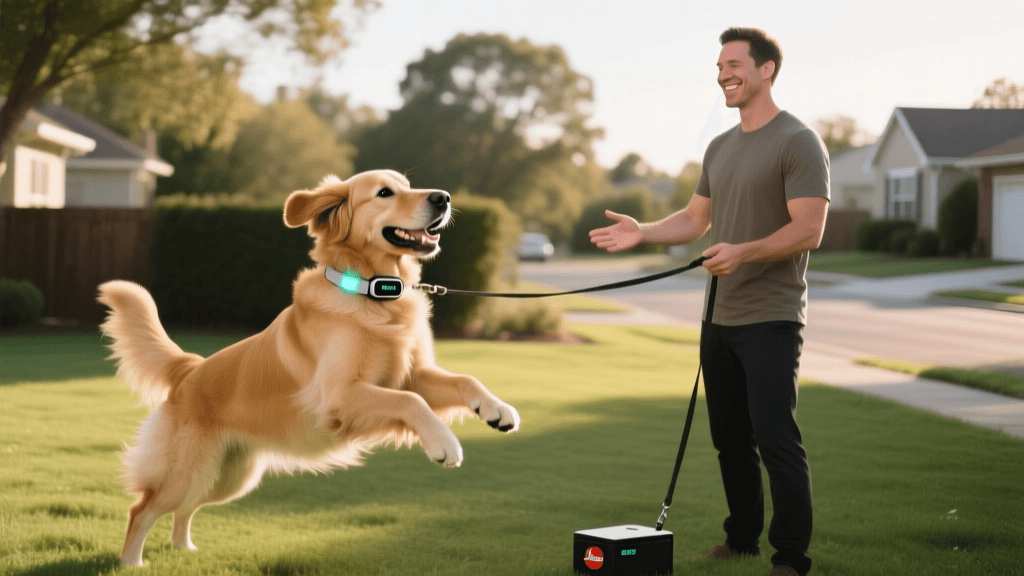
Once the haptic feedback on the Halo Collar 4 is fully conditioned, allow your dog to explore the new yard off-leash. If they approach the invisible boundary, the collar will emit the warning vibration. Immediately call your dog back to you using your established recall cue and reward them heavily for retreating from the boundary and returning to your side. This merges the technology with your vocal obedience command, creating a redundant safety net.
2026 GPS Training Collar Comparison for Relocating Dogs
Choosing the right technology for your new property is vital. Below is a comparison of the top GPS training collars available in 2026, specifically evaluated for their utility during home transitions and boundary conditioning.
| 2026 GPS Collar Model | Satellite Tech | Haptic/Vibrate Options | Upfront Cost | Monthly Subscription |
|---|---|---|---|---|
| Halo Collar 4 | RTK GPS (1-inch accuracy) | 15 Customizable Levels | $399.00 | $24.99/mo |
| SpotOn 2026 Edition | Dual-Band GPS + Cellular | 30 Levels + Tone | $999.00 | Optional ($7.95/mo) |
| Wagz Freedom Smart Collar | Standard GPS + Wi-Fi Assist | 10 Levels (Shock-Free) | $249.00 | $9.99/mo |
Note: For highly anxious dogs, the Wagz Freedom is often recommended by fear-free trainers due to its strict shock-free philosophy, relying entirely on haptic and auditory cues. However, for large, rural properties with dense tree cover, the SpotOn 2026 Edition's dual-band GPS prevents the signal loss that plagued older generations of smart collars.
Maintaining Obedience During the Unpacking Chaos
The first two weeks in a new home are characterized by open boxes, delivery drivers, and shifting furniture. This is the exact scenario where a dog's 'Place' command becomes invaluable.
The 'Place' command directs your dog to a specific, elevated cot where they must remain until released. Elevated beds, like the Kuranda Chew-Proof Cot ($149.99), provide a physical boundary that is easier for a dog to understand than a flat mat on the floor. Set the cot up in a quiet corner of the main living area. Whenever the doorbell rings or movers are carrying heavy items, send your dog to their 'Place.' Reward them intermittently with a long-lasting chew, such as a yak cheese stick or a Kong filled with frozen peanut butter and pumpkin puree.
"A successful life transition with your dog is not about forcing them to adapt to your timeline; it is about building a scaffold of predictable routines, clear boundaries, and positive reinforcement that makes the new environment feel like home."
Conclusion: Patience is the Ultimate Training Tool
Relocating in 2026 offers incredible technological advantages, from RTK GPS fences to advanced calming pheromones, but technology cannot replace the bond and patience between handler and hound. Expect minor setbacks. If your dog has an accident in the house or fails a recall in the new yard, take a deep breath, revert to the long-line, and rebuild their confidence. By combining structured desensitization, modern GPS boundary training, and high-value positive reinforcement, you will guide your anxious dog through this major life transition, emerging with a stronger, more resilient obedience foundation than ever before.
beth-carrasco
All our authors care for dogs every day — read more of their work on the authors page.