Puppy-Proofing & Emergency Prep: A New Dog Safety Guide
Learn how to puppy-proof your home and build a canine first-aid kit. Essential safety tips, toxic plant lists, and emergency prep for new dog owners.
Welcoming Your New Dog: The Reality of Home Safety
Bringing a new dog home is one of the most exciting milestones in life. Whether you are adopting a rescue or bringing home a purebred puppy, the joy of watching them explore their new environment is unmatched. However, from an emergency and safety perspective, a typical human home is an obstacle course of hidden hazards. Choking risks, toxic substances, and escape routes can turn a joyous occasion into a veterinary emergency in seconds.
According to the American Kennel Club, thousands of pets are treated in emergency veterinary clinics each year due to accidental household poisonings and preventable injuries. Preparing your home before your dog's paws touch the floor is not just about protecting your furniture; it is about protecting their life. This comprehensive emergency and safety guide will walk you through room-by-room puppy-proofing, assembling a critical first-aid kit, and establishing an emergency action plan.
Room-by-Room Puppy-Proofing Checklist
Dogs, especially puppies and newly adopted rescues experiencing environmental stress, explore the world with their mouths. Securing your home requires looking at every room from ground level.
The Kitchen: Ground Zero for Toxins
The kitchen contains the highest concentration of lethal hazards. Human foods like xylitol (found in sugar-free gum and peanut butter), grapes, raisins, onions, and macadamia nuts are highly toxic to dogs. Furthermore, cleaning supplies under the sink can cause severe chemical burns or systemic poisoning if ingested.
- Trash Cans: Invest in a heavy, locking trash can. The Simplehuman Step Trash Can features a lock button that prevents dogs from scavenging, which can lead to fatal intestinal blockages or pancreatitis from fatty scraps.
- Cabinet Locks: Install magnetic cabinet locks, such as the Safety 1st Magnetic Locking System, on all lower cabinets containing chemicals, medications, or dog treats to prevent accidental overdoses.
- Dishwasher Safety: Never leave dishwasher detergent pods accessible, and always check the dishwasher before closing the door to ensure your dog hasn't crawled inside to lick food residue.
The Living Room: Choking and Strangulation Risks
Living rooms are full of electrical cords, small decorative items, and toxic houseplants. Chewing on live electrical cords can cause severe oral burns and fatal pulmonary edema (fluid in the lungs).
- Cord Management: Use split-loom tubing or products like the CritterCord Cord Protector to encase wires. Alternatively, apply a bitter deterrent like Grannick's Bitter Apple Spray to baseboards and cord covers.
- Small Objects: Anything smaller than a standard film canister (or roughly 1.5 inches in diameter) is a choking or blockage hazard. Keep children's toys, coins, and hair ties in sealed bins.
Building Your Canine First-Aid & Emergency Kit
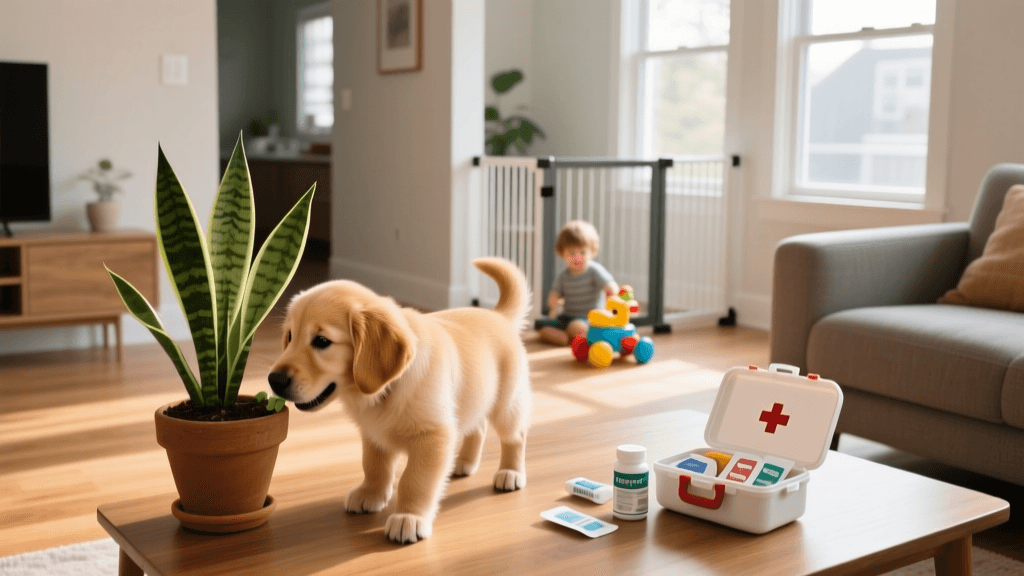
Every new dog owner must have a dedicated canine first-aid kit ready before the dog arrives. In an emergency, the first 10 minutes are critical. Store these items in a brightly colored, waterproof tackle box or a dedicated Ruffwear First-Aid Kit bag, and keep it in a centralized, easily accessible location.
| Item | Purpose & Usage Details | Estimated Cost |
|---|---|---|
| Kwik Stop Styptic Powder | Stops bleeding from torn nails or minor cuts. Apply directly with a cotton swab. | $8 - $12 |
| 3% Hydrogen Peroxide | Induces vomiting. Dose: 1 ml per pound of body weight. ONLY use under direct vet guidance. | $3 - $5 |
| Digital Rectal Thermometer | Checks for fever or hypothermia. Normal canine temp: 101.0°F to 102.5°F. | $10 - $15 |
| Self-Adhering Bandage (Vetwrap) | Wraps wounds securely without sticking to fur. Apply over gauze; do not wrap too tightly. | $5 - $8 |
| Basket Muzzle | Prevents biting. Even the sweetest dogs will bite when in severe pain or shock. | $15 - $25 |
| Saline Eye Wash | Flushes debris, dirt, or mild irritants from the eyes safely. | $4 - $7 |
Important Note: Never administer human pain medications like Ibuprofen (Advil), Acetaminophen (Tylenol), or Aspirin to your dog. These are highly toxic and can cause fatal liver failure or gastrointestinal bleeding. Always consult an emergency veterinarian.
Identifying and Removing Toxic Hazards
Many common household plants and outdoor flora are deadly to dogs. The ASPCA Animal Poison Control center handles hundreds of thousands of plant toxicity cases annually. Before bringing your dog home, audit your indoor and outdoor plant life.
Highly Toxic Plants to Remove Immediately
- Sago Palm: All parts are toxic, but the seeds contain the highest concentration of cycasin, which causes severe liver failure and death.
- Lilies (Lilium and Hemerocallis species): While more famous for being fatal to cats, certain lilies can cause severe gastrointestinal and neurological issues in dogs.
- Oleander: Common in outdoor landscaping in warmer climates; ingestion of even a few leaves can cause fatal cardiac arrhythmias.
- Aloe Vera: Contains saponins that cause vomiting, lethargy, and tremors in dogs.
Seasonal and Environmental Toxins
During the winter, antifreeze (ethylene glycol) is a massive threat. It tastes sweet to dogs but causes rapid, irreversible kidney failure. Always clean up driveway spills immediately and consider switching to a propylene glycol-based antifreeze, which is significantly safer for pets. In the spring and summer, be mindful of toxic lawn fertilizers, cocoa bean mulch, and snail bait (which contains metaldehyde, a severe neurotoxin).
Escape Prevention and Yard Safety
New dogs, particularly those in the 'flight risk' window of the first 30 days in a new home, are highly prone to bolting out of doors or digging under fences. Securing your perimeter is a vital safety measure.
Fencing and Digging Barriers
A standard chain-link or wooden fence is often insufficient for determined escape artists. For large or athletic breeds (like Huskies, German Shepherds, or Terriers), fences should be a minimum of 6 feet tall. To prevent digging escapes, install an 'L-footer' barrier.
- How to Build an L-Footer: Purchase 1/2-inch galvanized hardware cloth. Attach it to the bottom of your existing fence, bend it outward at a 90-degree angle to form an 'L' shape along the ground, and bury it 12 inches deep, or secure it with landscape staples and cover with mulch. When the dog digs at the fence line, they hit the wire mesh and stop.
Door Dashing Prevention
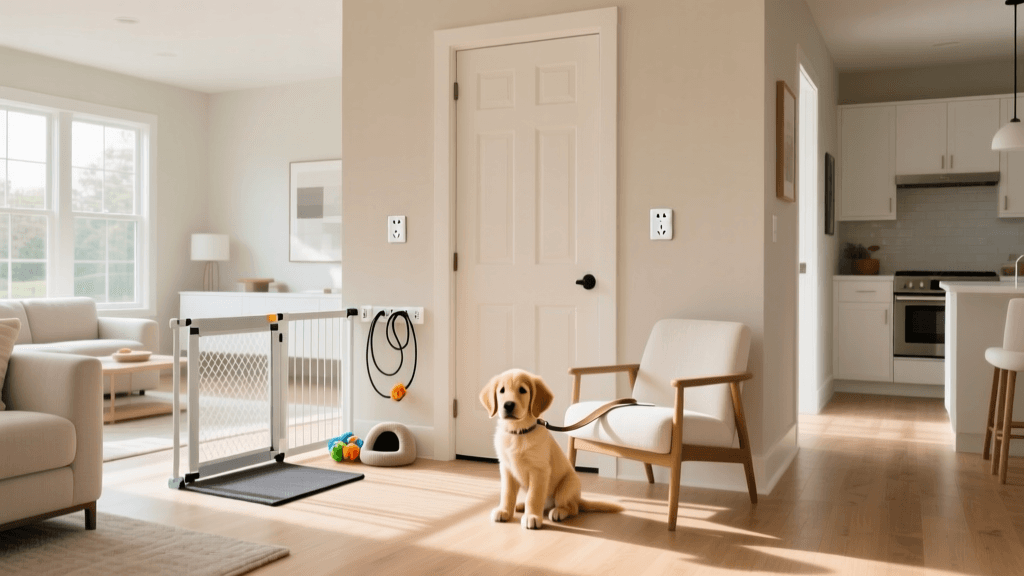
Install a baby gate or a freestanding pet pen (like the MidWest Foldable Metal Dog Exercise Pen) in your entryway to create a double-door airlock system. This ensures that if the front door is left open by a guest or delivery driver, your dog cannot bolt into the street.
Creating an Emergency Action and Evacuation Plan
Safety is not just about daily hazards; it is about disaster preparedness. According to FEMA and Ready.gov, thousands of pets are separated from their owners during natural disasters because owners lack a pet-specific evacuation plan.
Identification and Microchipping
On day one, ensure your dog is wearing a sturdy, well-fitted collar with a visible ID tag containing your current phone number. However, collars can break or slip off. Microchipping is the only permanent form of identification. Ensure the microchip is registered with your current contact information through a national database like HomeAgain or the AKC Reunite registry.
The 'Go-Bag' for Pets
Keep a waterproof duffel bag near your emergency exit containing:
- A 3-day supply of kibble and bottled water.
- Collapsible travel bowls.
- A slip lead (which is easier to secure on a panicked dog than a standard leash and collar).
- Physical copies of your dog's vaccination records and a recent, clear photograph of you with your dog (to prove ownership if separated).
- Calming aids, such as a Thundershirt or Adaptil pheromone spray, to manage acute stress during evacuations.
Final Thoughts on Proactive Safety
Preparing for emergencies before they happen is the hallmark of a responsible dog owner. By systematically puppy-proofing your living spaces, investing in a high-quality first-aid kit, removing toxic flora, and establishing a firm evacuation protocol, you are providing your new dog with the safest possible foundation. For further reading on disaster preparedness for animals, consult the American Veterinary Medical Association's disaster preparedness guidelines. Your new dog is counting on you to keep their environment secure, allowing them to thrive in their forever home.
aaron-whyte
All our authors care for dogs every day — read more of their work on the authors page.