Best Puppy Crates & Playpens: New Owner Buyer Guide
Discover the best puppy crates and playpens for new dog owners. Compare top-rated wire, plastic, and soft crates with sizing tips and training advice.
Bringing a new puppy home is an exhilarating experience, but it also requires careful preparation to ensure your new furry friend transitions smoothly into their forever home. Among the most critical purchases you will make before your puppy arrives are a high-quality crate and a reliable playpen. These tools are not just about confinement; they are essential for potty training, preventing destructive chewing, and providing your dog with a secure sanctuary. In this comprehensive buyer's guide, we review the best puppy crates and playpens on the market, breaking down dimensions, costs, and specific use cases to help you make an informed decision.
Why Every New Puppy Needs a Crate and Playpen
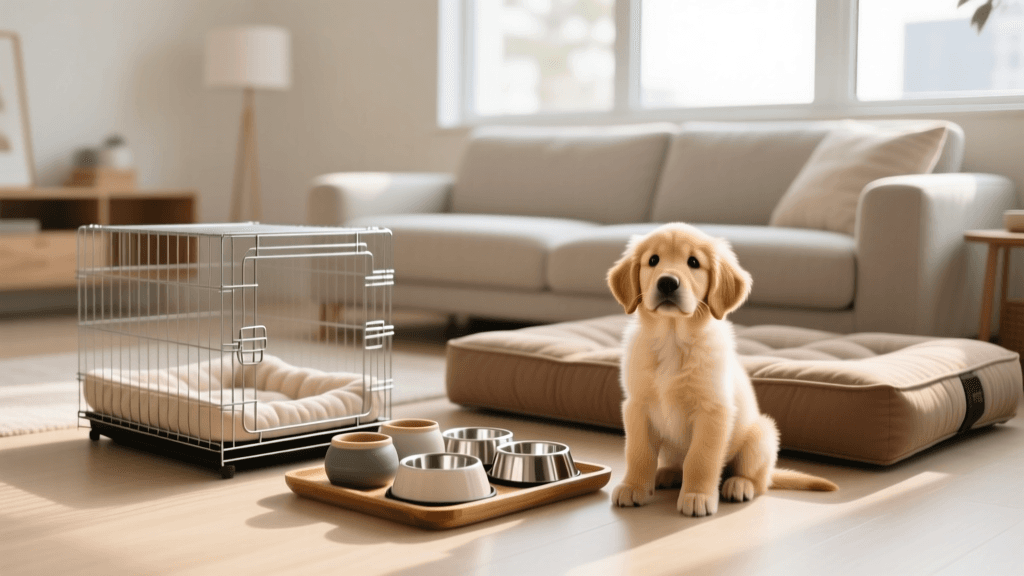
Dogs are naturally den-dwelling animals. According to the ASPCA, a properly introduced crate taps into this instinct, offering a safe retreat where your puppy can relax when overwhelmed. Furthermore, crates are indispensable for housebreaking. Because dogs naturally avoid soiling their sleeping area, a correctly sized crate encourages them to hold their bladder until you take them outside. Playpens, on the other hand, offer a larger, semi-contained area for daytime play when you cannot give your puppy your undivided attention but want to give them more freedom than a crate allows.
Crate vs. Playpen: Understanding the Difference
Many new owners confuse the primary functions of crates and playpens. While both are containment tools, they serve distinctly different purposes in your puppy's daily routine. Below is a quick comparison to help you understand how to utilize both effectively.
| Feature | Dog Crate | Dog Playpen |
|---|---|---|
| Primary Purpose | Sleeping, potty training, secure overnight containment, and travel. | Safe daytime play area, exercise, and supervised chewing. |
| Size & Space | Cozy and enclosed; just large enough to stand, turn, and lie down. | Spacious; allows for toys, water bowls, and movement. |
| Potty Training | Highly effective; leverages the den instinct to hold bladder. | Often includes a pee pad zone; teaches designated potty spots. |
| Portability | Wire and plastic crates are portable; soft crates are highly mobile. | Generally stationary, though metal panels can be folded. |
Top 3 Puppy Crates for New Dog Owners
Choosing the right crate depends on your puppy's temperament, your living space, and whether you plan to travel. Here are the top-rated options across the three main crate categories.
1. MidWest Homes for Pets Ultima Pro (Best Overall Wire Crate)
Price Range: $70 - $95
Dimensions (36-inch model): 36 x 23 x 25 inches
Best For: Growing puppies and home training
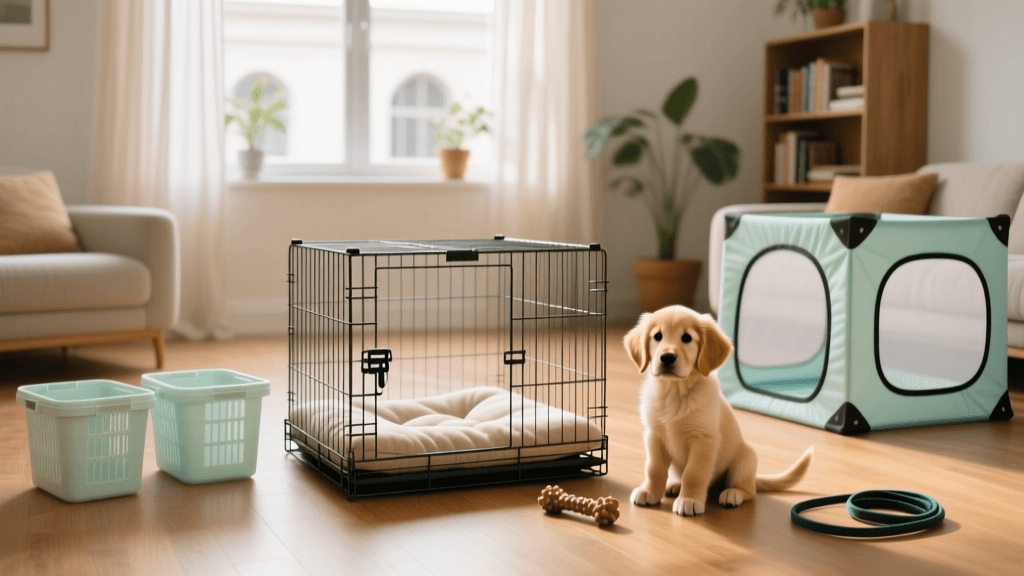
Wire crates are the gold standard for puppy training because they offer maximum visibility and ventilation. The MidWest Ultima Pro is constructed from heavy-duty, professional-grade wire, making it incredibly durable for teething puppies who might try to chew the bars. The standout feature for new owners is the included adjustable divider panel. You can buy a crate that will fit your adult dog and use the divider to shrink the space for your puppy, ensuring the space remains small enough to prevent potty accidents. It also features two doors (front and side) for flexible placement in your home and a leak-proof plastic pan for easy cleanup.
2. Petmate Sky Kennel (Best Plastic Crate for Travel & Den Lovers)
Price Range: $50 - $80
Dimensions (Medium model): 28 x 20.5 x 21.5 inches
Best For: Anxious puppies and air travel
If your puppy seems overwhelmed by the open visibility of a wire crate, a plastic kennel like the Petmate Sky Kennel offers a more enclosed, den-like environment. The plastic shell blocks out visual stimuli, which can significantly reduce anxiety and help puppies sleep through the night. This model meets most airline cargo specifications, making it an excellent long-term investment if you plan to fly with your dog. It features heavy-duty wire doors with secure vault-style latches that clever puppies cannot easily nudge open.
3. EliteField 3-Door Folding Soft Crate (Best for Calm Puppies & Travel)
Price Range: $60 - $85
Dimensions (30-inch model): 30 x 21 x 24 inches
Best For: Car trips, hotel stays, and fully potty-trained older puppies
Soft-sided crates are lightweight, easy to fold, and highly portable. The EliteField 3-Door crate is made with a sturdy steel tube frame and durable mesh panels. However, a crucial warning for new owners: soft crates should not be used for young teething puppies or dogs with separation anxiety, as they will easily chew through the fabric and potentially ingest dangerous materials. This is best utilized as a secondary travel crate once your puppy has outgrown the destructive chewing phase.
Top 2 Puppy Playpens for Safe Containment
When you are cooking, working from home, or simply need to step away for a moment, a playpen provides a safe zone where your puppy can play without accessing household hazards like electrical cords or toxic plants.
1. MidWest Foldable Metal Exercise Pen (Best Customizable Playpen)
Price Range: $45 - $65
Dimensions: 24W x 24H inches per panel (8 panels total)
This metal exercise pen is a staple for new dog owners. The eight interconnected panels can be arranged into a circle, octagon, or rectangle, or even unfolded to act as a temporary room divider. The 24-inch height is perfect for small to medium breeds, though larger breeds may require the 36-inch or 42-inch versions. The metal is coated with a rust-resistant black electro-coat finish, and it folds completely flat for storage. You can also attach it directly to a MidWest wire crate to create an expanded living suite.
2. IRIS USA Square Pet Playpen with Door (Best for Small Spaces)
Price Range: $50 - $70
Dimensions: 35.25 x 35.25 x 23.6 inches
For apartment dwellers or those who want a more aesthetically pleasing option, the IRIS USA plastic playpen is an excellent choice. Made from durable, commercial-grade plastic, it is lightweight and easy to wipe clean. The integrated door allows you to let your puppy in and out without having to lift them over the panels, which is especially helpful as your dog grows or if you have mobility issues. It is highly stable and won't scratch hardwood floors like metal pens sometimes can.
How to Choose the Right Size Crate
Buying the correct size is the most critical factor in crate training. If a crate is too large, your puppy will designate one corner for sleeping and another for eliminating, completely defeating the purpose of potty training. The American Kennel Club advises that your dog should be able to stand up without their head touching the top, turn around comfortably, and lie down stretched out. To measure your puppy for future adult size, research the breed standard weight and height, or consult your veterinarian. For mixed breeds, estimate based on the size of the puppy's paws and parents. Always utilize a divider panel if you purchase an adult-sized crate for a young puppy.
Essential Crate Accessories to Consider
- Washable Crate Pads: Avoid thick, plush beds for young puppies, as they often become chew toys and ingestion hazards. Opt for flat, durable, machine-washable mats like the KONG Slumber Mat.
- Crate Covers: A fitted cover (or even a breathable blanket) can block out light and household movement, signaling to your puppy that it is time to sleep.
- Snuggle Puppy Toys: Products like the SmartPetLove Snuggle Puppy include a battery-operated heartbeat simulator and a heat pack, which mimic the presence of littermates and drastically reduce nighttime whining.
Expert Tips for Crate Training Your New Dog
Introducing your puppy to their new crate must be a positive, gradual process. VCA Animal Hospitals recommends never using the crate as a form of punishment. Instead, feed your puppy their meals inside the crate with the door open, and toss high-value treats into the back to encourage voluntary entry. Start with short durations—just five to ten minutes while you sit nearby—and gradually increase the time and your distance from the crate. If your puppy whines, ensure they have been exercised and have eliminated before crating; if they are simply protesting, wait for a brief moment of silence before opening the door so you do not reinforce the whining behavior. With patience and the right equipment, your puppy will soon view their crate as their favorite sanctuary in your home.
marcus-aldridge
All our authors care for dogs every day — read more of their work on the authors page.