Best No-Pull Dog Harnesses For New Dogs In 2026: First Walk Guide
Prepare for your new dog's first walk in 2026. Learn how to choose, measure, and fit a no-pull harness to ensure safe, stress-free outings from day one.
The Day-One Essential: Why Your New Dog Needs a No-Pull Harness
Bringing a new dog home is one of the most thrilling milestones in life. You have likely spent weeks preparing: buying the orthopedic bed, stocking up on premium 2026 kibble, puppy-proofing the living room, and setting up the crate. However, one of the most critical items for your new dog's first week is often overlooked until the moment you step outside: the no-pull dog harness. When you adopt or purchase a new dog, you are bringing an animal into a completely novel environment. During this transition period, dogs frequently experience sensory overload, anxiety, or sheer excitement, all of which can manifest as severe leash pulling.
Many new owners mistakenly believe that a standard flat collar and a nylon leash will suffice for the first few days. Unfortunately, this can lead to immediate behavioral setbacks and potential physical harm. According to the American Kennel Club's guidelines on leash pulling, utilizing the right equipment from day one is fundamental to establishing good walking habits and ensuring your dog's physical safety. A well-fitted no-pull harness is not just a walking accessory; it is a vital communication tool that helps your new dog understand boundaries without experiencing pain or fear.
Understanding the Mechanics: Front-Clip vs. Dual-Clip Designs
To make an informed decision for your new dog's first walk, it is essential to understand how modern harnesses function. In 2026, the market is saturated with various designs, but the most effective options for new, untrained dogs rely on biomechanical redirection rather than restriction.
The Front-Clip Advantage
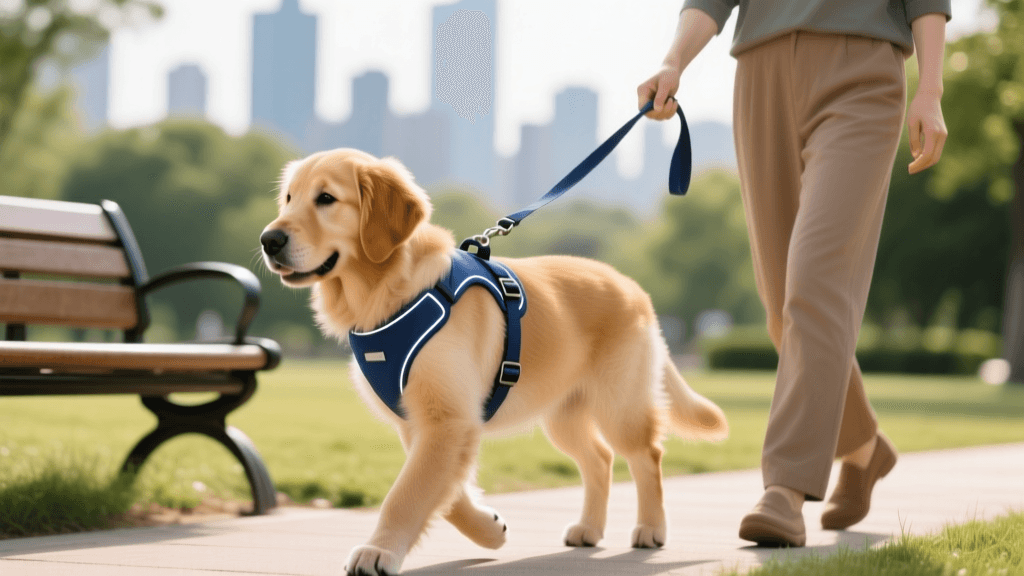
A front-clip harness features a D-ring located on the chest strap, right over the dog's sternum. When your dog pulls forward, the tension on the leash gently redirects their momentum back toward you. This naturally turns the dog's shoulders and breaks their forward focus, making it physically difficult for them to continue pulling with full force. For a newly adopted dog whose pulling strength you have not yet fully assessed, this is the safest and most effective point of contact.
The Danger of Traditional Collars for New Pullers
Using a standard neck collar on a dog that pulls poses severe health risks. The canine trachea is remarkably delicate. Repeated pressure from a flat collar or, worse, a choke chain, can lead to tracheal collapse, chronic coughing, and exacerbated cervical spine issues. Veterinary professionals universally recommend harnesses for dogs prone to pulling, brachycephalic breeds (like Pugs and French Bulldogs), and young puppies whose growth plates are still developing. By distributing the kinetic energy across the chest and shoulders, a no-pull harness completely removes the dangerous pressure from the neck.
2026 Comparison Chart: Top No-Pull Harness Styles for New Dogs
When shopping for your new dog's first harness, you will encounter several distinct styles. Below is a comparison of the most common designs available in 2026 to help you choose the best option for your specific situation.
| Harness Style | Best For | Pros | Cons |
|---|---|---|---|
| Front-Clip Y-Shape | Most new dogs, strong pullers, puppies | Allows full shoulder extension; excellent redirection; prevents chafing | Can be slightly more complex to put on initially |
| Dual-Clip (Front & Back) | Dogs in active training, versatile walkers | Offers two leash attachment points; great for transitioning to back-clip later | Heavier hardware; may be bulky for very small breeds |
| Over-the-Head Step-In | Dogs fearful of having things placed over their head | Easy to step into; minimal handling required | Often lacks a front-clip; less effective for severe pullers |
| Tactical / Padded Vest | Large breeds, working dogs, hiking | Highly durable; includes grab handles; excellent weight distribution | Can cause overheating in summer; heavy for casual walks |
Step-by-Step: How to Measure and Fit Your New Dog
Buying the right style is only half the battle; a poorly fitted harness can cause chafing, restricted breathing, or allow the dog to slip out and escape. Because you may not know your new dog's exact measurements before bringing them home, it is highly recommended to purchase a highly adjustable harness with multiple points of customization. Here is how to ensure a perfect fit:
- Measure the Neck Girth: Wrap a soft measuring tape around the base of the neck where a collar would naturally sit. Ensure you can slip two fingers between the tape and the dog's skin.
- Measure the Chest Girth: This is the most crucial measurement. Measure the widest part of the ribcage, usually just behind the front legs. Again, apply the two-finger rule.
- Check the Weight Rating: Cross-reference your dog's weight with the manufacturer's 2026 sizing chart. If your dog falls between sizes, always size up and adjust the straps down to prevent tightness.
- The Two-Finger Rule: Once the harness is on, you should be able to comfortably slide two fingers under any strap. If you can fit your whole hand, it is too loose and poses an escape risk. If you cannot fit two fingers, it is too tight and will restrict movement.
- Inspect the Shoulders: Ensure the Y-shape of the front straps does not cross over the shoulder joints. The straps should frame the shoulders to allow a full, natural range of motion during the gait cycle.
The 'Getting a Dog' Timeline: Integrating the Harness
As a new dog owner, your timeline for introducing the harness should begin before the dog even enters your home. Here is a strategic approach to integrating the no-pull harness into your new dog's routine.
Pre-Arrival and the Car Ride Home
Before picking up your new dog, have the harness ready in the car. In 2026, many premium no-pull harnesses double as crash-tested car safety restraints. By securing the leash or a specialized car tether to the back-clip of the harness during the ride home, you keep your new dog safe in the event of a sudden stop, while also introducing them to the feeling of wearing the gear in a calm, confined environment.
The First 24 Hours: Indoor Acclimation
Do not wait until you are standing on the busy sidewalk to put the harness on your dog for the first time. During the first evening at home, let the dog sniff the harness. Reward them with high-value treats. Put the harness on for just five minutes while they eat their dinner or chew on a puzzle toy. This creates a positive psychological association: the harness predicts good things, not just the overwhelming stress of the outside world.
Acclimating and the First Walk: Setting the Precedent
The first outdoor walk sets the precedent for your entire relationship. According to The Humane Society's walking resources, patience and positive reinforcement are the cornerstones of successful leash training. When you step outside, attach the leash to the front chest D-ring.
The 'Red Light, Green Light' Method
Your new dog will likely pull toward a bush, a scent, or a passing car. The moment the leash goes taut, stop walking completely. Become a tree. Do not yank the leash back; simply hold your ground. Wait for your dog to turn their head toward you or take a single step backward, which releases the tension on the front clip. The second the leash is slack, say 'Yes!' and resume walking. This teaches the dog that pulling acts as a brake, while a loose leash acts as the gas pedal.
Managing Sensory Overload
New dogs are processing thousands of new scents and sounds. Keep the first few walks incredibly short—perhaps just ten minutes around the immediate block. If your dog becomes overly stimulated and begins lunging, use the front-clip to gently guide them into a U-turn, walking in the opposite direction until they regain their composure. This builds engagement and teaches the dog to check in with you when the environment becomes too overwhelming.
Common Mistakes New Owners Make in 2026
Even with the best equipment, new owners frequently fall into a few common traps. Avoid these pitfalls to ensure your no-pull harness works effectively:
- Using Retractable Leashes: Retractable leashes teach dogs that pulling extends their range. They also eliminate the mechanical advantage of a front-clip harness. Always use a standard 4-to-6-foot biothane or nylon leash for training.
- Inconsistent Attachment Points: If you use the front-clip for training but switch to the back-clip when you are tired or in a rush, you will confuse the dog. Stick exclusively to the front-clip until the dog has reliably stopped pulling for several weeks.
- Leaving the Harness On Indoors: Harnesses should only be worn during walks or car rides. Leaving them on unsupervised can lead to the dog chewing the straps or getting caught on furniture, creating a severe choking hazard.
- Ignoring Harness Hygiene: Dogs sweat through their paws and pant to cool down, but harnesses can still trap dirt, dander, and moisture against the coat. Wash the harness according to the manufacturer's instructions every two weeks to prevent bacterial buildup and skin irritation.
Conclusion: Investing in a Lifetime of Good Walks
Getting a new dog is a profound commitment, and the equipment you choose on day one will shape your daily routine for years to come. A high-quality, properly fitted no-pull harness is an investment in your dog's physical health and behavioral development. By taking the time to measure correctly, introduce the gear positively, and consistently apply leash-training mechanics, you transform the dreaded tug-of-war into a peaceful, bonding experience. As you embark on this incredible journey in 2026, remember that the right harness does not just stop pulling—it opens the door to a harmonious life shared with your new best friend.
marcus-aldridge
All our authors care for dogs every day — read more of their work on the authors page.