Getting a Dog Before a New Baby: 2026 Transition Guide
Planning a family? Learn how to navigate getting a dog before a new baby arrives with our 2026 transition guide, featuring breed tips and smart prep.
Navigating the Dual Life Transition
Bringing a new dog into your home is a monumental life transition on its own. It requires adjusting your daily schedule, puppy-proofing your living space, and establishing new routines. However, when you are simultaneously preparing for the arrival of a new baby, the complexity of this transition multiplies exponentially. Many prospective parents in 2026 are choosing to adopt or purchase a dog before their child is born, hoping to establish a bond between the pet and the family unit before the nursery becomes the center of attention. While this is a beautiful goal, it requires meticulous planning, strategic timing, and a deep understanding of canine behavioral psychology. Getting a dog before a new baby is not merely about buying matching accessories; it is about creating a stable, predictable environment where both your new pet and your future child can thrive safely.
The Ideal Timeline: When to Bring Your Dog Home
One of the most common mistakes expectant parents make is bringing a new puppy or rescue dog home just weeks before the baby is due. The final trimester of pregnancy is physically exhausting and emotionally taxing, leaving little bandwidth for the intensive training a new dog requires. In 2026, veterinary behaviorists universally recommend a minimum six-month buffer between bringing a new dog home and the baby's expected arrival date.
Why Six Months is the 2026 Gold Standard
This six-month window serves multiple critical functions. First, it allows the dog to complete their foundational obedience training, including crucial commands like 'settle,' 'leave it,' and 'go to your mat.' Second, it provides ample time to address any behavioral quirks, such as jumping, resource guarding, or leash reactivity, with a professional trainer before your hands are full with an infant. Finally, it allows you to gradually implement the new household rules and boundary changes—like restricting access to the nursery—without the dog associating those sudden losses of privilege directly with the baby's arrival. By front-loading the heavy lifting of dog training, you ensure that when the baby finally comes home, the dog is a calm, integrated family member rather than a chaotic variable.
Choosing the Right Dog for a Nursery Transition
When selecting a dog during this specific life transition, temperament must heavily outweigh aesthetics. While it is tempting to choose a breed based on social media trends or childhood nostalgia, you must objectively evaluate the energy levels, prey drive, and noise sensitivity of the dog you are bringing into a home that will soon house a fragile infant.
Breeds and Rescue Profiles That Excel
If you are working with a breeder, look for breeds historically known for their patience, low prey drive, and biddable nature. Golden Retrievers, Labrador Retrievers, and Cavalier King Charles Spaniels remain top choices in 2026 for families preparing for infants due to their innate desire to please and high tolerance for environmental chaos. However, if you are adopting from a rescue, focus heavily on behavioral evaluations rather than breed guesses. Many mixed-breed dogs make exceptional family pets. When reviewing rescue profiles, look for dogs that have been in foster homes with children or dogs that are described as 'low-arousal,' 'confident,' and 'recover quickly from loud noises.' Avoid dogs with documented resource guarding issues, severe noise phobias, or high herding instincts, as the erratic movements and high-pitched cries of a baby can trigger these innate drives in unpredictable ways.
Environmental Prep: Smart Tech and Nursery Boundaries
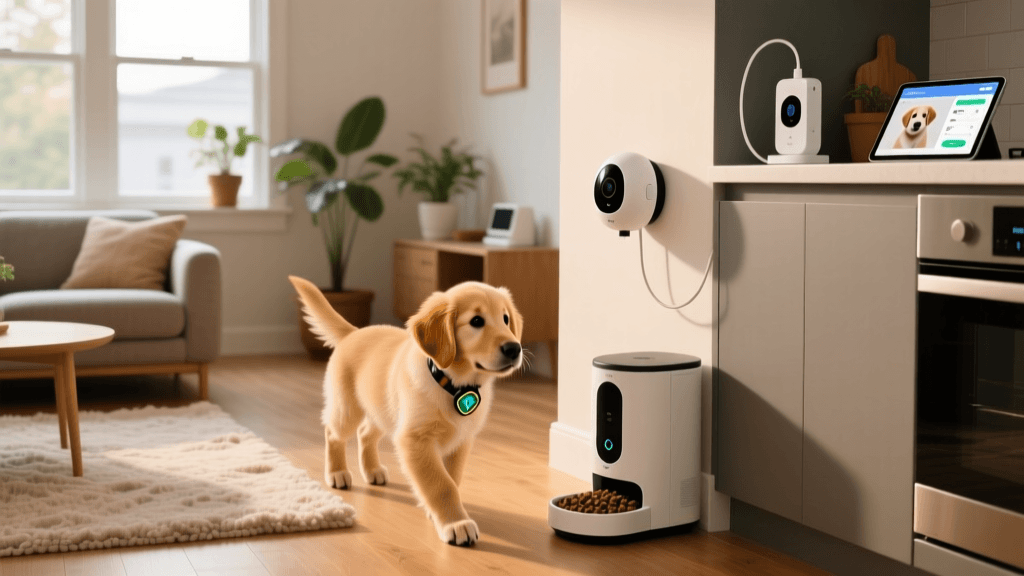
The physical preparation of your home is just as important as the behavioral preparation. The modern 2026 smart home offers incredible tools to help manage the physical boundaries between your dog and your baby's spaces, reducing your mental load during those exhausting early postpartum weeks.
| Prep Category | Traditional Method | 2026 Smart Transition Upgrade |
|---|---|---|
| Nursery Boundaries | Pressure-mounted wooden gates that require two hands to open. | Retractable mesh smart-gates with proximity sensors that auto-lock when the dog approaches. |
| Cry Desensitization | Playing YouTube baby cry sounds on a phone. | AI-integrated sound machines that gradually introduce and mix infant frequencies with white noise. |
| Supervision | Standard baby monitors that only alert for loud noise. | Dual-purpose nursery cameras with AI pet-detection that alert your phone if the dog enters the crib zone. |
| Enrichment | Stuffing a rubber toy with peanut butter. | Automated, app-controlled treat dispensers that schedule remote reward drops to keep the dog settled on their mat. |
Investing in this technology before the dog arrives allows you to train the dog to respect the automated boundaries while you are still fully mobile and capable of enforcing the rules manually. For instance, teaching your dog to settle on a specific mat outside the nursery door using an automated treat dispenser creates a positive association with the boundary, ensuring they view the nursery door as a place of reward rather than a place of exclusion.
Desensitization: Sounds, Scents, and Routines
Dogs experience the world primarily through their noses and ears. A newborn baby introduces a barrage of novel scents and piercing sounds that can trigger anxiety or overstimulation in an unprepared dog. Desensitization is the process of gradually introducing these stimuli at a low intensity, pairing them with high-value rewards to build a positive emotional response.
The Sound and Scent Protocols
Begin playing recordings of baby sounds—cooing, crying, and the mechanical whir of infant swings—at a very low volume while feeding your dog their meals or engaging in a fun training session. Over several weeks, gradually increase the volume. If the dog shows signs of stress, such as lip licking, yawning, or pacing, lower the volume immediately. You are looking for relaxed, indifferent behavior. Scent desensitization begins before the baby even leaves the hospital. When the baby is born, have a partner or family member bring home a blanket or onesie that has been in contact with the baby's skin. Allow your dog to sniff the item from a distance, rewarding them with high-value treats like boiled chicken or freeze-dried liver. Never force the item into the dog's face, and never allow the dog to sleep with or chew on the baby's belongings. This controlled introduction teaches the dog that the new scent predicts wonderful things, laying the groundwork for a peaceful first meeting.
The First Meeting and Ongoing Safety
When you finally bring the baby home, the initial greeting should be calm and highly structured. The dog should be exercised and mentally stimulated before the baby enters the house. Have one parent hold the baby while the other greets the dog calmly, keeping them on a leash if necessary. Allow the dog to sniff the baby's feet from a safe distance, rewarding calm behavior generously. According to the ASPCA's guide on preparing pets for a new baby, it is vital to never leave the dog and baby unattended together, regardless of how gentle the dog appears. As your baby grows and begins to crawl and walk, the dynamics will shift again, requiring constant supervision and ongoing management.
Safety must always remain the paramount concern during this life transition. The American Academy of Pediatrics (AAP) guidelines on pets and children emphasize that even the most well-behaved family dogs can react unpredictably to the sudden movements or accidental tail-pulling of a toddler. Furthermore, the American Veterinary Medical Association (AVMA) bite prevention resources highlight that the majority of dog bites to children occur in the home, involving familiar pets. By acknowledging these risks and proactively managing the environment through physical barriers, smart technology, and continuous behavioral training, you can successfully navigate the transition of getting a dog before your new baby arrives, fostering a lifelong, safe bond between your child and their canine sibling.
robin-maitland
All our authors care for dogs every day — read more of their work on the authors page.