Moving House With a Puppy in 2026: The Ultimate Transition Guide
Relocating in 2026? Discover expert strategies for moving house with a puppy, managing potty training regression, and easing transition anxiety.
The Psychology of Canine Relocation Stress
Moving to a new home is a monumental life transition for humans, but for a puppy, it represents a massive upheaval of their known universe. Puppies rely heavily on spatial memory, scent markers, and rigid daily routines to feel secure. When you begin packing up boxes, rearranging furniture, and ultimately changing the physical layout of their world, you inadvertently trigger a stress response. As we navigate the dynamic housing market of 2026, more families are relocating with young dogs, making it crucial to understand how to manage this transition effectively.
According to the ASPCA, maintaining a consistent routine is the single most effective way to reduce relocation stress in pets. A puppy does not understand the concept of a "mortgage" or a "lease agreement." To them, the sudden disappearance of their favorite chewing corner and the influx of strangers carrying heavy boxes signals that their environment is unstable. This instability can manifest in unwanted behaviors, including excessive barking, destructive chewing, clinginess, and most commonly, potty training regression.
The American Kennel Club (AKC) emphasizes that puppies may experience temporary regression in obedience and housebreaking during a move. Recognizing this as a normal psychological reaction—rather than stubbornness or bad behavior—is the first step in successfully guiding your puppy through this major life transition.
Phase 1: Strategic Packing and Pre-Move Prep
The weeks leading up to your move are just as critical as the moving day itself. The goal during this phase is to preserve as much normalcy as possible while slowly acclimating your puppy to the changing environment.
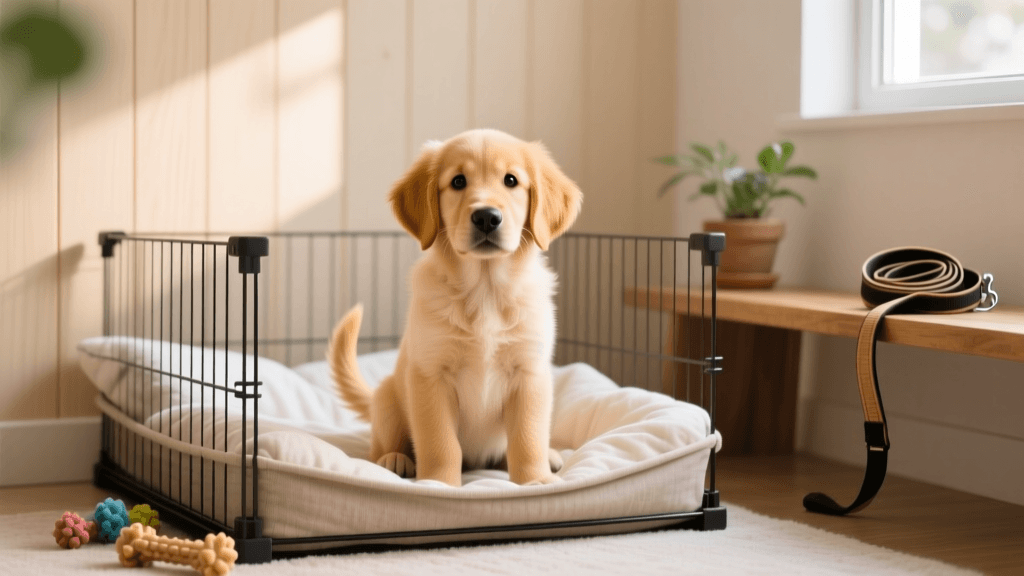
- Create a "Safe Zone": Designate one quiet room in your current home as the puppy’s sanctuary. Move their crate, bed, water bowl, and favorite toys into this room early on. Keep this space entirely free of moving boxes and packing materials.
- Delay Packing Their Belongings: Do not pack your puppy’s bed, favorite chew toys, or food bowls until the absolute last minute. These items are heavily imbued with familiar scents that will serve as an anchor in the new house.
- Introduce the Travel Crate: If your puppy will be traveling in a specific crate or carrier, leave it out in the living room weeks in advance. Feed them meals inside it and offer high-value treats to build a positive association with confinement and travel.
- Update Microchip Details: Before you even pack the first box, ensure your puppy’s microchip registry is updated with your new 2026 address and current phone number. If they slip out the door amidst the chaos of moving day, this is your best safety net.
Utilizing modern pet technology can also ease your mind during the packing process. Smart pet cameras, such as the Petcube Bites 3 Lite (a staple in 2026 pet tech), allow you to monitor your puppy’s stress levels in their safe zone while you are busy coordinating with movers or packing in other rooms.
Phase 2: Managing the Chaos of Moving Day
Moving day is loud, chaotic, and filled with strangers walking in and out of open doors. This is a prime time for a puppy to slip out, get stepped on, or become overwhelmingly frightened.
The absolute best strategy for moving day is to remove the puppy from the environment entirely. Book a familiar doggy daycare, hire a trusted pet sitter, or have a friend or family member take the puppy to their house for the day. If this is not an option, you must enforce a strict "closed-door" policy in the puppy's safe zone.
Place a prominent sign on the door of the safe room warning movers and family members to keep the door shut at all times. Inside the room, utilize calming aids. The Humane Society recommends using synthetic pheromone diffusers to help soothe pets during environmental changes. Plug in an Adaptil Optimum diffuser in the safe room at least 24 hours before moving day to saturate the space with comforting, mother-dog pheromones.
When it is finally time to transport your puppy to the new home, do so in their secured travel crate. Keep the car environment quiet, play soft classical music, and avoid making a big fuss when you arrive at the new destination. The transition should feel like a calm, routine car ride rather than a high-stakes event.
Phase 3: Conquering Potty Training Regression
The most common and frustrating issue owners face when moving house with a puppy is potty training regression. A puppy that was 100% housebroken at your old house might suddenly have accidents on the rug in your new living room. Why does this happen?
Puppies use spatial and olfactory cues to determine where it is appropriate to eliminate. In the new house, those familiar scent markers are gone. Furthermore, the new flooring might feel similar to the potty pads they used to use, or the new backyard might smell like unknown animals, causing them to hold their bladder or mark territory out of anxiety.
How to manage potty retraining in the new house:
- Revert to Basics: Treat your puppy as if they are 8 weeks old and completely untrained. Take them outside on a leash every two hours, immediately after meals, and immediately after naps.
- Scent Transfer: If possible, bring a small piece of turf, an unwashed potty pad, or even a bit of soil from their old potty spot and place it in their designated new potty area. This provides an immediate olfactory cue.
- Supervision is Key: Do not give your puppy free roam of the new house for the first two weeks. Use baby gates or keep them tethered to you with a hands-free leash so you can intercept any circling or sniffing behaviors.
- Enzymatic Cleaners: Accidents will happen. When they do, clean them immediately with a high-quality enzymatic cleaner like Rocco & Roxie Professional Strength Stain & Odor Eliminator. Standard household cleaners will not break down the uric acid crystals, leaving a scent trail that invites repeat offenses.
2026 Puppy Relocation Toolkit: Calming Aids & Tech
To support your puppy through the stress of a life transition, consider incorporating these highly rated tools and supplements into your moving strategy. The following table outlines the most effective products recommended by veterinary behaviorists in 2026.
| Product / Tool | Category | Primary Benefit | 2026 Est. Cost |
|---|---|---|---|
| Adaptil Optimum Diffuser | Pheromone | Reduces environmental anxiety and promotes calmness | $65.00 |
| Zylkene 75mg | Natural Supplement | Short-term acute stress relief (moving day/travel) | $35.00 |
| Petcube Bites 3 Lite | Smart Camera | Remote monitoring and treat tossing for separation anxiety | $120.00 |
| ThunderEase Puppy Calming Spray | Pheromone Spray | Portable calming aid for crates and car travel | $22.00 |
| KONG Classic (Red) | Enrichment Toy | Mental stimulation and stress relief through chewing | $18.00 |
Note: Always consult your primary veterinarian before introducing new oral supplements like Zylkene, especially if your puppy is on other medications or has underlying health conditions.
Phase 4: Re-establishing Routine and Neighborhood Socialization
Once the boxes are unpacked and the physical move is complete, the next phase of the life transition begins: integrating your puppy into the new neighborhood. A new environment means new sounds, new smells, new wildlife, and new neighbors. This can be overstimulating for a young dog.
For the first few days, keep walks short and close to home. Allow your puppy to sniff and process the new scents without forcing them to interact with strangers or other dogs. Sniffing is a naturally calming activity for dogs; it lowers their heart rate and helps them process their environment. A 15-minute "sniffari" around your new block is often more mentally tiring—and beneficial—than a 45-minute brisk walk.
As your puppy settles in, begin mapping out your new local resources. Locate the nearest 24-hour emergency veterinary clinic, identify the best local pet supply stores, and find secure, enclosed areas for off-leash play if your puppy has a reliable recall. Re-enroll in a local puppy socialization or basic obedience class in your new area. This not only reinforces training but also helps your puppy build positive associations with their new community.
Final Thoughts on Life Transitions
Moving house with a puppy requires patience, empathy, and strategic planning. By understanding that your puppy is experiencing a profound life transition, you can adjust your expectations and provide the support they need. Regression in potty training or temporary spikes in anxiety are not steps backward; they are natural responses to a shifting world.
Stick to your routines, utilize modern calming tools, and shower your puppy with positive reinforcement. Within a few weeks, the new house will no longer feel like a strange, scary place. It will simply become "home," anchored by the most important constant in your puppy's life: you.
beth-carrasco
All our authors care for dogs every day — read more of their work on the authors page.