Puppy Agility Foundations 2026: Safe Joints & Drive Guide
Discover safe puppy agility foundations for 2026. Learn joint protection, age milestones, and drive-building exercises to prep your pup for competition.
Introduction to Puppy Agility in 2026
Welcome to the dynamic world of canine sports. As we navigate the competitive landscape in 2026, the approach to puppy agility foundations has evolved significantly. Modern canine sports science emphasizes a holistic, developmentally appropriate methodology that prioritizes long-term joint health and psychological drive over premature physical exertion. Whether your goal is to compete in national championships or simply enjoy a fulfilling weekend hobby, laying the correct groundwork during your puppy's first year is the most critical step you will take. This comprehensive guide explores the safest, most effective methods to prepare your puppy for agility and competitive sports without compromising their physical or mental well-being.
The Golden Rule: Protecting Growing Joints
The most crucial aspect of puppy agility training is understanding canine skeletal development. Puppies possess open growth plates, or epiphyseal plates, at the ends of their long bones. These soft areas of developing cartilage are highly susceptible to injury from repetitive impact, twisting, or forced jumping. According to the Orthopedic Foundation for Animals (OFA), premature stress on these plates can lead to premature closure, resulting in angular limb deformities and early-onset osteoarthritis.
In 2026, veterinary sports medicine strictly advises against allowing puppies to jump at full height or perform repetitive weaving motions until their growth plates have fully fused. For medium and large breeds, this fusion typically occurs between 14 and 18 months of age. Therefore, all physical agility training during the first year must remain strictly on the ground or utilize specialized, low-impact proprioception equipment.
Age-Appropriate Agility Milestones
Structuring your training plan around your puppy's developmental stages ensures steady progress without causing physical or mental burnout. Below is the recommended timeline for introducing agility concepts during the first year.
| Puppy Age | Physical Focus | Mental and Drive Focus | Equipment Introduced |
|---|---|---|---|
| 8 to 16 Weeks | Body awareness, balance, safe surface navigation | Toy engagement, basic marker training, socialization | Flat paw pods, low cavaletti poles |
| 4 to 6 Months | Core strength, rear-end awareness, flexibility | Restrained recalls, tug drive, impulse control | Inflatable balance discs, wobble boards |
| 6 to 9 Months | Dynamic movement, jumping mechanics (ground level) | Distance control, obstacle focus, handling cues | Low plank walks, jump bumps, tunnel bags |
| 9 to 12 Months | Sequencing, endurance building, low-height jumping | Course analysis, proofing distractions, high-drive starts | Regulation tunnels, low contact equipment |
Building Body Awareness and Proprioception
Proprioception is the body's ability to sense its location, movements, and actions. For an agility dog, excellent proprioception means knowing exactly where their hind feet are while navigating a narrow dog walk or adjusting their stride before a jump. In 2026, the gold standard for building these skills involves specialized inflatable and foam equipment.
Recommended Foundation Exercises
- Targeting: Teach your puppy to place their front paws, and eventually their hind paws, on a specific target. Use a raised platform like the Klimb Dog Training Platform to encourage weight shifting and rear-end awareness.
- Perch Work: Using FitPAWS Paw Pods, encourage your puppy to step onto the unstable surfaces. This micro-movement engages deep core stabilizers that traditional walking simply cannot activate.
- Backing Up: Teaching a puppy to walk backward in a straight line is one of the most effective ways to build hindquarter strength and coordination, essential for tight jump wraps and contact obstacles.
Cultivating Drive and Engagement
Physical skills mean little if the dog lacks the motivation to perform them in a highly distracting competition environment. Drive building is the process of developing your puppy's innate prey and food drives into a focused, working partnership.
According to the Federation Cynologique Internationale (FCI) agility regulations, the speed and precision required in modern international competitions demand a dog that is intrinsically motivated and highly engaged with their handler. Drive is the engine that powers this performance.
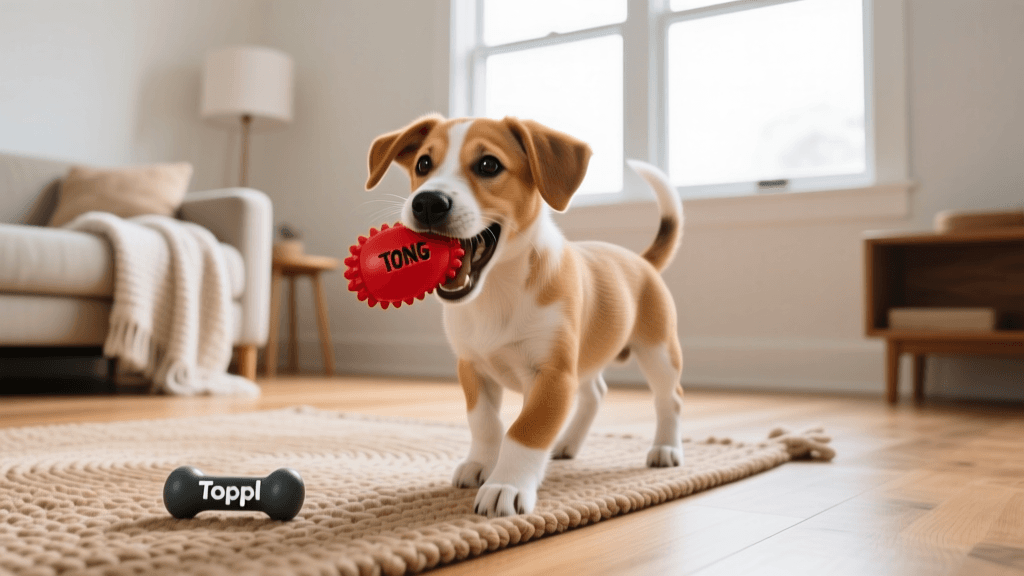
To build toy drive, utilize the two-toy game. Keep two identical tug toys hidden. When the puppy bites and tugs the first toy, reveal the second toy to trigger their chase instinct. This teaches the puppy that releasing a toy results in an even more exciting game, building powerful out-and-chase mechanics that translate directly to speed on the agility course.
Flatwork: The Invisible Leash of Agility
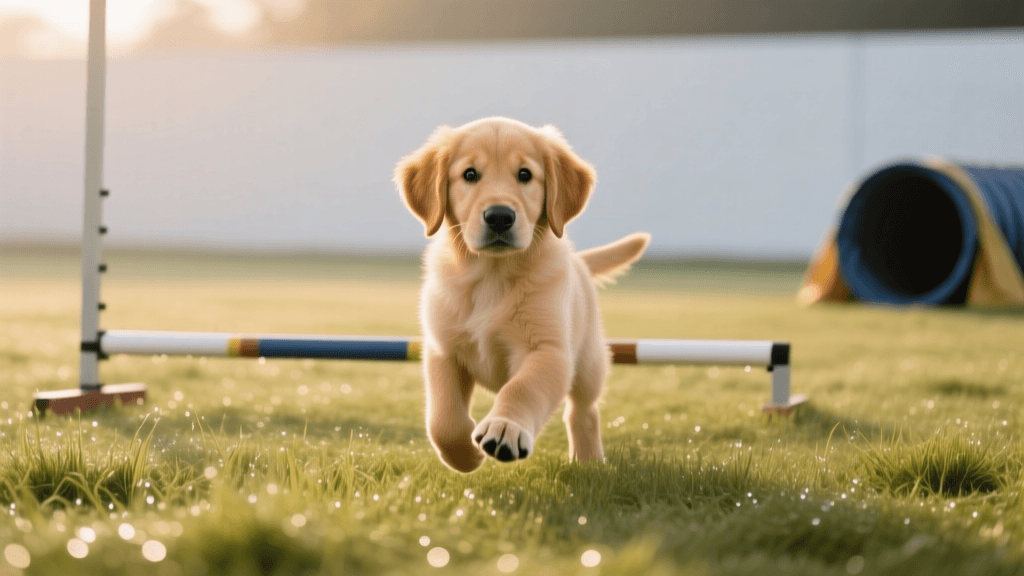
Flatwork refers to handling and obedience exercises performed without any obstacles. It is the absolute bedrock of agility. According to the American Kennel Club (AKC), top handlers spend up to 80 percent of their foundational training time on flatwork. This includes teaching the puppy to follow your body language, respond to verbal cues, and understand acceleration and deceleration mechanics. Start by running with your puppy on a flat, grassy surface. Practice changing directions, stopping abruptly, and accelerating. Reward the puppy heavily when they maintain focus on you despite environmental distractions. A puppy that understands flatwork will naturally seek out the correct path on a complex agility course, reducing the need for micromanagement later in their career.
Environmental Socialization for the Competition Venue
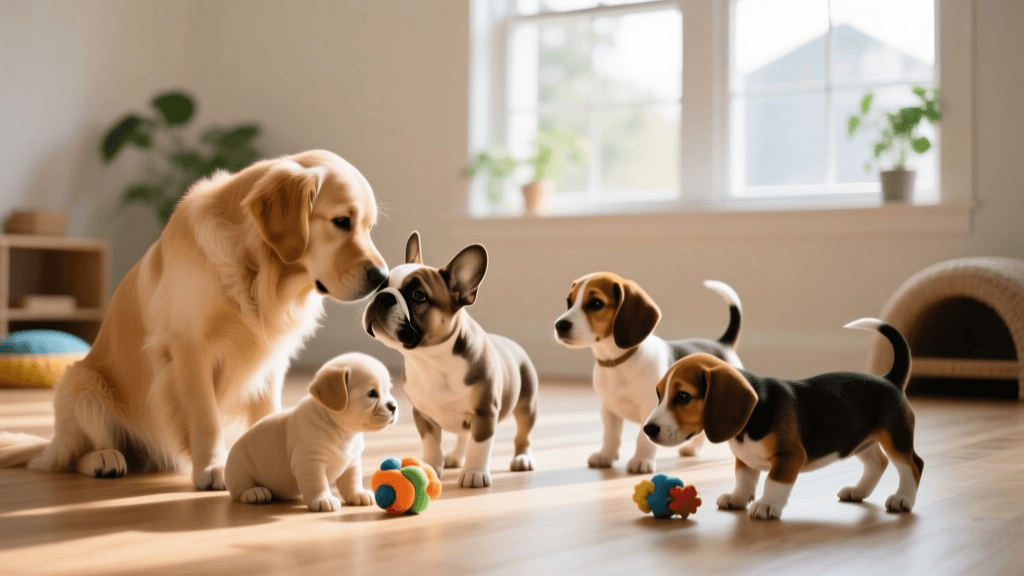
Agility trials are loud, chaotic, and visually overwhelming. A puppy that is not properly socialized to these stimuli will struggle to focus on the task at hand. Take your puppy to outdoor cafes, busy parks, and hardware stores. Bring your training treats and practice basic engagement in these high-distraction environments. Expose them to strange surfaces like metal grates, tarps, and wobble boards. The goal is to teach the puppy that novel environments are simply new places to play and earn rewards with their handler. This mental resilience is just as critical as physical conditioning when preparing for the intense atmosphere of a regional or national championship.
Essential 2026 Gear for Puppy Foundations
Investing in the right equipment early on prevents the formation of bad habits and ensures safety. Here are the top-rated tools for puppy agility foundations this year:
- Ruffwear Web Master Harness: Features a padded chest and belly support band, making it the safest option for spotting and lifting your puppy onto low contact equipment without straining their joints.
- Outward Hound Treat Pouch: A high-capacity, magnetic-closure treat pouch that allows for rapid reward delivery, which is critical when marking precise proprioception behaviors.
- Chute Tunnels (Collapsed Tunnels): While full tunnels are great, introducing a collapsed chute tunnel builds immense confidence and drive as the puppy learns to push through resistance to reach their reward.
Common Mistakes to Avoid in Early Training
Even with the best intentions, handlers can inadvertently set their puppies back. Avoid these common pitfalls:
- Repetitive Jumping: Never allow a puppy under 12 months to jump repeatedly, even at low heights. The repetitive landing impact is cumulative and damaging.
- Forcing Weave Poles: The lateral twisting required for weave poles is highly stressful on an immature spine. Wait until the puppy is at least 14 to 18 months old before introducing weaves.
- Overtraining: Puppies have short attention spans. Keep foundation sessions to 3 to 5 minutes. It is always better to end a session while the puppy is still begging for more than to push them to the point of mental fatigue.
Conclusion
Preparing a puppy for the rigors of competitive dog sports is a marathon, not a sprint. By focusing on joint preservation, deep proprioceptive awareness, and explosive drive building, you are constructing a resilient, confident, and fast canine athlete. The foundation you lay in 2026 will dictate your dog's competitive longevity and success for years to come. Stay patient, keep sessions joyous, and celebrate the small victories along the way.
hannah-wickes
All our authors care for dogs every day — read more of their work on the authors page.