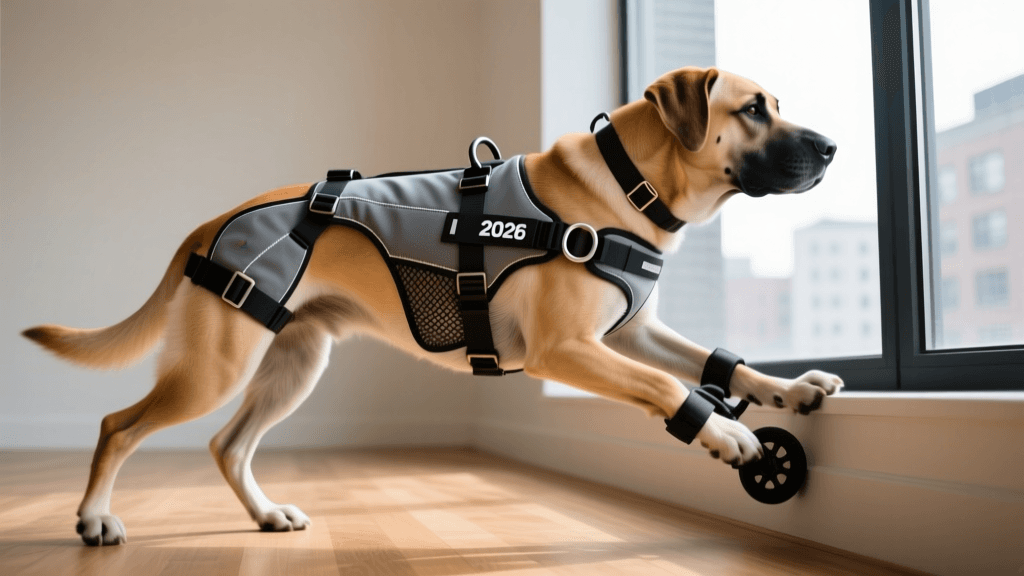
Best Mobility Service Dog Harnesses for Bracing: 2026
Discover the best mobility service dog harnesses for bracing and pulling in 2026. Compare top ergonomic picks for large breed task work and daily support.
Navigating Mobility Task Work in 2026
Living with a mobility service dog is a profound partnership that transforms daily life, offering independence, stability, and confidence to handlers with physical disabilities. As we move through 2026, the gear available for working dogs has evolved significantly, prioritizing both canine biomechanics and handler ergonomics. For individuals who rely on their dogs for bracing, counter-balance, or wheelchair pulling, selecting the correct harness is not just a matter of convenience; it is a critical investment in the dog's long-term joint health and working longevity.
Mobility tasks place unique physical demands on a dog's skeletal and muscular systems. Unlike guide work or medical alert tasks, mobility work requires the dog to absorb and redirect kinetic energy. According to the Americans with Disabilities Act (ADA), service dogs must be individually trained to do work or perform tasks for people with disabilities. When that work involves physical support, the equipment used must distribute the handler's weight safely across the dog's center of gravity to prevent catastrophic orthopedic injuries over time.
Understanding the Biomechanics of Bracing and Pulling
Before investing in high-end gear, it is essential to understand the distinct differences between the three primary types of mobility tasks:
- Bracing: This is a static or slow-moving task where the handler leans on the dog's back or shoulders for balance while standing, transferring from a wheelchair, or navigating uneven terrain. The dog must remain planted and absorb downward and lateral pressure.
- Pulling: A dynamic task where the dog pulls a manual wheelchair or helps a handler walk by providing forward momentum. This requires a harness that distributes weight across the chest and ribcage without restricting shoulder extension.
- Counter-Balance: The dog walks closely beside the handler, providing a stabilizing weight on the opposite side of the handler's weakness. This requires less specialized load-bearing gear but still benefits from a secure, non-shifting harness.
The Assistance Dogs International (ADI) sets rigorous accreditation standards that emphasize the physical welfare of working dogs. ADI guidelines dictate that dogs must not be subjected to tasks that exceed their physical capabilities, and handlers must use properly fitted, task-appropriate equipment. In 2026, top-tier mobility harnesses are designed specifically to meet these welfare standards, utilizing aerospace-grade materials and veterinary-approved padding.
Key Features of a 2026 Mobility Harness
When shopping for a mobility harness this year, generic 'service dog' vests will not suffice. You must look for specific structural elements designed for load-bearing:
1. Rigid vs. Flexible Handles
For bracing tasks, a rigid handle is non-negotiable. A rigid handle is typically constructed with a stainless steel or reinforced polymer core wrapped in leather or dense neoprene. When the handler leans on a rigid handle, the force is distributed evenly across the dog's back. A flexible handle, while excellent for guiding and navigating crowds, will collapse under the handler's weight during a brace, potentially causing the dog to lose balance or suffer spinal compression.
2. Chest Plate and Girth Distribution
Pulling harnesses require a broad, padded breastplate that sits above the sternum and clears the dog's shoulder joints. In 2026, the best models feature Y-shaped chest plates or wide saddle-style girth straps lined with memory foam or sheepskin to prevent chafing during long outings.
3. Custom Orthopedic Padding
Dogs performing heavy bracing tasks need extra padding along the spine and ribcage. Look for harnesses that offer modular padding or custom-molded inserts that conform to your specific dog's anatomy.
Top 3 Mobility Service Dog Harnesses for 2026
Based on veterinary feedback, handler reviews, and durability testing, here are the top three mobility harnesses dominating the market in 2026.
1. Custom Dog Designs Orthopedic Bracing Harness
For handlers who require heavy, frequent bracing, Custom Dog Designs remains the gold standard. This harness is built to order based on precise measurements of your dog's chest, girth, and back length. The 2026 iteration features an upgraded ultra-rigid titanium-core handle that is incredibly lightweight yet capable of supporting significant downward force. The saddle is lined with premium orthopedic foam that prevents pressure sores, even during prolonged standing tasks. While the price point is steep, the investment in your dog's spinal health is unparalleled.
2. Bold Lead Designs Mobility Harness
Bold Lead Designs offers a highly modular system that is perfect for handlers who need a mix of pulling and light bracing. Their Mobility Harness features a wide, padded chest plate that excels at wheelchair pulling. The handle is semi-rigid, offering excellent support for counter-balance and light bracing without the bulk of a full orthopedic saddle. The 2026 model includes improved quick-release buckles and reflective stitching for low-light visibility. It is an excellent mid-tier option that balances performance, comfort, and accessibility.
3. Ruffwear Web Master Pro
While not designed for heavy, full-body bracing, the Ruffwear Web Master Pro is the premier choice for counter-balance work, hiking, and light mobility support. Its multi-point adjustment system ensures a secure fit that will not shift when the dog moves laterally. The padded chest and belly straps provide excellent load distribution for pulling tasks on rough terrain. It is highly breathable, making it ideal for handlers living in warmer climates who need reliable daily support without overheating their canine partner.
2026 Mobility Harness Comparison Chart
| Brand and Model | Best Use Case | Handle Type | Approx. 2026 Price |
|---|---|---|---|
| Custom Dog Designs Orthopedic | Heavy Bracing and Transfers | Ultra-Rigid Titanium Core | $450 - $550 |
| Bold Lead Designs Mobility | Pulling and Light Bracing | Semi-Rigid Modular | $280 - $320 |
| Ruffwear Web Master Pro | Counter-Balance and Trail Pulling | Flexible Padded | $110 - $130 |
Canine Conditioning for Mobility Tasks
Even the most expensive 2026 harness cannot protect a dog that lacks the core strength to perform mobility tasks safely. Working dogs must be treated like canine athletes. Before clearing your dog for bracing or pulling, consult with a certified canine rehabilitation therapist.
Conditioning routines should focus on core stability, proprioception, and hind-end awareness. Exercises such as cavaletti rail work, standing on inflatable balance discs, and targeted resistance band training help build the deep stabilizing muscles required to absorb a handler's weight. Furthermore, veterinary guidelines generally suggest that a dog should not dynamically pull or brace more than 30 to 40 percent of their own body weight without specialized conditioning and explicit veterinary clearance.
Daily Fit Checks and Maintenance
A harness that fit perfectly six months ago may cause severe injury today if your dog has gained muscle mass, lost weight, or aged. Incorporate a fit check into your weekly routine:
- The Two-Finger Rule: You should be able to slide two fingers flat under all straps. If it is tighter, you risk restricting circulation and breathing; if looser, the harness will shift and cause friction burns.
- Asymmetrical Wear: Inspect the padding on the underside of the saddle. If one side is more compressed than the other, it may indicate that your dog is compensating for a subtle lameness or that your bracing technique is uneven.
- Hygiene: Wash the harness regularly according to the manufacturer's instructions. Accumulated sweat, dirt, and oils can break down the structural integrity of the webbing and cause severe bacterial skin infections on your dog's back.
Final Thoughts on Life with a Mobility Dog
Sharing your life with a mobility service dog is a deeply rewarding experience that requires ongoing attention to your partner's physical well-being. By investing in a high-quality, ergonomically sound harness and committing to a lifelong conditioning program, you ensure that your dog can continue to provide the vital support you need while living a comfortable, pain-free life. As gear technology continues to advance throughout 2026, handlers have more options than ever to protect the incredible animals that give them their independence.
aaron-whyte
All our authors care for dogs every day — read more of their work on the authors page.