2026 Mobility Service Puppy Socialization: Public Access Prep
Discover the 2026 public access socialization protocol for mobility assistance puppies, covering early desensitization, gear, and milestone tracking.
Raising a Mobility Assistance Puppy in 2026
Raising a puppy destined for mobility assistance work is a profoundly rewarding journey that requires a vastly different approach than raising a standard household pet. Mobility service dogs are tasked with life-changing duties, such as bracing for balance, retrieving dropped items, pulling wheelchairs, and opening doors. To perform these tasks reliably, the puppy must first master the art of remaining calm, focused, and unbothered in highly stimulating public environments. In 2026, the standards for public access training have evolved, emphasizing early, structured desensitization and positive reinforcement to build resilient working dogs.
The first year of a mobility puppy's life is the foundation of their entire career. If a puppy washes out of service dog training, it is rarely due to a lack of physical capability; rather, it is almost always due to environmental sensitivities, lack of focus, or poor public manners developed during the critical socialization window. This comprehensive guide outlines the 2026 public access socialization protocol, essential gear, and milestone tracking necessary to prepare a mobility assistance puppy for the rigors of their future career.
The Critical Socialization Window for Working Puppies
The primary socialization window for puppies occurs between 3 and 14 weeks of age. During this time, a puppy's brain is uniquely primed to accept new experiences without fear. For a future mobility dog, this window must be maximized to introduce the sights, sounds, and surfaces they will encounter while working alongside a disabled handler. According to the AKC Canine Good Citizen Program, early positive exposure is the strongest predictor of a dog's future temperament and adaptability in public spaces.
Unlike pet puppies, who may only need to tolerate a busy park, mobility puppies must be desensitized to medical environments, public transit, and mobility equipment. This means introducing the sound of dropping metal crutches, the hum of electric wheelchairs, and the tactile sensation of hospital linoleum floors long before the puppy reaches six months of age.
The 2026 Public Access Desensitization Protocol
To ensure your puppy develops the stoic temperament required for mobility work, follow this phased desensitization protocol during their first six months.
Phase 1: Surface and Spatial Awareness (Weeks 8-10)
Mobility dogs must navigate complex terrain while their handler's safety is on the line. During this phase, introduce your puppy to:
- Tactile Paving and Metal Grates: Use high-value treats (like freeze-dried beef liver) to lure the puppy across sidewalk tactile domes and subway grates. Never force them; let them explore at their own pace.
- Slippery Floors: Practice basic sits and downs on polished concrete, hospital linoleum, and wet tile. This builds hind-end awareness and confidence.
- Elevators and Automatic Doors: The sudden movement of automatic grocery store doors or the enclosed space of an elevator can trigger claustrophobia. Feed meals inside stationary elevators or near automatic doors to build positive associations.
Phase 2: Auditory and Visual Desensitization (Weeks 11-14)
Public spaces are loud and unpredictable. A mobility dog cannot flinch or break their "settle" command when a tray drops in a cafeteria or a siren wails past.
- Medical Equipment Sounds: Play recordings of hospital PA systems, heart monitors, and wheelchair motors at a low volume while the puppy eats, gradually increasing the volume over several weeks.
- Transit Environments: Visit bus terminals or train stations. Sit on a bench 50 feet away from the boarding area and reward the puppy for offering eye contact and remaining relaxed as heavy machinery moves past.
Phase 3: Mobility Equipment Familiarization (Weeks 15-24)
Before a dog can brace or pull, they must view mobility aids as neutral objects. Introduce canes, crutches, walkers, and manual wheelchairs in the home environment. Allow the puppy to sniff the equipment, then practice "leave it" and "place" commands while you operate the equipment nearby. The goal is for the puppy to remain entirely indifferent to the movement of the gear.
Essential Gear for Early Public Access Training
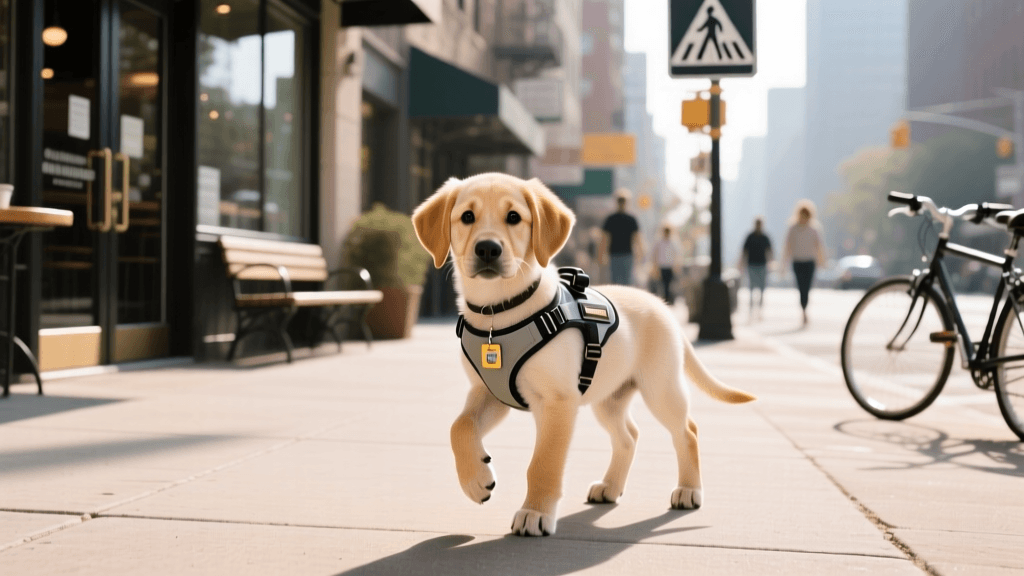
Equipping your puppy with the right tools in 2026 ensures safety and clear communication. While actual bracing and pulling harnesses are custom-fitted only after the dog reaches skeletal maturity (18-24 months), early training requires specific gear:
- Julius-K9 IDC Powerharness: Excellent for early public access work. It provides a secure handle for emergency control without restricting the puppy's shoulder movement, which is critical for developing mobility dogs.
- Doggone Good Rapid Rewards Pouch: In public access, timing is everything. This pouch features a magnetic closure that allows for rapid, silent treat delivery, preventing the puppy from becoming distracted by the sound of zippers or velcro.
- Kurgo Waterproof Training Mat: The "settle" or "place" command is the most vital skill for a service dog. Carrying a portable, waterproof mat allows you to create a designated "office space" for your puppy under restaurant tables or in hospital waiting rooms.
- Snuggle Puppy Heartbeat Stuffed Toy: Crucial for the first few weeks of crate training and hotel stays during public access outings. The simulated heartbeat reduces separation anxiety and promotes deep, restorative sleep.
Potty Training on Command for Public Access
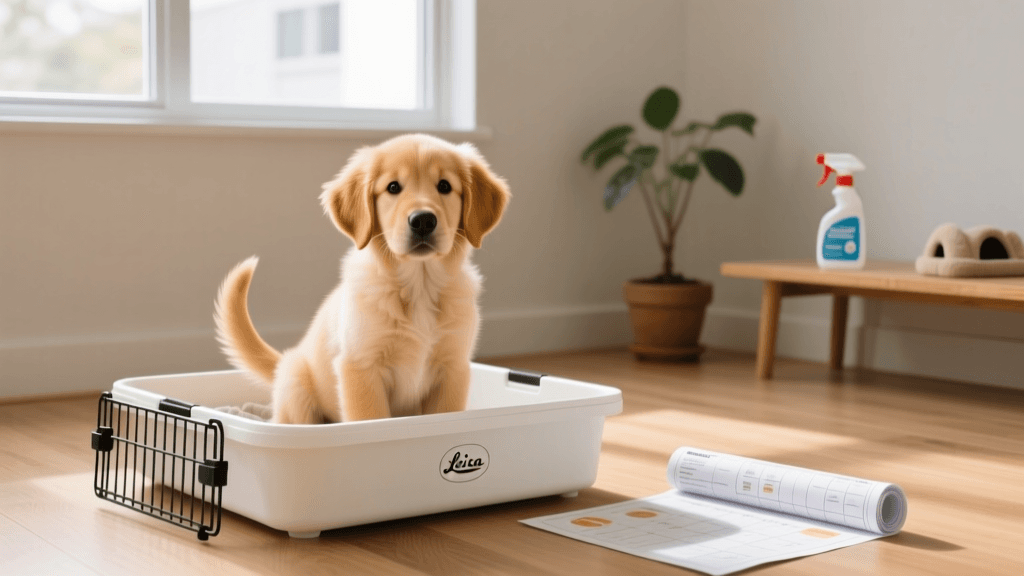
For a mobility assistance dog, potty training goes far beyond simply not having accidents in the house. The dog must learn to eliminate on command, on various surfaces, and in a designated spot to accommodate a handler who may have limited mobility or time. The U.S. Department of Justice ADA Service Animal Requirements dictate that service animals must be housebroken, making this a non-negotiable federal standard.
The "Go Potty" Protocol:
- Choose a specific verbal cue (e.g., "Go Potty" or "Do your business").
- Take the puppy to a designated spot on a leash. Say the cue exactly once.
- Allow 3-5 minutes. If the puppy eliminates, immediately reward with a high-value treat and a release word ("Free!").
- If the puppy does not eliminate, return them to their crate or a supervised pen for 15 minutes, then try again. This prevents the puppy from learning that being outside is for playing rather than working.
By month four, the puppy should be able to eliminate on gravel, grass, concrete, and mulch on command, ensuring they can relieve themselves in any urban environment their handler navigates.
Milestone Tracking Chart: The First 6 Months
Tracking your puppy's progress is vital for identifying gaps in their public access preparation. Use the following chart to monitor their development.
| Age Range | Primary Environment | Mobility Skill Focus | Potty & Manners Goal |
|---|---|---|---|
| 8-10 Weeks | Home, Quiet Parks | Surface confidence, Hind-end awareness | Crate training, Bell-ringing for door |
| 11-14 Weeks | Retail Stores, Cafes | Settle on mat, Ignoring dropped food | Potty on command (Grass/Concrete) |
| 15-18 Weeks | Transit Hubs, Hospitals | Indifference to wheels/medical gear | Eliminating in high-distraction zones |
| 19-24 Weeks | Offices, Schools | Under-desk settle, Silent resting | 100% reliable housebreaking |
Cultivating the "Soft Mouth" During Teething
Mobility dogs are frequently tasked with retrieving dropped items such as smartphones, credit cards, keys, and medication bottles. A dog with a "hard mouth" will puncture or crush these items, rendering the task useless. Therefore, managing the teething phase (typically 3 to 6 months) with a focus on bite inhibition and soft-mouth retrieval is critical.
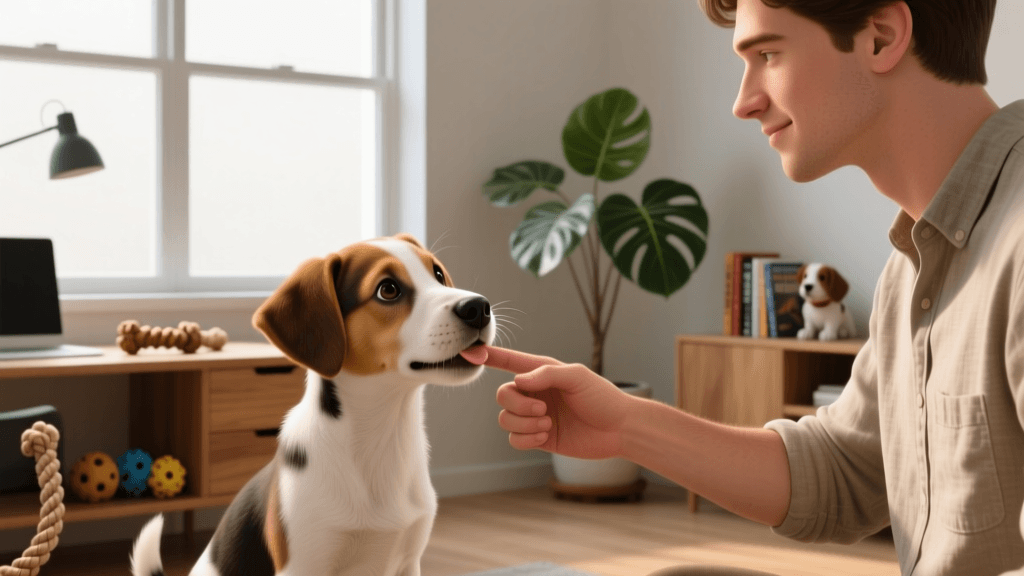
During the teething phase, provide plenty of appropriate chewing outlets like the KONG Classic or frozen carrot sticks to soothe inflamed gums. When introducing early retrieve games, use soft, pliable toys and heavily reward the puppy for releasing the item gently into your hand. Never play tug-of-war with a future mobility dog during their teething phase, as this encourages a hard bite and pulling, which directly conflicts with the gentle retrieval required for service work.
Adhering to Federal and Organizational Standards
As you navigate the puppy's first year, it is imperative to align your training with established industry benchmarks. The Assistance Dogs International (ADI) Standards provide rigorous guidelines on public access behavior, emphasizing that a service dog must remain unobtrusive, quiet, and entirely focused on their handler. ADI standards explicitly state that a dog in training must not solicit petting, sniff merchandise, or exhibit aggressive or fearful behaviors in public.
By combining the ADI behavioral standards with early, systematic desensitization and positive reinforcement, you set your mobility assistance puppy on a path to success. The dedication required during the first year is immense, but the end result—a confident, capable dog that grants their handler independence and dignity—is a profound testament to the power of early, intentional puppy care.
hannah-wickes
All our authors care for dogs every day — read more of their work on the authors page.