Raising Mobility Service Dog Puppies: 2026 Training Guide
Learn the 2026 protocols for raising mobility service dog puppies, focusing on early joint care, foundational task cues, and public access socialization.
Raising a puppy is a universally rewarding experience, but raising a mobility service dog puppy elevates this journey into a profound, life-changing responsibility. In 2026, the demand for highly trained mobility assistance dogs has surged, driven by an aging population and increased awareness of invisible disabilities. These remarkable canines are tasked with life-altering duties: bracing for balance, retrieving dropped items, opening heavy doors, and even pulling wheelchairs. However, a successful working dog is not born overnight; the foundation is laid during the critical first twelve months of life. As a puppy raiser, you are the architect of a future lifeline. This comprehensive guide explores the 2026 protocols for rearing mobility service dog prospects, focusing on joint preservation, foundational task mapping, and structured public access socialization.
The Critical Role of the Puppy Raiser
Puppy raisers, often volunteers working under the umbrella of established assistance dog organizations, serve as the vital bridge between a breeder’s whelping box and a professional trainer’s advanced curriculum. According to Assistance Dogs International (ADI), the global coalition that sets the gold standard for assistance dog training, the puppy raising phase is the most critical period for behavioral shaping. In 2026, ADI emphasizes a shift away from rigid, old-school obedience models toward force-free, cognitive-based enrichment. This means that modern puppy raising is less about demanding perfect heel positions and more about fostering confidence, environmental neutrality, and problem-solving skills.
Protecting Growth Plates: Joint Care for Future Mobility Dogs
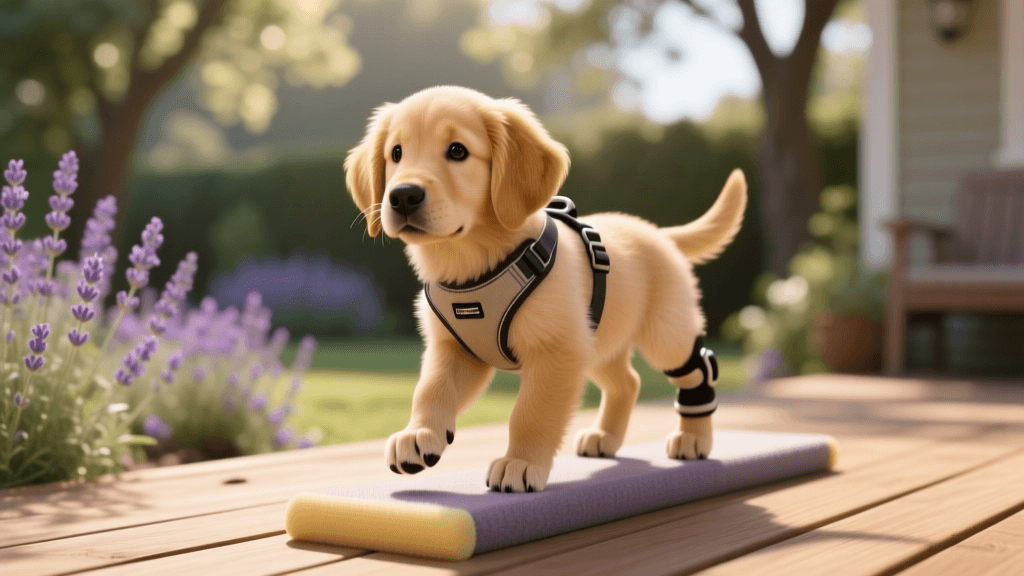
Unlike companion pets, mobility assistance dogs are canine athletes. Breeds commonly selected for this work—such as Labrador Retrievers, Golden Retrievers, and German Shepherds—are large, heavy-boned dogs that will eventually bear physical loads. Protecting their orthopedic health during the puppy phase is non-negotiable. Puppies possess open growth plates (epiphyseal plates) at the ends of their long bones. These areas of developing cartilage are highly susceptible to injury from repetitive stress, high-impact jumping, or forced running.
The 2026 veterinary consensus strongly advises against high-impact exercises like agility jumping, frisbee, or jogging on hard pavement until a large-breed puppy is at least 18 to 24 months old and has received radiographic clearance. Instead, puppy raisers must focus on proprioception and low-impact core strengthening.
- Surface Variety: Walk the puppy on grass, sand, gravel, and safe rubberized surfaces to build stabilizing micro-muscles.
- Puzzle Feeders: Use snuffle mats and elevated, adjustable slow feeders to encourage natural foraging postures without straining the neck or spine.
- Controlled Stair Use: Carry puppies up and down stairs until they are at least six months old, and then limit stair climbing to short, controlled sessions.
Foundational Cues: Mapping Puppy Training to Mobility Tasks
You are not teaching a puppy to pull a wheelchair at eight weeks old. Instead, you are teaching the component behaviors that will eventually be chained together into complex mobility tasks. By breaking down advanced tasks into foundational puppy cues, you build a confident learner who views work as an engaging game. Below is a structured breakdown of how basic 2026 puppy training cues translate into advanced mobility assistance tasks.
| Foundational Puppy Cue | Training Method (Force-Free) | Future Mobility Task Application |
|---|---|---|
| Targeting (Touch) | Teaching the puppy to touch a target stick or hand with their nose or paw. | Pushing ADA-compliant door buttons, closing cabinets, or turning on lights. |
| Mat Work (Settle) | Rewarding calm, settled behavior on a specific textured mat. | Tucking tightly under a restaurant table or hospital bed without blocking aisles. |
| Brace (Stand) | Shaping a solid, unmoving stand-stay while applying mild, variable pressure. | Providing counter-balance support for a handler with vestibular disorders or POTS. |
| Harness (Dress) | Desensitizing the puppy to wearing vests, booties, and head halters. | Willingly inserting head and legs into a custom-fitted mobility pulling harness. |
| Retrieve (Hold) | Shaping a soft-mouth hold with various textures (metal, plastic, fabric). | Picking up dropped credit cards, keys, or mobility aids like a collapsed cane. |
By mastering these foundational elements, the puppy develops the muscle memory and cognitive understanding required for advanced tasking. Professional trainers will later add the physical weight and environmental distractions necessary for real-world mobility work.
Public Access Socialization and SDiT Etiquette
A mobility dog must remain unfazed by the chaos of the human world. Sirens, erratic children, slick floors, and crowded transit hubs are all part of the job description. However, socializing a Service Dog in Training (SDiT) requires strict adherence to legal and ethical guidelines. Under the Americans with Disabilities Act (ADA), service animals must be individually trained to do work or perform tasks for a person with a disability. While the ADA does not grant automatic public access rights to SDITs (this is governed by individual state laws), reputable organizations ensure their puppies are exposed to public environments safely and legally.
In 2026, best practices for SDiT socialization involve the 'Passive Observation' method. Rather than forcing a puppy to interact with every stranger, raisers teach the puppy to observe the environment neutrally while remaining focused on the handler. Strangers are notoriously eager to pet a puppy in a vest, but allowing constant petting undermines the dog's future working focus.
A well-socialized mobility prospect does not ignore the environment out of fear, but rather acknowledges it and chooses to remain engaged with their handler. Environmental neutrality is the ultimate goal.
Large Breed Nutrition for Working Dog Prospects
Fueling a future mobility dog requires precise nutritional management. Overfeeding a large-breed puppy can lead to rapid growth, exacerbating the risk of hip and elbow dysplasia—conditions that will instantly disqualify a dog from mobility work. The Association of American Feed Control Officials (AAFCO) strictly regulates large-breed puppy formulations, ensuring they contain controlled levels of calcium and phosphorus to promote steady, safe bone development.
In 2026, top-tier assistance dog organizations mandate the use of specific large-breed puppy kibble or scientifically formulated raw diets that meet WSAVA (World Small Animal Veterinary Association) guidelines. Raisers must weigh their puppies weekly and utilize body condition scoring (BCS) to ensure the puppy remains lean. A working dog prospect should have a visible waist and easily palpable ribs; carrying excess puppy fat places unnecessary, damaging stress on developing joints.
The Emotional Journey: Support for Puppy Raisers
The emotional journey of puppy raising is often overlooked. The 'puppy blues' are a well-documented phenomenon, and raising a dog destined to change a disabled person's life adds a layer of performance anxiety. Fortunately, the 2026 landscape of assistance dog organizations includes robust mental health and peer-support networks for volunteer raisers. Weekly virtual check-ins, regional puppy-sitting co-ops, and access to certified veterinary behaviorists ensure that raisers are supported just as much as the puppies they rear.
Conclusion: The Reward of the Journey
Raising a mobility service dog puppy is a rigorous, emotionally demanding, and deeply fulfilling endeavor. By adhering to the 2026 protocols for joint preservation, utilizing force-free foundational cue mapping, and practicing ethical public access socialization, puppy raisers ensure these incredible animals are physically and mentally prepared for the work ahead. When that puppy eventually graduates and is placed with a handler who relies on them for independence and safety, every early morning walk, every training session, and every protected growth plate will have been worth it.
anouk-beaumont
All our authors care for dogs every day — read more of their work on the authors page.