7 Major Mistakes to Avoid When Preparing for a New Dog
Avoid these 7 common and costly mistakes when preparing your home and buying supplies for a new dog. Ensure a safe, smooth transition for your new pet.

The Excitement Trap: Why Good Intentions Lead to Costly Mistakes
Bringing a new dog or puppy into your home is one of life’s most rewarding experiences. The anticipation often drives new owners to pet stores and online retailers, filling shopping carts with every gadget, bed, and toy available. However, this excitement can easily lead to costly errors, unsafe environments, and behavioral hurdles that could have been avoided. Preparing for a dog is not just about buying things; it is about strategic planning, safety, and understanding canine psychology.
Many well-meaning pet parents inadvertently sabotage their dog's transition by making common setup mistakes. From choosing the wrong training gear to using hazardous household cleaners, the pitfalls are numerous. To help you navigate this critical phase, we have compiled a comprehensive guide on what not to do when preparing your home and gathering supplies for your new furry family member.
1. Do NOT Buy an Oversized Crate Without a Divider
One of the most frequent mistakes new owners make is purchasing a massive crate to accommodate the adult size of their puppy, thinking it will save them money in the long run. While the logic seems sound, an oversized crate defeats the primary purpose of crate training: housebreaking.
Dogs naturally avoid soiling their sleeping area. If a small puppy is placed in a large crate, they will designate one corner for sleeping and the opposite corner as a bathroom. This completely undermines your potty training efforts. According to the American Kennel Club (AKC), a crate should only be large enough for the dog to stand up, turn around, and lie down comfortably.
The Actionable Fix:
- Buy a wire crate with an adjustable divider panel. Brands like Midwest Homes for Pets offer these standard features.
- Measure correctly: Estimate your dog's adult height from the floor to the top of their shoulders, and add 2 to 4 inches. Buy that size crate, but use the divider to restrict the space to just what the puppy needs right now.
- Expand gradually: Move the divider back a few inches every month as your puppy grows.
2. Do NOT Skip the 'Floor-Level' Puppy-Proofing Crawl
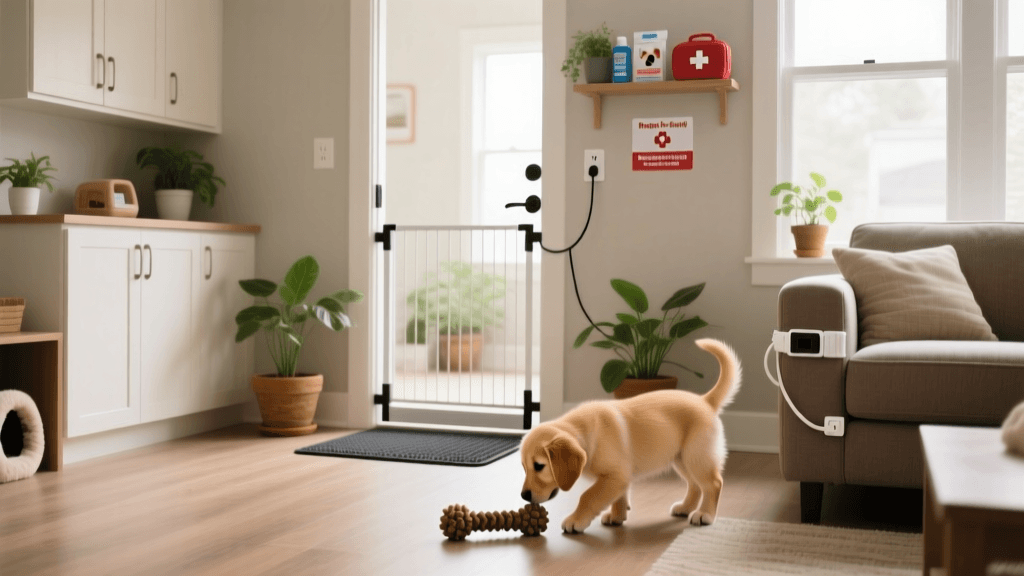
Human beings live at a height of five to six feet, which means our perspective on home safety is inherently flawed when it comes to dogs. Assuming your home is safe because hazardous items are out of your reach is a dangerous oversight. Puppies explore the world with their mouths, and their eye level is mere inches from the floor.
Failing to get down on your hands and knees to inspect your home can lead to emergency vet visits for gastrointestinal blockages or toxic exposures. The ASPCA strongly recommends a thorough, ground-level sweep of your home before a dog's paws ever touch your floors.
The Actionable Fix:
- Secure electrical cords: Use split-loom tubing or cable management boxes to hide wires behind TVs and desks. Puppies chewing on live wires can suffer severe burns or fatal electrocution.
- Audit your houseplants: Many common plants, including Sago Palms, Lilies, and Pothos, are highly toxic to dogs. Move all plants to high shelves or hang them from the ceiling.
- Check for small choking hazards: Pick up stray coins, rubber bands, children's toys, and dropped medications. If it can fit inside a toilet paper tube, it is a choking or blockage risk.
3. Do NOT Invest in Expensive Orthopedic Beds for Teething Puppies
It is incredibly tempting to spoil a new puppy with a $150 orthopedic memory foam bed or a plush, luxury lounger. However, puppies go through a relentless teething phase that peaks between 4 and 6 months of age. During this time, their urge to chew is insatiable, and a plush bed will be viewed as an oversized chew toy.
Not only is destroying an expensive bed a waste of money, but it is also a severe health hazard. Ingesting foam, cotton stuffing, or fabric can cause life-threatening intestinal blockages requiring emergency surgery, which can cost upwards of $3,000 to $5,000.
The Actionable Fix:
- Use an elevated cot: Invest in a chew-proof, PVC-framed elevated bed (like a Kuranda cot). The tight mesh fabric is difficult to chew, and it keeps the dog cool.
- Layer with cheap blankets: Use inexpensive, tightly woven fleece blankets that can be easily replaced and machine-washed.
- Wait for adulthood: Save the luxury orthopedic beds for when your dog is past the chewing phase, typically around 12 to 18 months of age.
4. Do NOT Use Retractable Leashes for Early Training
Retractable leashes (the ones with a plastic handle and a thin cord that extends up to 26 feet) are heavily marketed and widely purchased by new dog owners. From a training and safety perspective, they are a terrible choice for a new dog.
Retractable leashes teach dogs that pulling is rewarded with more freedom. If a dog pulls and the leash extends, they learn that tension on the neck yields the desired result. Furthermore, the thin cords can cause severe friction burns to human hands, and the bulky plastic handles can easily be dropped, terrifying the dog and leading to a runaway incident.
The Actionable Fix:
- Use a standard 4-to-6-foot leash: A fixed-length leather, nylon, or BioThane leash gives you maximum control and keeps the dog close in high-traffic areas.
- Choose the right collar or harness: Avoid standard flat collars for breeds with narrow heads (like Greyhounds or Whippets) as they can slip out; use a Martingale collar instead. For strong pullers, use a front-clip harness (like the Ruffwear Front Range) which gently redirects the dog's momentum back toward you when they pull.
5. Do NOT Stockpile Bulk, Unverified Dog Food
Buying a 40-pound bag of dog food from a warehouse store simply because it is on sale is a major misstep. Not all dog foods are created equal, and some bulk brands lack the rigorous nutritional testing required for optimal canine development. Furthermore, buying in bulk before you know your dog's specific dietary tolerances can lead to severe gastrointestinal upset, allergies, or wasted money.
The World Small Animal Veterinary Association (WSAVA) provides strict global nutrition guidelines, urging owners to choose diets formulated by veterinary nutritionists and backed by feeding trials, rather than marketing buzzwords.
The Actionable Fix:
- Stick to the breeder or shelter's food initially: For the first two weeks, feed your dog exactly what they were eating previously to avoid stress-induced diarrhea.
- Transition slowly: When switching to a WSAVA-compliant brand (such as Purina Pro Plan, Hill's Science Diet, or Royal Canin), mix the new food with the old over a 7-to-10-day period (starting at 25% new / 75% old).
- Buy smaller bags first: Purchase a 5-pound or 10-pound bag to ensure your dog tolerates the formula well before committing to a 30-pound bulk sack.
6. Do NOT Clean Accidents With Ammonia or Bleach
When a new dog inevitably has a housetraining accident on your rug, your first instinct might be to reach for heavy-duty household cleaners like bleach or ammonia-based products. This is a critical error that will actually encourage your dog to soil the exact same spot again.
Urine contains high levels of ammonia. If you clean an accident with an ammonia-based cleaner, the lingering scent signals to the dog's highly sensitive olfactory system that the spot is an approved bathroom area. Bleach, meanwhile, is toxic and can cause respiratory irritation for both you and your pet.
The Actionable Fix:
- Use enzymatic cleaners exclusively: Products like Nature's Miracle or Rocco & Roxie contain bio-enzymes that literally break down the uric acid crystals and proteins in the urine, eliminating the scent entirely.
- Blot, do not rub: Press down firmly with paper towels to absorb as much moisture as possible before applying the enzymatic cleaner.
- Let it sit: Enzymatic cleaners need time to work. Saturate the area and let it sit for 10 to 15 minutes before blotting it dry.
Quick Reference Table: Puppy Supply Do's and Don'ts
| Supply Category | What NOT to Do | What to Do Instead |
|---|---|---|
| Crates | Buy an oversized crate without a divider. | Buy a wire crate with an adjustable divider panel. |
| Beds | Purchase plush, expensive memory foam beds. | Use an elevated PVC cot with cheap fleece blankets. |
| Leashes | Use retractable leashes with thin cords. | Use a fixed 4-to-6-foot BioThane or nylon leash. |
| Cleaners | Clean accidents with ammonia or bleach. | Use bio-enzymatic cleaners like Nature's Miracle. |
| Food | Buy 40lb bulk bags of unverified kibble. | Buy small bags of WSAVA-compliant food and transition slowly. |
7. Do NOT Delay Veterinary and Financial Safety Nets
Many new owners bring their dog home and put off finding a veterinarian or setting up a financial safety net, assuming they can handle it 'later.' This is a massive gamble. Puppies and newly adopted dogs are highly susceptible to sudden illnesses, congenital defects, and accidental injuries during their first few weeks in a new environment.
Waiting until your dog is sick or injured to find an emergency vet means you will be making high-stress decisions while panicked. Furthermore, failing to secure pet insurance early can leave you with thousands of dollars in unexpected medical bills, or force you to make tragic economic euthanasia decisions.
The Actionable Fix:
- Schedule a 'Well-Visit' on Day One: Call a local veterinary clinic before you even bring the dog home and schedule an intake exam within the first 72 hours.
- Enroll in Pet Insurance Immediately: Most pet insurance providers (like Trupanion or Healthy Paws) have waiting periods for illnesses and orthopedic conditions. If you wait three months to enroll, any pre-existing conditions developed during that time will be permanently excluded from coverage.
- Create an Emergency Fund: If you opt against pet insurance, open a separate high-yield savings account specifically for your dog and seed it with at least $1,000 to $2,000 before the dog arrives.
Final Thoughts on Setting Your Dog Up for Success
Preparing for a new dog requires shifting your perspective from a human homeowner to a curious, chewing, learning canine. By avoiding these seven common mistakes, you protect your wallet, safeguard your dog's health, and lay a rock-solid foundation for training and bonding. Remember that the goal of bringing a dog home is not just to provide them with a house, but to create a secure, structured environment where they can thrive for the next decade and beyond. Take your time, do your research, and prioritize safety and function over aesthetics and impulse buys.
hannah-wickes
All our authors care for dogs every day — read more of their work on the authors page.