Resource Guarding in Multi-Dog Homes: A Behaviorist's Guide
Discover applied behavior analysis techniques to safely manage and modify resource guarding in multi-dog households with expert routines.
Understanding Resource Guarding Through a Behaviorist's Lens
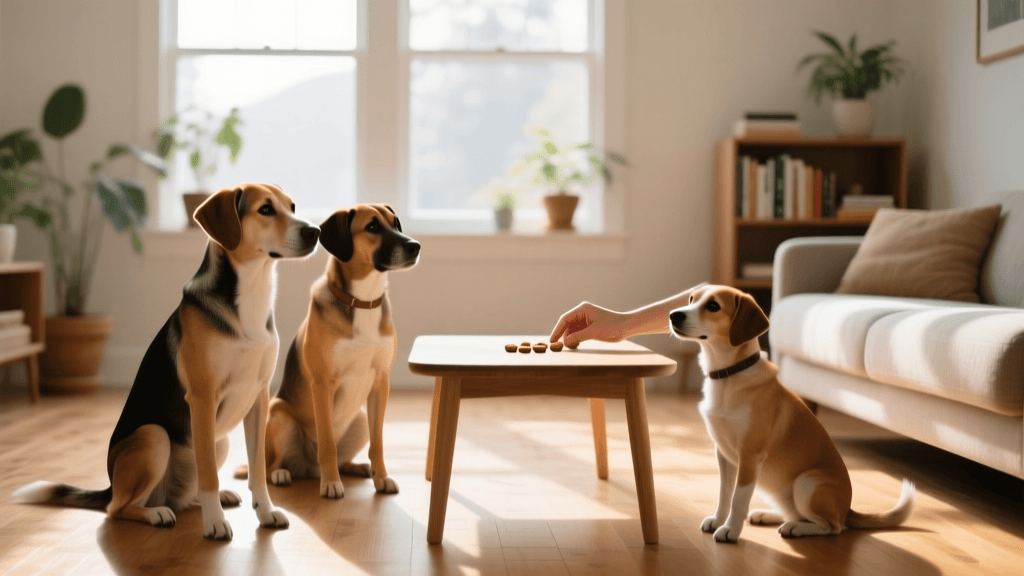
Resource guarding is one of the most misunderstood and frequently mismanaged behaviors in multi-dog households. From an applied behavior analysis (ABA) and ethological perspective, guarding is not a manifestation of 'dominance,' 'spite,' or 'alpha' posturing. Instead, it is a natural, adaptive survival behavior that has been inadvertently shaped by operant conditioning. When Dog A approaches Dog B's high-value chew, and Dog B offers a low-level warning like a stiffened posture or a hard stare, Dog A typically retreats. The consequence of Dog B's behavior is that they successfully retain their resource. This negative reinforcement makes the guarding behavior more likely to occur, and escalate, in the future.
As a behaviorist, my primary goal is not to suppress the warning signs through punishment, which often leads to a dog that bites without warning. Instead, we must address the underlying emotional response (anxiety and fear of resource loss) while strictly managing the environment to prevent rehearsal of the unwanted behavior. According to the ASPCA's guide on resource guarding, early intervention and positive reinforcement are the cornerstones of safely modifying this behavior.
The ABCs of Canine Guarding Behavior
To effectively modify guarding, we must break the behavior down into its Antecedent, Behavior, and Consequence (the ABCs of behavior analysis):
- Antecedent (The Trigger): Another dog enters the room, approaches within a specific distance (e.g., 6 feet), or makes eye contact while the guarding dog has a valued item (food bowl, bully stick, favorite toy).
- Behavior (The Response): The guarding dog freezes, lowers its head over the item, growls, snaps, or bites.
- Consequence (The Outcome): The approaching dog retreats, or the owner intervenes and removes the item. In both cases, the guarding dog's behavior is reinforced because the perceived threat is removed.
By understanding this loop, we can see why punishing the growl is counterproductive. If you punish the growl (the Behavior), the dog learns that warning signals result in a negative outcome, leading them to skip the warning and go straight to a bite the next time the Antecedent occurs.
Environmental Management: Setting Up for Success
Before any active behavior modification can begin, we must implement strict environmental management. Management prevents the dog from rehearsing the guarding behavior, keeping the neural pathways associated with aggression from strengthening. In a multi-dog home, this means complete separation during high-value activities.
Invest in a Carlson Extra Tall Walk-Through Pet Gate (approximately $60 to $80). This gate features a small pet door, which is useful for cats but should be blocked off if you have small dogs that could slip through and trigger the guarding dog. Set up distinct 'safe zones' or feeding stations in separate rooms. When it is time for meals or high-value chews like a Kong Classic stuffed with frozen peanut butter ($15), each dog goes to their designated station. The gate is closed, and the dogs are only released once all items are completely consumed and picked up by the handler.
Management is not a failure of training; it is a critical component of a comprehensive behavior modification plan. You cannot train a dog out of guarding if they are allowed to practice it daily.
The Escalation Ladder of Resource Guarding
Dogs rarely bite 'out of nowhere.' They communicate through a subtle escalation ladder. Recognizing these early signs allows you to intervene before the threshold is crossed. The American Kennel Club's expert advice emphasizes the importance of reading canine body language to prevent bites.
| Stage | Behavioral Indicators | Distance Threshold | Handler Intervention |
|---|---|---|---|
| Stage 1: Early Warning | Freezing, hard stare, eating faster, whale eye (showing whites of eyes). | 10 to 15 feet | Call the approaching dog away; do not punish the guarding dog. |
| Stage 2: Escalation | Lip licking, low growl, snarl, hovering body over the item. | 6 to 10 feet | Interrupt the approaching dog's path using a physical barrier or body block. |
| Stage 3: Late Warning | Air snap, loud bark, raised hackles, stiff tail. | 3 to 6 feet | Immediately separate dogs. Toss high-value treats away from the resource. |
| Stage 4: Contact | Bite, holding on, or repeated snapping. | 0 to 3 feet | Emergency separation. Consult a certified veterinary behaviorist immediately. |
The Behavior Modification Protocol: Desensitization and Counter-Conditioning
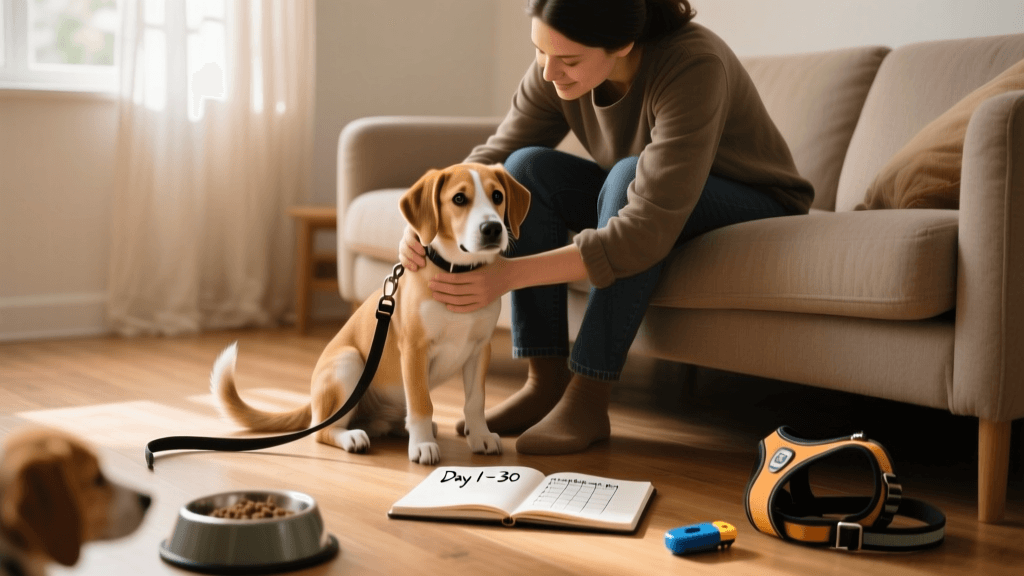
Once management is in place, we can begin Desensitization and Counter-Conditioning (DS/CC). The goal is to change the guarding dog's emotional response from 'threat' to 'predictor of good things' when another dog is nearby. This protocol requires the Blue-9 Balance Harness ($45) and a 15-foot biothane long line ($30) for safe, hands-free control without applying pressure to the dog's neck, which can increase anxiety.
Step 1: Establish the Sub-Threshold Distance
Find the distance at which the guarding dog notices the other dog but does not show any Stage 1 warning signs. For many dogs, this initial threshold is 15 to 20 feet. If your dog is guarding a specific item, provide them with a lower-value item (like a standard kibble-filled toy) during the initial training sessions.
Step 2: The 'Look and Treat' Game
With both dogs on their respective long lines, have the non-guarding dog (the 'trigger' dog) walk parallel to the guarding dog at the established sub-threshold distance. The moment the guarding dog looks at the other dog, mark the behavior with a verbal 'yes' and deliver a high-value treat (e.g., boiled chicken or freeze-dried liver) within a 1 to 2-second window. The timing is critical; the treat must be delivered while the other dog is still present and moving.
Step 3: Decreasing the Distance
Over several weeks, as the guarding dog begins to anticipate the treat when looking at the other dog (a conditioned emotional response), you can decrease the distance by 1 to 2 feet per session. If you see any freezing or hard staring, you have crossed the threshold. Immediately increase the distance and proceed more slowly.
Daily Routines and Enrichment for Multi-Dog Harmony
A predictable daily routine reduces overall household anxiety, which in turn lowers the frequency of guarding incidents. Incorporate the following routines into your daily schedule:
- Scatter Feeding and Snuffle Mats: Instead of feeding from a single bowl, which can trigger guarding, scatter kibble in the yard or use a snuffle mat ($25). This encourages natural foraging behaviors and eliminates the 'bowl' as a trigger.
- Decompression Walks: Take each dog on a separate 20-minute decompression walk daily. Allow them to sniff and explore on a long line. Sniffing lowers a dog's heart rate and reduces cortisol levels, promoting a calmer baseline state when they return to the multi-dog environment.
- The 'Trade-Up' Game: Practice trading items with the guarding dog when they are alone. Offer a piece of chicken in exchange for their toy. This teaches the dog that giving up an item results in something even better, reducing the fear of resource loss.
Cost and Time Investment
Modifying resource guarding requires an investment of both time and money. Expect to spend approximately $150 to $200 on initial management equipment (gates, long lines, harnesses, and enrichment toys). In terms of time, dedicate 15 minutes twice a day for active DS/CC training sessions, plus the time required for separated feeding and individual decompression walks. While this routine is demanding, the cost of a severe dog bite—both financially and emotionally—far outweighs the investment in proactive behavior management.
When to Seek Professional Help
If your dog has progressed to Stage 3 or Stage 4 on the escalation ladder, or if you have children in the home, DIY behavior modification is not recommended. The American Veterinary Society of Animal Behavior (AVSAB) strongly advises seeking the guidance of a board-certified veterinary behaviorist or a certified applied animal behaviorist (CAAB) for cases involving severe aggression or multi-species households. They can provide a tailored behavior plan and, if necessary, discuss psychopharmacological interventions to lower your dog's baseline anxiety and facilitate learning.
By approaching resource guarding with empathy, scientific rigor, and strict environmental management, you can foster a safer, more harmonious life for all the dogs in your home.
priya-sutaria
All our authors care for dogs every day — read more of their work on the authors page.