First-Time Owner Guide: First 30 Days With Your Rescue Dog
Discover a step-by-step 30-day routine for first-time rescue dog owners. Learn feeding, walking, and training schedules to help your new dog thrive.
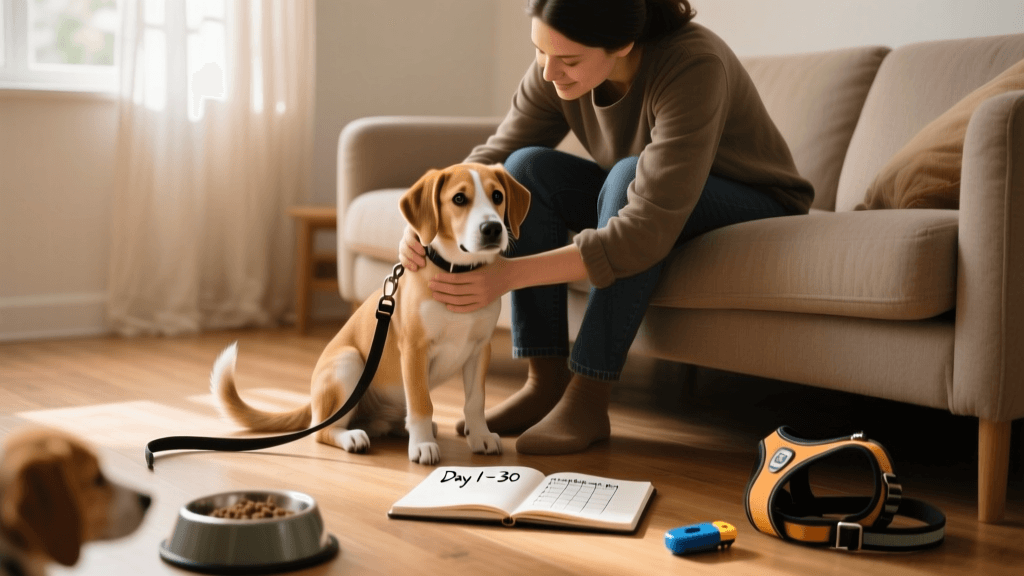
Bringing a rescue dog into your home is one of the most rewarding experiences a person can have. However, for first-time dog owners, the initial weeks can feel incredibly overwhelming. You are suddenly responsible for a living, breathing creature with its own fears, habits, and needs. The secret to a successful transition is not just love and patience; it is establishing a predictable, structured environment from day one. This comprehensive 30-day guide will walk you through the critical first month of life with your new rescue dog, providing actionable schedules, gear recommendations, and training milestones.
The 3-3-3 Rule of Rescue Dog Decompression
Before diving into daily schedules, every first-time owner must understand the ‘3-3-3 Rule’ of dog adoption. Widely endorsed by animal welfare organizations, including the ASPCA, this rule outlines the emotional timeline a rescue dog experiences when transitioning from a shelter to a forever home.
3 Days: Overwhelm and Decompression
During the first three days, your dog is processing a massive environmental shift. They may hide, refuse to eat, sleep excessively, or test boundaries. This is not their true personality; it is a stress response. Your primary goal is to provide a quiet, low-stimulation ‘safe room’ and avoid introducing them to dozens of friends and family members.
3 Weeks: Settling In and Learning Routines
By week three, your dog is beginning to understand that this is their permanent home. They will start to show their true personality, which may include emerging behavioral quirks or resource guarding. This is the critical window for establishing firm, fair, and consistent household rules.
3 Months: Feeling at Home and Building Trust
After three months, a deep bond of trust begins to solidify. The dog feels secure in their environment and understands their place in your family’s daily rhythm.
Week 1: Survival, Safety, and Decompression
The first seven days are all about survival and safety. Keep your world incredibly small. Limit your dog’s access to the entire house by using baby gates to confine them to a single, easily cleaned room (like a kitchen or a tiled mudroom) and a properly sized crate.
Crate Setup and Sizing: A crate should be a den, not a punishment zone. For a medium-sized dog (30-50 lbs), a 36-inch wire crate is ideal. For large breeds (50-80 lbs), opt for a 42-inch crate. If you adopt a puppy or a smaller dog, use a wire divider so the space is only large enough for them to stand up, turn around, and lie down. This prevents them from soiling one end and sleeping in the other.
Product Recommendation: To ease nighttime anxiety, place a Snuggle Puppy (a plush toy with a simulated heartbeat and heat pack) inside the crate. This mimics the feeling of littermates and can drastically reduce first-night whining.
Week 2: Establishing the Core Daily Routine
Dogs thrive on predictability. Once the initial shock of the shelter wears off, you must implement a rigid daily schedule. According to the American Kennel Club (AKC), a consistent routine accelerates potty training and reduces separation anxiety. Below is a foundational daily schedule for an adult rescue dog during their second week.
| Time | Activity | Duration | First-Time Owner Tips |
|---|---|---|---|
| 6:30 AM | Wake Up & Potty | 10 mins | Carry or leash them outside immediately. Use a specific cue word like ‘Go Potty’ and reward with high-value treats (e.g., Zuke’s Mini Naturals). |
| 7:00 AM | Breakfast & Enrichment | 20 mins | Skip the food bowl. Serve kibble inside a Kong Classic or a snuffle mat to engage their brain and burn mental energy. |
| 8:00 AM | Decompression Walk | 30 mins | Use a 15-foot long line in a quiet area. Let them sniff; sniffing lowers a dog’s heart rate and provides immense mental stimulation. |
| 9:00 AM | Crate Nap / Quiet Time | 3-4 hours | Provide a safe chew (like a Yak Cheese chew) to encourage settling. Do not let them sleep on the bed yet; build crate value first. |
| 1:00 PM | Midday Potty & Play | 20 mins | A quick potty break followed by 10 minutes of gentle tug-of-war or fetch in a fenced yard. |
| 5:30 PM | Training Session | 10 mins | Keep sessions short. Focus on ‘Sit’, ‘Down’, and ‘Touch’ (hand target). End on a positive note before they get frustrated. |
| 6:30 PM | Dinner & Relaxation | 30 mins | Feed dinner, then practice ‘place’ training on a raised dog cot while you eat your own meal to prevent begging. |
| 9:30 PM | Final Potty & Bedtime | 10 mins | Last trip outside on a leash. Into the crate with the lights out and white noise machine on to block household sounds. |
Week 3: Introducing Basic Training and Boundaries
By week three, your dog is likely testing boundaries. They might jump on the counter, pull on the leash, or guard their food bowl. This is normal, but it requires immediate, gentle correction through management and positive reinforcement.
Leash Walking Gear: If your rescue dog pulls like a freight train, ditch the standard collar and retractable leash. Invest in a front-clip harness, such as the Kurgo Tru-Fit Smart Harness. The front chest ring gently redirects the dog’s forward momentum back toward you when they pull, making walks significantly more manageable for first-time owners.
Impulse Control: Start practicing the ‘Wait’ command at thresholds. Before opening the front door for a walk, or before placing their food bowl on the floor, ask your dog to sit and wait. This simple exercise builds immense impulse control and establishes you as the provider of resources, which is crucial for dogs with unknown histories.
Week 4: Socialization and Expanding Their World
Socialization is often misunderstood by first-time owners. It does not mean letting your dog play with every dog they see or letting strangers pet them on the head. True socialization is about neutral exposure to the world. The Humane Society of the United States emphasizes that positive, controlled exposure prevents fear-based reactivity later in life.
Actionable Socialization Exercises:
- Surface Walking: Encourage your dog to walk on gravel, metal grates, wet grass, and tarps. Reward heavily for bravery.
- Sound Desensitization: Play recordings of thunderstorms, fireworks, or city traffic on your phone at a very low volume while feeding them high-value treats. Gradually increase the volume over several days.
- People Watching: Sit on a park bench 50 feet away from a busy sidewalk. Reward your dog for simply looking at strangers passing by without barking or lunging. They do not need to interact; they just need to learn that strangers are irrelevant and predict good things (treats).
Essential Gear Checklist and First-Month Budget
First-time owners often overspend on unnecessary toys and outfits while skimping on essential management tools. Below is a realistic breakdown of the core gear you need for the first 30 days, along with estimated costs to help you budget effectively.
| Item Category | Specific Recommendation | Purpose | Estimated Cost |
|---|---|---|---|
| Crate & Bedding | MidWest Homes 36' or 42' Wire Crate + Fleece Mat | Safe den, potty training management, and nighttime sleeping. | $60 - $90 |
| Harness & Leash | Kurgo Tru-Fit Harness + 6ft Biothane Leash | Safe walking, pulling prevention, and easy cleanup. | $45 - $65 |
| Enrichment Toys | Kong Classic (Red or Black) + West Paw Toppl | Mental stimulation, slow feeding, and crate training aid. | $25 - $40 |
| Training Treats | Zuke’s Mini Naturals + Freeze-Dried Beef Liver | Low-calorie rewards for high-repetition potty and obedience training. | $20 - $30 |
| Management | Wooden Pressure-Mount Baby Gates (Set of 2) | Restricting access to carpets, stairs, or off-limit rooms. | $40 - $60 |
| Cleaning | Nature’s Miracle Enzymatic Cleaner | Destroying urine pheromones to prevent repeat indoor accidents. | $15 - $20 |
Total Estimated First-Month Gear Budget: $205 - $305
Final Thoughts for the First-Time Owner
The first 30 days with a rescue dog are a marathon, not a sprint. There will be sleepless nights, unexpected potty accidents, and moments where you question your readiness. Remember that your dog has likely experienced trauma, neglect, or at the very least, the profound confusion of the shelter system. By prioritizing decompression, adhering to a strict daily routine, and investing in the right management tools, you are laying the bedrock for a decade or more of unwavering loyalty and companionship. Give yourself grace, give your dog time, and trust the process.
tom-renshaw
All our authors care for dogs every day — read more of their work on the authors page.