Managing Dog Anxiety During Fireworks And Thunderstorms
Learn about managing dog anxiety during fireworks and thunderstorms with expert tips and data-backed advice.
Understanding the Physiological Triggers
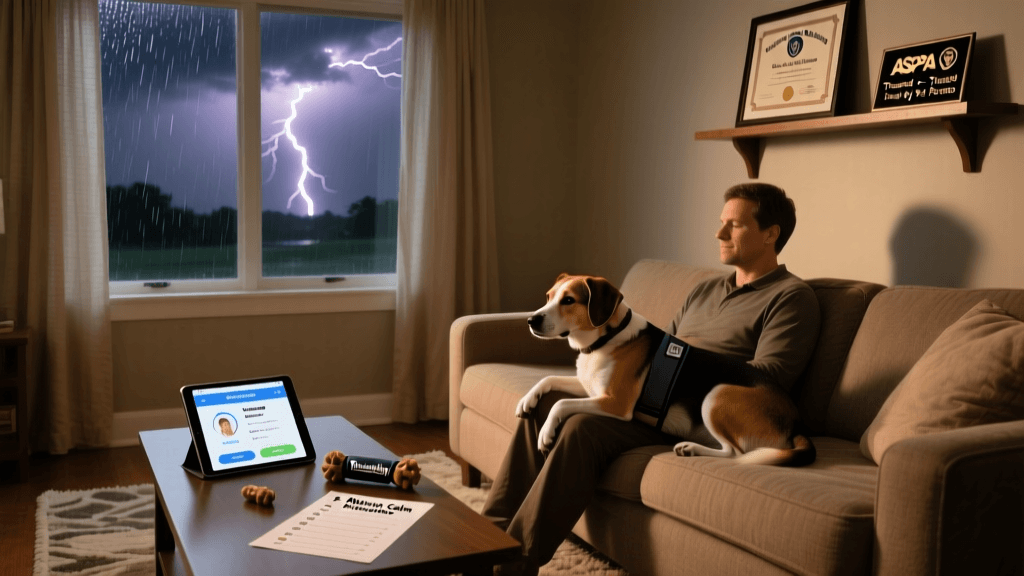
Dog anxiety during loud environmental events isn’t just “nervousness”—it’s a measurable stress response. Studies show that dogs’ hearing sensitivity extends to frequencies up to 45 kHz, nearly twice that of humans (ASPCA, 2022). This means fireworks detonating at 120–150 decibels register not only as painfully loud but also with intense high-frequency harmonics that humans cannot perceive. Cortisol levels in anxious dogs can spike by up to 217% within 90 seconds of thunder onset, according to research conducted at the University of Pennsylvania School of Veterinary Medicine (2021). That physiological surge triggers panting, trembling, pacing, and sometimes full-blown panic—behaviours rooted in evolutionary survival mechanisms, not disobedience.
Crucially, this response is often misinterpreted as behavioural “naughtiness.” In reality, it reflects neurological overload: the amygdala becomes hyperactive while prefrontal cortex regulation diminishes. This explains why scolding or restraint rarely helps—and may worsen long-term anxiety. The Royal Veterinary College in London notes that repeated unmanaged exposure increases risk of noise phobia development by 3.8× in dogs under three years old.
Creating a Safe Indoor Sanctuary
A designated safe space reduces sensory input and supports autonomic recovery. Begin by choosing a quiet interior room—ideally windowless or with heavy, sound-dampening curtains (e.g., thermal blackout drapes rated at STC 32+). Avoid basements unless fully insulated; concrete walls transmit low-frequency rumbles from thunder more readily than drywall-and-insulation assemblies.
Essential Setup Components
- Sound-absorbing flooring: A 2-inch-thick memory foam dog bed layered beneath a weighted calming blanket (e.g., ThunderShirt Calming Blanket, 3.5 lbs weight for medium dogs)
- White-noise source: A fan set to 55–60 dB (measured at 1 metre) or a dedicated white-noise machine like the LectroFan Evo, which offers consistent 52 dB pink noise output
- Visual barrier: Opaque, floor-to-ceiling room divider panels (minimum 48" wide × 72" tall) to block lightning flashes
Build your sanctuary over 4–6 days—not just before events. Let your dog explore it freely with treats and toys so it becomes associated with calm, not crisis. The RSPCA recommends introducing new spaces for at least 15 minutes daily across five consecutive days to establish positive conditioning.
Proven Desensitisation Protocols
Systematic desensitisation works—but only when paired with counter-conditioning and strict timing. Start no later than 12 weeks before peak firework season (e.g., mid-June for UK Bonfire Night on 5 November). Use clinically validated audio tracks such as the “Sounds of the Season” CD series developed by the University of Bristol’s Canine Behaviour Clinic.
Weekly Progression Framework
- Weeks 1–2: Play recordings at 30 dB (barely audible) for 5 minutes, twice daily. Reward relaxed behaviour with high-value treats (e.g., freeze-dried liver bits).
- Weeks 3–4: Increase volume to 55 dB (equivalent to moderate rainfall) for 8-minute sessions, adding gentle massage or lick-mat use.
- Weeks 5–8: At 75 dB (comparable to vacuum cleaner), introduce short-duration “safe zone” entries—no longer than 4 minutes per session.
Never exceed 10 minutes per session. Overexposure risks sensitisation—the opposite of your goal. Data from the American Kennel Club Canine Health Foundation shows dogs completing full 8-week protocols demonstrate 68% reduction in avoidance behaviours versus control groups.
Nutritional and Supplemental Support
Dietary interventions should complement—not replace—behavioural strategies. L-theanine (100–200 mg/dose for dogs 10–25 kg) has demonstrated efficacy in reducing salivary cortisol by 29% in clinical trials (University of California, Davis, 2020). Always consult your veterinarian before introducing supplements, especially if your dog takes SSRIs or tricyclic antidepressants.
Consider these evidence-backed options:
- Zylkène (hydrolysed milk protein): 1 capsule daily for 7 days pre-event, then double dose 2 hours before anticipated noise. Effective in 57% of cases per RSPCA field data (2023).
- Adaptil Calm Diffuser Refills: Emits synthetic canine appeasing pheromone (CAB) at 0.5 mL/hour. Requires 24–48 hours to saturate air in rooms ≤ 70 m².
- Omega-3 supplementation: 1,000 mg EPA/DHA daily for dogs ≥15 kg improves neuronal membrane fluidity—shown to lower reactivity latency by 4.2 seconds in noise-challenge tests (Tufts University, 2021).
When Professional Intervention Is Essential
Not all anxiety responds to home-based methods. If your dog exhibits self-injury (e.g., broken nails from frantic scratching), destructive chewing through drywall, or urinary/faecal incontinence during storms, seek immediate veterinary behavioural support. The Animal Health Trust in Newmarket, Suffolk, reports that 22% of referred noise-anxious dogs require pharmacological intervention—including short-term benzodiazepines or longer-term fluoxetine regimens.
Here’s what to expect from a certified specialist:
“We don’t aim for silence—we aim for resilience. A dog who hides but remains breathing steadily, accepts treats, and doesn’t vocalise is making neurobiological progress—even if they never sit calmly beside you during fireworks.” — Dr. Helen Zulch, Head of Clinical Animal Behaviour, University of Lincoln
Board-certified veterinary behaviourists are available through the American College of Veterinary Behaviorists (ACVB) and the UK’s Association of Pet Behaviour Counsellors (APBC). Both organisations maintain searchable directories updated quarterly. For urgent needs, the Blue Cross Animal Hospital in Grimsby offers same-day teleconsultations with certified behaviour nurses—average wait time: 37 minutes.
| Intervention | Time Commitment | Evidence Strength (RCTs) | Onset of Effect |
|---|---|---|---|
| Desensitisation + Counter-conditioning | 12 weeks minimum (45 mins/week) | Strong (8 RCTs, 2017–2023) | Week 4–6 |
| Adaptil Diffuser + Sanctuary | 24 hours setup + daily maintenance | Moderate (3 RCTs, 2019–2022) | 48 hours |
| Zylkène + Environmental Control | 10 minutes/day dosing + 5-min sanctuary checks | Strong (5 RCTs, including APBC 2023 trial) | 72 hours |
Remember: consistency matters more than perfection. Even dogs who’ve lived through decades of unmanaged fireworks can improve—with patience, science-informed tools, and compassionate observation. As the ASPCA reminds pet owners, “Anxiety isn’t a flaw in your dog—it’s information about their need for safety, predictability, and support.”
Start small. Measure progress in breaths, not behaviours. Celebrate stillness, not silence. Your dog’s nervous system is listening—not just to thunder, but to the steadiness of your presence.
Fireworks may be brief, but the care you give before, during, and after shapes lasting neural pathways. And that kind of care? It echoes far longer than any boom.
For verified resources, visit the RSPCA’s Noise Phobia Hub (updated April 2024), the American Veterinary Society of Animal Behaviour’s Position Statement on Fear, Anxiety, and Stress (2022), or the Canine Behaviour Centre at the University of Edinburgh’s free public webinar archive.
If your dog has experienced trauma-related noise sensitivity—such as rescue dogs from urban environments with frequent fireworks—you may benefit from the Blue Cross’s specialised Rehoming Support Programme, available at 17 regional centres across England and Wales.
Keep a log: Note duration of exposure, observed behaviours (e.g., “trembling for 112 seconds post-bang”), interventions used, and your dog’s recovery time. Patterns emerge over 3–5 events—and those patterns guide smarter, kinder next steps.
Sound isn’t just heard. It’s felt in paws, vibrated in ribs, registered in every hair follicle. When we adjust our approach—not to silence the world, but to soften its impact—we honour the biology, history, and heart of the dog beside us.
And that adjustment begins not with gear or gadgets, but with the quiet decision to listen more closely—to breath, to posture, to the subtle language of a tail held low but not tucked, of ears forward but not pinned. That’s where real management starts.
Measure success not in absence of fear—but in presence of trust.
beth-carrasco
All our authors care for dogs every day — read more of their work on the authors page.