Dog Disaster Evacuation Plan: A Complete Safety Guide
Learn how to create a comprehensive dog disaster evacuation plan. Discover essential go-bag items, safety tips, and shelter strategies for emergencies.
Why a Dog Disaster Evacuation Plan is Crucial
When a wildfire, hurricane, or flood threatens your community, panic is the enemy of survival. For dog owners, the stakes are even higher. You are not just responsible for your own safety, but for the life of a dependent animal who cannot understand the danger or pack their own belongings. According to the ASPCA's disaster preparedness resources, a significant percentage of pets separated from their owners during natural disasters are never reunited. Having a proactive, meticulously planned dog disaster evacuation strategy is not just a recommendation; it is a fundamental aspect of responsible pet ownership.
This guide will walk you through the exact steps to prepare your dog for an emergency, from assembling a specialized go-bag to navigating pet-friendly shelters and managing post-disaster trauma. By taking action today, you ensure that when the sirens sound, you and your canine companion are ready to move swiftly and safely.
The Legal Landscape: The PETS Act
Before 2006, many public emergency shelters strictly prohibited animals, forcing owners to make the heartbreaking choice between staying in a disaster zone or abandoning their pets. Following the devastation of Hurricane Katrina, where thousands of pets were left behind or perished, the U.S. government passed the Pets Evacuation and Transportation Standards (PETS) Act. This legislation requires state and local emergency preparedness plans to accommodate pets and service animals. While the PETS Act mandates that plans include pets, it does not guarantee that every single shelter will accept animals, nor does it cover exotic pets or unvaccinated dogs. This makes personal preparation and researching local pet-friendly evacuation centers absolutely critical.
Building the Ultimate Canine Go-Bag
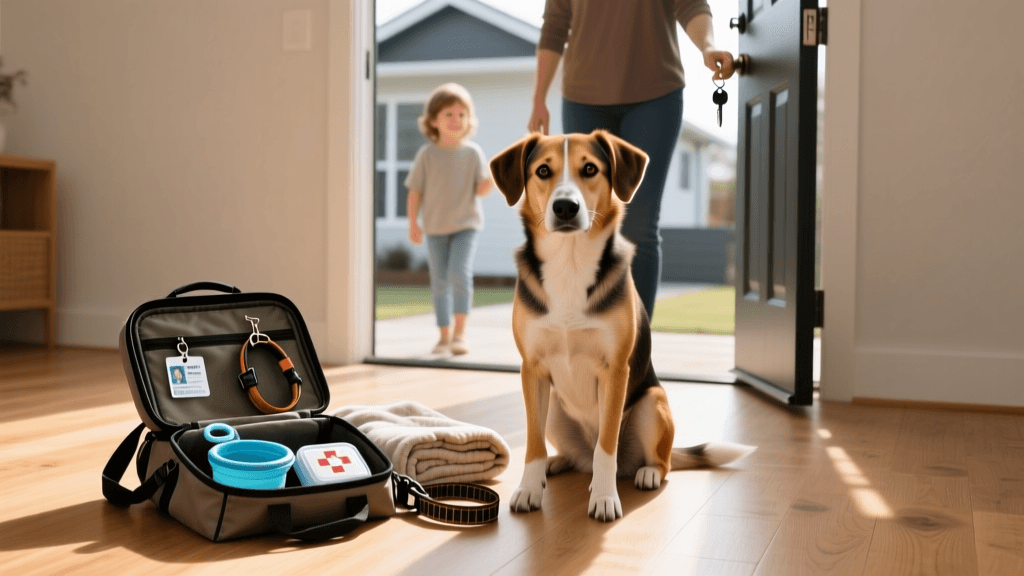
Your dog’s emergency go-bag should be a dedicated, waterproof duffel bag or backpack stored near your primary exit. It must contain enough supplies to sustain your dog for a minimum of 72 hours, though preparing for 5 to 7 days is highly recommended for prolonged evacuations. Here are the precise measurements and product recommendations for your kit:
- Food and Water: Pack 4 to 5 cups of dry kibble per day for a 50-pound dog. Store it in airtight, waterproof containers. For water, the general rule is 1 ounce of water per pound of body weight per day. A 50-pound dog needs roughly 6.25 cups (about 0.4 gallons) daily. Pack collapsible silicone bowls to save space.
- Medications and First Aid: Keep a 14-day supply of essential medications (e.g., Apoquel for allergies, Bravecto for flea/tick prevention). Your first aid kit must include styptic powder (like Kwik Stop) for nail tears, Vetrap for bandaging, and a digital rectal thermometer.
- Sanitation: Pack a 30-count box of biodegradable poop bags, paper towels, and a pet-safe enzymatic cleaner to handle accidents in temporary shelters or hotel rooms.
- Comfort Items: Include a familiar-smelling item, such as an unwashed t-shirt, and a durable chew toy (like a Kong Classic stuffed with peanut butter) to reduce anxiety in high-stress environments.
Emergency Go-Bag Checklist and Cost Breakdown
To help you budget and organize your preparations, review the following table detailing essential items, their specific purposes, and estimated costs.
| Item | Specification & Purpose | Estimated Cost |
|---|---|---|
| Waterproof Duffel Bag | 40L capacity to hold all canine supplies; keeps gear dry during floods. | $35 - $60 |
| Collapsible Bowls (x2) | Silicone, BPA-free bowls for food and water; folds flat to save space. | $10 - $15 |
| Extra Leash & Harness | 6-foot nylon leash (no retractables) and a front-clip harness for secure control. | $25 - $45 |
| Canine First Aid Kit | Includes Vetrap, styptic powder, saline solution, and tick remover. | $25 - $40 |
| Microchip & Registration | ISO-compliant 15-digit microchip implanted by a vet, plus lifetime registry. | $50 - $75 |
| Physical Medical Records | Waterproof folder containing vaccination history, rabies certificate, and vet contact. | $5 (folder) |
| Calming Supplements | Zesty Paws Calming Bites or Adaptil spray for acute stress management. | $20 - $30 |
Identification, Microchipping, and Medical Records
In the chaos of an evacuation, dogs can easily slip their collars or bolt from unfamiliar environments. A collar with an up-to-date ID tag is your first line of defense, but a microchip is your ultimate safety net. Ensure your dog is implanted with an ISO-compliant 15-digit microchip. More importantly, you must register the chip with a national database like HomeAgain or 24PetWatch and keep your contact information updated. An unregistered microchip is essentially useless to a shelter worker scanning a lost dog.
Additionally, keep physical copies of your dog’s medical records, particularly their rabies vaccination certificate, in a waterproof sleeve inside your go-bag. According to the American Veterinary Medical Association (AVMA), boarding facilities, emergency foster networks, and pet-friendly hotels will almost universally require proof of current rabies and DHPP vaccinations before admitting your dog.
Mapping Evacuation Routes and Pet-Friendly Shelters
Never assume your local emergency shelter will take your dog, even with the PETS Act in place. Before disaster season begins, identify at least three pet-friendly evacuation options outside of your immediate hazard zone. Look for motels or hotels along your evacuation route that explicitly allow pets; chains like La Quinta, Motel 6, and Best Western are known for their pet-friendly policies, but always call ahead to verify weight limits and breed restrictions.
Reach out to friends or family members who live at least 100 miles away and ask if they would be willing to host you and your dog in an emergency. You can also use the FEMA Ready.gov pet preparedness guide to locate local emergency management agencies that maintain lists of designated pet-friendly shelters and co-located animal staging areas in your county.
Crate Training for High-Stress Environments
If you end up in a crowded emergency shelter or a small hotel room, your dog will need to be crated for their safety and the comfort of others. If your dog is not crate-trained, an emergency is the worst time to introduce one. Begin crate training at least three to six months before your region's peak disaster season (e.g., spring for hurricane zones, early summer for wildfire areas).
Invest in a high-quality, crash-tested travel kennel if you are evacuating by vehicle. Brands like Gunner Kennels or Ruff Land Performance Kennels cost between $400 and $600 but offer unparalleled protection in the event of a car accident. For shelter use, a standard wire crate with a sturdy canvas cover can provide a den-like environment that blocks out the visual stimuli and noise of a chaotic evacuation center.
Post-Disaster Safety: Returning Home
The danger does not end when the storm passes or the fire is extinguished. Returning home presents a new set of hazards for your dog. Before letting your dog out of their crate or off-leash in your yard, conduct a thorough sweep of your property. Look for downed power lines, broken glass, exposed nails, and toxic chemical spills from overturned household cleaners or antifreeze.
Be highly vigilant about standing water. Floodwaters can harbor dangerous bacteria, sharp debris, and deadly blue-green algae (cyanobacteria), which can be fatal to dogs within hours of ingestion. Furthermore, natural disasters displace local wildlife. Snakes, coyotes, and rodents may be seeking higher ground or shelter in your garage and under your deck. Keep your dog on a short leash and supervise all outdoor bathroom breaks for the first few weeks after returning home.
Finally, monitor your dog for signs of post-traumatic stress. Symptoms in canines include excessive panting, pacing, hiding, loss of appetite, and sudden reactivity. Maintain a strict routine, utilize calming pheromones like Adaptil, and consult your veterinarian if your dog's anxiety does not subside within a few weeks of returning to normalcy. By preparing thoroughly and remaining vigilant, you ensure that your dog remains safe, healthy, and by your side through any disaster life may throw your way.
priya-sutaria
All our authors care for dogs every day — read more of their work on the authors page.