Managing Different Dog Diets in a Multi-Pet Household
Learn practical strategies for feeding multiple dogs with different dietary needs, managing food allergies, and preventing resource guarding.

The Challenge of Multi-Dog Mealtime
Sharing your home with multiple dogs is an incredibly rewarding experience, but it introduces a unique set of logistical hurdles, particularly when it comes to nutrition and feeding strategies. While one dog might thrive on a standard adult kibble, another may require a prescription hypoallergenic diet, and a third might be a growing puppy needing specialized caloric density. When you add behavioral elements like resource guarding, rapid eating, or food theft into the mix, the daily routine of filling food bowls can quickly devolve into a stressful household battleground.
Successfully managing different dog diets in a multi-pet household requires more than just buying separate bags of food. It demands a strategic approach to feeding zones, a deep understanding of individual caloric requirements, and a commitment to consistent daily routines. In this comprehensive guide, we will explore practical, actionable strategies to ensure every dog in your pack receives the exact nutrition they need, without the chaos of cross-contamination or mealtime anxiety.
Assessing Individual Nutritional Requirements
Before you can manage the logistics of feeding, you must clearly define what each dog actually needs to eat. A common mistake in multi-dog homes is feeding by volume rather than caloric density. A cup of high-performance working dog kibble can contain over 500 calories, while a cup of senior weight-management formula might contain closer to 300 calories.
According to the WSAVA Global Nutrition Guidelines, a dog's daily energy requirement (DER) should be calculated based on their resting energy requirement (RER) multiplied by a life-stage and activity factor. For example, a 30-pound neutered adult dog has an RER of roughly 370 calories per day before adjusting for activity. If you are free-feeding or guessing portions based on a generic measuring cup, you risk obesity in your less active dog while severely underfeeding your high-metabolism companion. Always consult your veterinarian to establish the exact caloric target and macronutrient profile for each individual pet.
Life Stage and Health Discrepancies
Consider a household with a 10-month-old Great Dane puppy and a 12-year-old Chihuahua. The puppy requires a large-breed growth formula with strictly controlled calcium and phosphorus ratios to prevent orthopedic diseases like hypertrophic osteodystrophy. The senior Chihuahua, conversely, may need a calorie-dense, easily digestible senior diet with added omega-3 fatty acids for joint support. Mixing these diets or allowing the puppy to eat the senior dog's food can have long-term developmental consequences.
Managing Food Allergies and Prescription Diets
Cross-contamination is the ultimate enemy of the elimination diet. If Dog A is undergoing an eight-week strict dietary trial using a hydrolyzed protein diet like Purina Pro Plan Veterinary Diets HA to diagnose a chicken allergy, even a single bite of Dog B's standard chicken-and-rice kibble can reset the clock and trigger an inflammatory flare-up. This makes physical separation during meals absolutely non-negotiable.
When dealing with prescription diets for conditions like kidney disease (which requires restricted protein and phosphorus) or urinary tract health (which requires precise mineral balancing), allowing a healthy dog to eat the prescription food can actually cause them harm over time. Conversely, if the sick dog eats the healthy dog's standard maintenance food, their medical condition may rapidly deteriorate. Strict environmental management is the only way to guarantee dietary compliance.
The Logistics of Separate Feeding Zones
To prevent food theft and cross-contamination, you must establish dedicated feeding zones. The method you choose will depend on your home's layout, your budget, and your dogs' temperaments.
Crate Training for Meals
Feeding dogs in their crates is one of the most secure and cost-effective methods for managing different diets. It provides a safe, den-like environment where dogs can eat without feeling threatened or rushed. To implement this, bring each dog to their respective crate, place the food bowl inside, and close the door. Allow them 15 to 20 minutes to eat in peace. Once finished, remove the bowls and release the dogs simultaneously. This method completely eliminates the risk of food theft and drastically reduces resource guarding behaviors.
Microchip-Activated Feeders
If your dogs are free-roaming and you prefer not to use crates, technology offers an elegant solution. Microchip-activated feeders, such as the SureFeed Microchip Pet Feeder Connect, read your dog's existing RFID microchip or a specialized collar tag. The lid of the feeder only opens when the authorized dog approaches. While these feeders are an investment—typically costing between $180 and $250 per unit—they are invaluable for households where one dog is a notorious grazer and the other is a rapid eater, or when managing strict prescription diets.
Baby Gates and Elevated Spaces
For households with significant size disparities, physical barriers and vertical space can be highly effective. A baby gate with a small pet door can allow a 15-pound Terrier to access their food in a separate room while keeping a 70-pound Labrador out. Alternatively, placing the small dog's food on a sturdy, elevated surface like a washing machine or a specialized pet feeding station can keep it out of reach of larger dogs. However, this method is not foolproof if your larger dog is agile or prone to jumping.
Comparison Chart: Multi-Dog Feeding Solutions
| Feeding Method | Upfront Cost | Best For | Pros | Cons |
|---|---|---|---|---|
| Crate Feeding | $50 - $150 (Crates) | Dogs needing strict separation or training | Provides safe space; prevents guarding | Requires crate training; takes up floor space |
| Microchip Feeders | $180 - $250 per unit | Free-roaming dogs; prescription diets | Automated; highly secure; reduces stress | Expensive; requires microchip or RFID tag |
| Baby Gates / Rooms | $30 - $80 (Gates) | Different sized dogs; grazing habits | Low stress; uses existing home layout | Not foolproof for agile dogs; requires supervision |
| Scheduled Hand-Feeding | $0 | Severe resource guarders; bonding exercises | Builds trust; zero food theft | Extremely time-consuming; impractical for busy owners |
Preventing Resource Guarding and Food Theft
Resource guarding is a natural canine behavior, but it becomes dangerous in a multi-dog household. Signs of guarding include stiffening over the bowl, whale eye (showing the whites of the eyes), lip licking, growling, or eating at a frantic, unnatural pace. If you notice these behaviors, feeding your dogs in separate rooms or crates is mandatory to ensure safety.
Never punish a dog for growling over food, as this suppresses the warning signal and can lead to a sudden, unprovoked bite. Instead, manage the environment so the dog never feels the need to guard. Pick up all food bowls immediately after the 15-minute feeding window closes. Leaving empty bowls with residual smells on the floor can trigger guarding behaviors long after the food is gone.
The Danger of Table Scraps in Mixed-Diet Homes
When managing strict diets, owners must also police human food. Dropping a piece of cheese or a scrap of meat might seem harmless, but it can ruin a prescription diet or trigger an allergic reaction. Furthermore, many common human foods are highly toxic to canines. The ASPCA Animal Poison Control Center strictly warns against feeding dogs items like onions, garlic, grapes, macadamia nuts, and xylitol-sweetened peanut butter. In a multi-dog home, if one dog is trained to catch tossed scraps, the other may learn the behavior or inadvertently consume a toxic item dropped on the floor. Implementing a strict 'no human food from the table' rule is vital for maintaining dietary control and ensuring physical safety.
Establishing a Consistent Daily Routine
Dogs are creatures of habit, and predictability reduces mealtime anxiety, which is especially important for dogs prone to resource guarding or digestive sensitivities. The American Kennel Club emphasizes that consistent feeding schedules help regulate a dog's digestive tract, making house-training and bathroom schedules far more predictable. For a multi-dog household, a synchronized yet separated routine works best.
Sample Daily Feeding Schedule
- 6:30 AM - Morning Potty: Take all dogs outside for their morning bathroom break.
- 6:45 AM - Meal Prep: Measure out exact caloric portions for each dog. Use a digital kitchen scale for accuracy rather than a volume measuring cup.
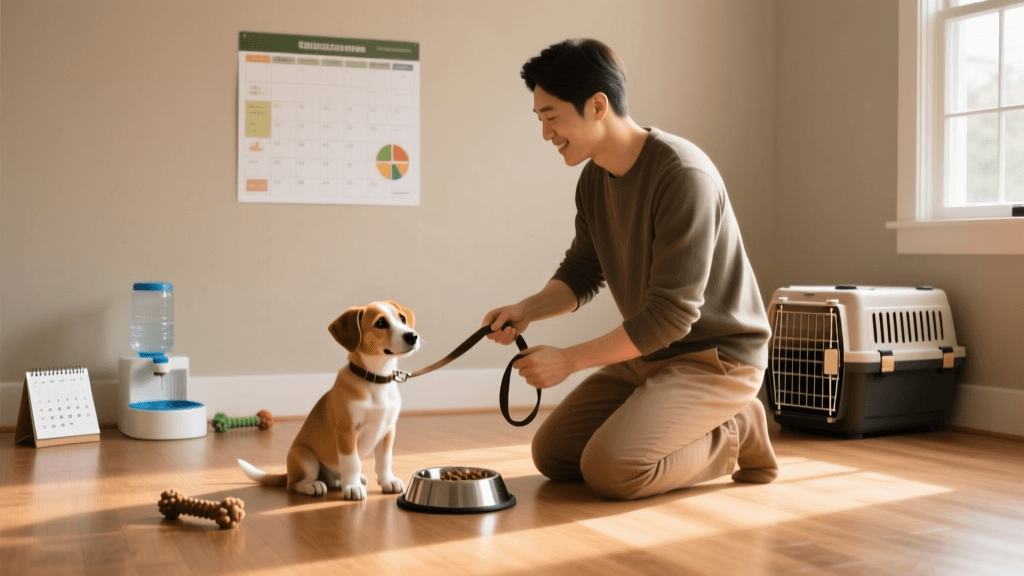
- 7:00 AM - Separation: Guide dogs to their designated feeding zones (crates, separate rooms, or microchip feeders).
- 7:05 AM - Serve and Monitor: Place the food down. Allow exactly 15 minutes for eating.
- 7:20 AM - Cleanup: Pick up all bowls, regardless of whether they are empty. Wash bowls with hot, soapy water to prevent bacterial growth and residual food smells.
- 6:00 PM - Evening Routine: Repeat the exact same process for the evening meal to maintain circadian rhythm and digestive consistency.
Safe Food Handling and Hygiene
When managing multiple diets, proper food storage is just as important as the feeding itself. Keep all kibble in its original bag, which contains vital lot numbers and expiration dates, and place that bag inside an airtight container. Wash the container thoroughly between different bags of food to prevent fat rancidity and cross-contamination of allergens. If you are feeding fresh or raw diets, treat the food with the same safety protocols as human raw meat, sanitizing all preparation surfaces and bowls immediately after use to protect both your pets and your human family members.
Conclusion
Managing different dog diets in a multi-pet household requires patience, organization, and a commitment to environmental management. By calculating individual caloric needs, utilizing physical barriers or microchip technology, and adhering to a strict daily schedule, you can eliminate mealtime chaos. Ultimately, taking control of your dogs' feeding routines not only ensures they receive the precise nutrition required for their unique health profiles, but it also fosters a calmer, safer, and more harmonious home for your entire pack.
tom-renshaw
All our authors care for dogs every day — read more of their work on the authors page.