2026 Canine OA Home Care: Librela, Ramps, and Ortho Beds
Discover the best 2026 home treatments for canine osteoarthritis. Learn how to combine Librela, orthopedic beds, and ramps for your dog's joint health.
Understanding Canine Osteoarthritis in 2026
Canine osteoarthritis (OA), also known as degenerative joint disease, is a progressive condition that affects the cartilage, joint capsule, and underlying bone. As of 2026, veterinary epidemiologists estimate that over 20% of the adult dog population and up to 80% of senior dogs experience some degree of OA-related pain. While it was once considered an inevitable part of aging, modern veterinary science and advanced home care strategies have transformed OA management from simple pain masking into a comprehensive, multi-modal lifestyle approach.
Living with an arthritic dog requires a shift in how you structure your daily routine, your home environment, and your medical care plan. The goal in 2026 is no longer just to reduce inflammation, but to actively preserve joint function, maintain muscle mass, and maximize your dog's quality of life. According to the American Kennel Club, early intervention combined with environmental modifications can drastically slow the progression of mobility loss and keep senior dogs active and happy well into their golden years.
The Medical Breakthrough: Anti-NGF Therapies
The most significant shift in canine OA treatment over the last few years has been the widespread adoption of anti-Nerve Growth Factor (anti-NGF) monoclonal antibodies. In 2026, Librela (bedinvetmab) has largely become the gold standard for long-term OA pain management, frequently replacing or reducing the need for daily Non-Steroidal Anti-Inflammatory Drugs (NSAIDs).
Unlike NSAIDs, which work systemically to reduce inflammation and can carry risks for the liver and kidneys over long-term use, Librela specifically targets the NGF protein that transmits pain signals from the joints to the brain. Administered as a simple monthly subcutaneous injection by your veterinarian, it provides continuous, targeted pain relief with a highly favorable safety profile. In 2026, the cost for a monthly Librela injection typically ranges from $75 to $120, depending on your dog's weight and your geographic location. For dogs that cannot tolerate traditional NSAIDs due to pre-existing renal or hepatic conditions, this targeted biologic therapy has been nothing short of life-changing.
Essential Home Modifications for Arthritic Dogs
Medical management is only half the battle. The physical environment of your home plays a massive role in either exacerbating or alleviating your dog's joint stress. Making strategic modifications to your living space is a cornerstone of modern OA home care.
Orthopedic Beds: Beyond the Standard Mattress
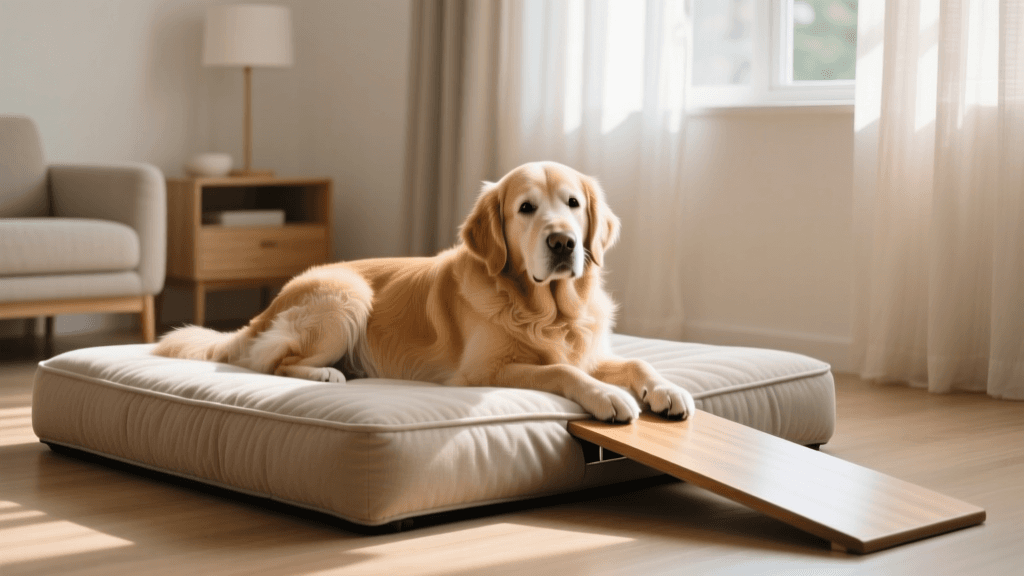
Standard plush dog beds do not provide the structural support required for a dog with compromised joints. In 2026, therapeutic orthopedic beds are engineered with specific foam densities designed to distribute weight evenly and prevent pressure points. The Big Barker 7-inch Pillow Top Orthopedic Dog Bed remains a top recommendation. It utilizes a proprietary three-stage foam system that will not flatten out over time, backed by a 10-year warranty. For a large breed dog like a Labrador or German Shepherd, investing $250 to $350 in a high-quality therapeutic bed is essential. Place the bed in a draft-free, easily accessible area of your home where your dog can still feel part of the family without having to navigate stairs or slippery floors to get to it.
Ramps and Stairs: Saving Joints from Impact
Jumping onto furniture or into vehicles places an immense, sudden load on arthritic joints, particularly the hips, knees, and spine. To mitigate this, ramps are a non-negotiable accessory for OA households. The PetSafe Happy Ride Folding Pet Ramp is an excellent, durable choice for 2026. Weighing only 10 pounds but supporting up to 200 pounds, its high-traction sandpaper-like surface prevents slipping, which is a common source of anxiety and secondary injury for arthritic dogs. Use this ramp for all vehicle entries and exits, and consider purchasing specialized pet stairs with a gentle incline for accessing high human beds or deep sofas.
Flooring and Traction
Hardwood, tile, and laminate floors are incredibly slippery for dogs with weakened hindquarters. Slipping causes micro-traumas to the joint capsule and accelerates cartilage degradation. Cover high-traffic pathways, especially the routes between your dog's bed, food bowls, and the back door, with interlocking foam mats or low-pile, rubber-backed area rugs. Additionally, consider using dog-specific traction socks or applying a non-toxic paw wax to improve grip on unavoidable hard surfaces.
Nutritional Support and Joint Supplements
Dietary management is twofold: weight control and active joint nutrition. Carrying excess body fat is the single most modifiable risk factor for OA progression. In 2026, veterinary nutritionists emphasize keeping arthritic dogs on the lean side of their ideal body condition score (BCS 4/9) to minimize mechanical load on the joints.
Beyond weight management, targeted supplementation is critical. Look for joint supplements that contain a synergistic blend of ingredients rather than just basic glucosamine. Dasuquin Advanced Soft Chews is a premier choice, featuring ASU (Avocado/Soybean Unsaponifiables), Boswellia serrata extract, and high-quality glucosamine hydrochloride. ASU has been shown to help protect cartilage from degradation and reduce joint inflammation. Additionally, integrating a high-potency Omega-3 fish oil supplement rich in EPA and DHA can provide natural, systemic anti-inflammatory benefits that complement your dog's primary medical treatments.
Daily Routine and Physical Therapy
Exercise remains vital, but the type and intensity must be carefully calibrated. The 'weekend warrior' approach—where a dog rests all week and then goes on a massive hike on Saturday—is disastrous for arthritic joints. Instead, aim for multiple short, controlled leash walks (10 to 15 minutes) spread evenly throughout the day. This keeps the synovial fluid circulating within the joints, which provides lubrication and nutrients to the cartilage without causing fatigue-induced stumbling.
Hydrotherapy, particularly underwater treadmill sessions, continues to be a highly recommended adjunct therapy in 2026. The buoyancy of the water unloads the joints while the resistance builds crucial stabilizing muscle mass. If professional hydrotherapy is not accessible, gentle, targeted massage and passive range-of-motion (PROM) exercises performed at home can help maintain joint flexibility and reduce muscle atrophy.
Managing osteoarthritis is not about finding a single cure, but rather building a comprehensive daily ecosystem of comfort, medical support, and environmental modification. Consistency in your daily routine is just as important as the medications you administer.
2026 Canine OA Home Care Comparison Chart
To help you budget and plan your dog's OA management strategy, here is a breakdown of the top recommended products and treatments for 2026:
| Product Category | Top 2026 Recommendation | Key Feature | Estimated Cost |
|---|---|---|---|
| Monthly Injection | Librela (Bedinvetmab) | Anti-NGF targeted pain relief | $75 - $120 / month |
| Orthopedic Bed | Big Barker 7-inch Pillow Top | Therapeutic foam, 10-year warranty | $250 - $350 |
| Mobility Ramp | PetSafe Happy Ride Folding Ramp | Lightweight, high-traction surface | $80 - $100 |
| Joint Supplement | Dasuquin Advanced Soft Chews | ASU, Boswellia, and Glucosamine | $60 - $80 / month |
| Flooring Mod | Interlocking EVA Foam Mats | Shock absorption, slip resistance | $40 - $70 per set |
Conclusion: Embracing a Multi-Modal Approach
Living with a dog suffering from osteoarthritis requires empathy, patience, and a proactive approach to their daily environment. By leveraging modern medical advancements like Librela, investing in high-quality orthopedic support, and making simple but effective modifications to your home's layout, you can drastically reduce your dog's daily pain. In 2026, a diagnosis of canine OA is not a reason to despair; rather, it is an invitation to optimize your shared living space and daily routines, ensuring your loyal companion remains comfortable, mobile, and joyful for years to come.
anouk-beaumont
All our authors care for dogs every day — read more of their work on the authors page.