Managing Canine Over-Arousal in Agility Competitions: 2026 Guide
Discover how to read canine stress signals and manage over-arousal in dog agility competitions with our 2026 guide to behavioral psychology.
The Evolution of Canine Sports Psychology in 2026
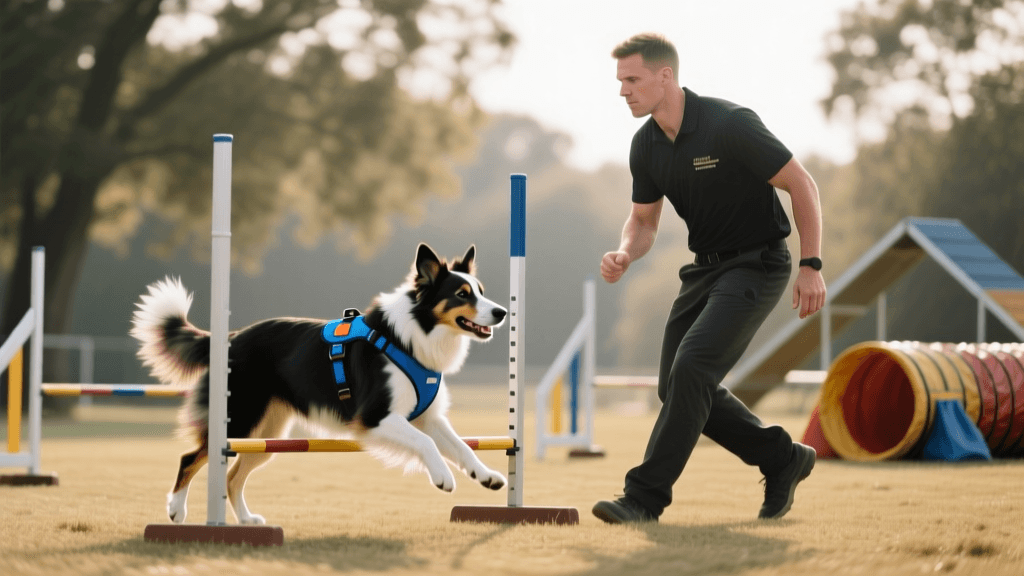
As we navigate the 2026 dog sports season, the landscape of canine agility and competitive obedience has shifted dramatically. Today, top handlers and veterinary behaviorists recognize that raw speed and physical conditioning are only half the equation. The true differentiator in the ring is a deep understanding of canine psychology, specifically the management of drive, arousal, and stress. Agility is essentially a controlled expression of a dog's predatory motor patterns—chasing, turning, and leaping. While this taps into natural breed instincts, the high-stimulation environment of a competition venue can easily push a dog from optimal performance into cognitive shutdown.
Understanding your dog's internal emotional state is paramount. According to the American Kennel Club's expert guidelines on canine stress, dogs communicate their emotional thresholds through subtle micro-expressions and body language long before they exhibit overt behavioral issues. This guide explores the neurochemistry of canine drive, how to decode stress signals in real-time, and the 2026 best practices for keeping your canine athlete in the optimal performance zone.
The Neurochemistry of Drive vs. Over-Arousal
To understand why dogs do what they do in the ring, we must look at the brain. 'Drive' in dog sports is heavily mediated by dopamine, the neurotransmitter associated with seeking, anticipation, and reward. A dog with high drive is focused, resilient, and eager to work. However, when the environmental stimuli (barking dogs, cheering crowds, fast movements) become overwhelming, the sympathetic nervous system triggers the release of adrenaline and cortisol.
This is where 'eustress' (positive, motivating arousal) crosses the threshold into 'distress' (negative, overwhelming arousal). The Yerkes-Dodson law, a psychological principle dictating that performance increases with physiological or mental arousal only up to a certain point, applies perfectly to canine athletes. When a dog becomes over-aroused, their prefrontal cortex—the area responsible for learning, decision-making, and impulse control—essentially goes offline. The dog is no longer thinking; they are purely reacting. In agility, this manifests as blown contacts, knocked bars, or spinning out of frustration.
Decoding the Ring: Recognizing Subtle Stress Signals
Handlers often mistake over-arousal for 'high drive' or 'excitement,' but the canine body tells a different story. The Humane Society's comprehensive dog body language resources emphasize that stress signals are often subtle and easily missed in a fast-paced environment. Recognizing these communication signals early allows you to intervene before your dog reaches a state of cognitive overload.
Early Warning Signs (Displacement Behaviors)
- Lip Licking and Yawning: When not related to food or fatigue, these are classic calming signals used by dogs to self-soothe or communicate discomfort.
- Displaced Sniffing: A sudden, intense interest in the ground when a dog is normally highly focused on the handler indicates avoidance and environmental overwhelm.
- Shaking Off: If your dog shakes their entire body as if wet after a stressful sequence or a loud noise, they are literally attempting to 'shake off' the adrenaline spike.
Critical Stress Indicators
- Whale Eye: Showing the whites of the eyes while the head is turned away is a severe indicator of anxiety and potential reactivity.
- Pinned Ears and Tight Commissures: The corners of the mouth (commissures) pull back tightly, and the ears are pinned flat against the skull.
- Frantic Pacing or Vocalization: Inability to settle in the start-line routine, accompanied by high-pitched, repetitive barking or whining.
Arousal Levels and Behavioral Indicators
Mapping your dog's arousal scale is a foundational exercise for any competitive handler. Use the following table to assess your dog's psychological state during training and competition days.
| Arousal Level | Physical Indicators | Psychological State | Action Required |
|---|---|---|---|
| 1 - Low | Slow movement, ground sniffing, relaxed posture | Disengaged, bored, or fatigued | Increase motivation, initiate play, use high-value rewards |
| 2 - Moderate | Soft eyes, relaxed mouth, responsive to cues | Calm, receptive, and focused | Ideal state for complex learning and technical training |
| 3 - Optimal | Alert ears, forward weight shift, eager engagement | 'In the zone' (Eustress), high drive | Competition ready; maintain with calm, clear handling |
| 4 - High | Panting, vocalizing, pulling on leash, widened eyes | Over-excited, frantic, impulse-driven | Implement decompression protocols; lower environmental stimuli |
| 5 - Critical | Whale eye, freezing, snapping, displacement behaviors | Distress, anxiety, cognitive shutdown | Remove from environment immediately; do not force compliance |
Breed-Specific Arousal Profiles
Breed instincts heavily influence how a dog expresses over-arousal. Understanding your dog's genetic blueprint is crucial for tailored sports psychology.
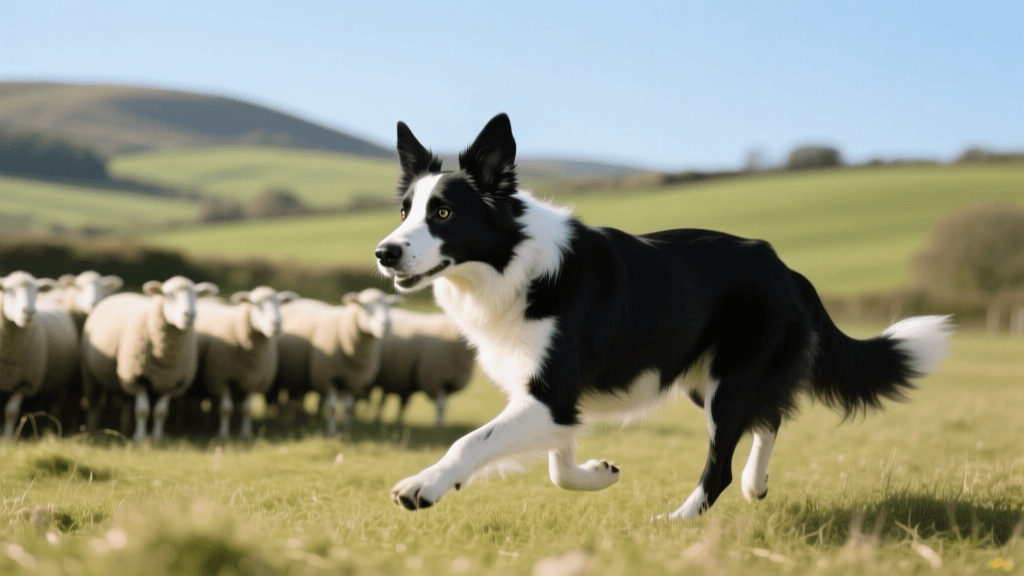
Herding Breeds (Border Collies, Australian Shepherds)
Herding breeds are wired for environmental sensitivity and motion detection. When over-aroused, they tend to internalize stress. You may see 'creeping' (moving slowly with a lowered head), intense staring, or nipping at the handler's heels. Their arousal often stems from a lack of clarity in the handler's movement, triggering their instinct to 'control' the flock.
Terriers and Spaniels (Jack Russell Terriers, Cocker Spaniels)
Bred for independent hunting and flushing, these breeds typically externalize stress. Over-arousal presents as spinning, frantic barking, or 'zoomies' in the ring. Their high prey drive can easily hijack their focus if a squirrel or shadow catches their eye, requiring rigorous impulse control training.
Molosser and Guardian Breeds
While less common in high-speed agility, when they do compete, their stress signals are often misread. A slow response to a cue is not always stubbornness; it can be a sign of environmental overwhelm or physical fatigue, requiring a patient, low-pressure handling style.
The 2026 Protocol for Competition Day Management
Modern canine sports science emphasizes proactive management over reactive correction. The Fear Free Pets initiative has heavily influenced how competitive venues now approach canine mental health, advocating for reduced sensory overload and structured decompression.
Pre-Run Acclimatization
Arriving at the venue and immediately walking into the bustling ring area is a recipe for an adrenaline dump. In 2026, top handlers utilize the 'park and decompress' method. Allow your dog to remain in a climate-controlled vehicle or a quiet, shaded crate area. Use a snuffle mat or a lick mat to encourage foraging behaviors, which naturally lower the heart rate and stimulate the parasympathetic nervous system.
The Warm-Up Routine
Physical warm-ups must be paired with psychological warm-ups. Engage in simple, high-reward obedience games away from the agility equipment. This builds a bubble of focus around the handler-dog team, insulating the dog from the chaotic visual stimuli of other dogs running the course.
Post-Run Decompression
What you do immediately after crossing the finish line dictates how your dog will feel for the rest of the day. Avoid high-pitched praise or chaotic play if your dog is already at an Arousal Level 4. Instead, transition to a 'sniffari'—a slow, unstructured walk on a long line in a grassy area away from the venue. Sniffing is cognitively tiring and acts as a natural reset button for the canine brain, helping to metabolize circulating cortisol.
Conclusion: Prioritizing the Canine Mind
Success in dog agility is not merely about shaving milliseconds off a course time; it is about fostering a willing, confident, and psychologically sound partner. By learning to read the nuanced body language of your dog, respecting their breed-specific instincts, and implementing modern decompression protocols, you ensure that the sport remains a joyous, enriching experience. As the 2026 competition season unfolds, let the welfare and mental clarity of your canine athlete be your ultimate guiding principle.
marcus-aldridge
All our authors care for dogs every day — read more of their work on the authors page.