Training Dogs With Osteoarthritis: 2026 Mobility Guide
Discover safe, low-impact training and proprioception exercises to manage canine osteoarthritis, maintain mobility, and strengthen bonds in 2026.
Understanding the 2026 Paradigm of Arthritic Dog Training
Osteoarthritis (OA) is a progressive, degenerative joint disease that affects a significant portion of the senior and working dog population. As we navigate the veterinary and behavioral landscapes of 2026, the consensus among canine rehabilitation specialists and veterinary behaviorists is clear: a diagnosis of OA is absolutely not a reason to stop training. Instead, it represents a critical juncture to pivot from high-impact obedience and agility to low-impact mobility conditioning, proprioception work, and cognitive enrichment.
Training provides essential mental stimulation. For an arthritic dog, a focused 15-minute session of low-impact trick training or scent work can be just as physically exhausting and psychologically satisfying as a three-mile run is for a healthy adolescent pup. According to the American College of Veterinary Surgeons, managing OA requires a multimodal approach that includes weight management, environmental modification, and controlled therapeutic exercise. In the context of dog training, this means we must adapt our teaching methods to protect compromised joints while keeping the canine brain sharp, engaged, and happy.
Environmental Setup for Low-Impact Sessions
Before introducing new cues or mobility exercises, you must audit your training environment. Slipping on hard surfaces is one of the leading causes of acute flare-ups in arthritic dogs. In 2026, the standard for indoor training on hardwood or tile floors involves using interlocking EVA foam traction mats or specialized non-slip canine yoga mats.
- Surface Traction: Ensure the training area has a high-friction surface. If you are using area rugs, they must be backed with heavy-duty rubber grip pads to prevent shifting when the dog pivots.
- Elevated Resting Zones: Incorporate an orthopedic bolster bed or a raised cot (such as the Kuranda Chewproof Bed) near your training station. This allows the dog to rest in a supported, joint-neutral position between repetitions without having to lower themselves all the way to the floor.
- Ramp Integration: If your training involves getting onto a grooming table or a couch, use a ramp with a maximum incline of 18 to 22 degrees, covered in high-traction ribbed carpeting.
Core Proprioception and Mobility Exercises
Proprioception—the body's ability to sense its location, movements, and actions—is often diminished in dogs with chronic joint pain due to altered gait and muscle atrophy. Rebuilding this mind-muscle connection is a cornerstone of modern canine physical therapy and advanced obedience training.
1. Cavaletti Rail Stepping
Cavaletti rails are a series of poles placed on the ground or slightly elevated to encourage deliberate, controlled limb flexion and extension. This exercise builds core strength and improves joint range of motion without the concussive impact of jumping.
- Setup: Use adjustable wooden or PVC Cavaletti rails. Set 4 to 6 poles in a straight line.
- Spacing: Space the poles at a distance equal to your dog's normal walking stride length (usually the distance from the hock to the ground for medium breeds).
- Height: For beginners or severe OA, keep poles flat on the ground. As mobility improves, raise them to a height equal to the distance from the ground to the top of the dog's carpal joint (wrist).
- Execution: Lure your dog through the rails at a slow, deliberate walk using a target stick or a smearable treat paste on a long-handled spoon. Reward heavily at the end of the line. Perform 3 to 5 passes per session.
2. Stationary Weight Shifting
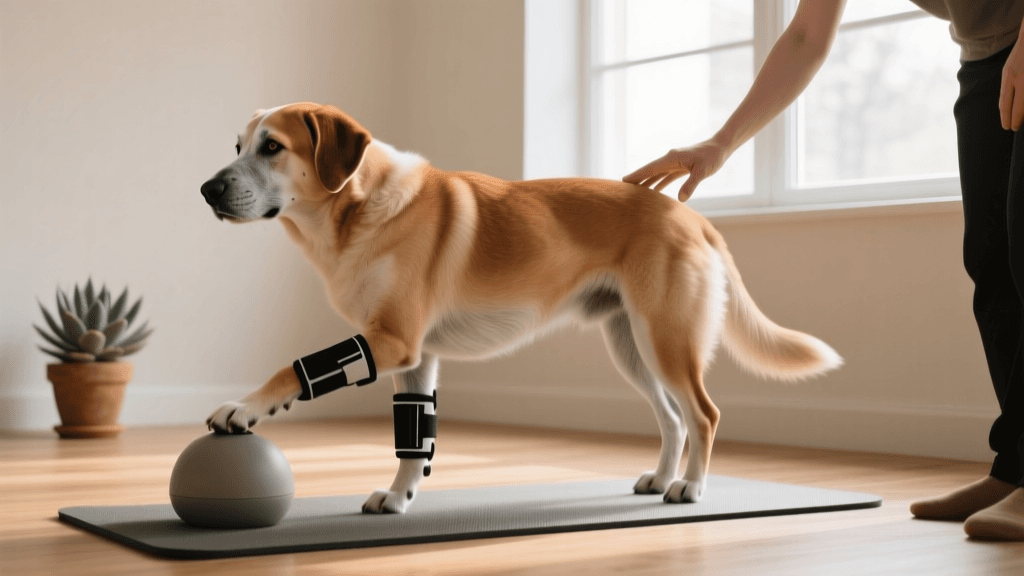
Weight shifting encourages the dog to engage stabilizing muscles and bear weight on limbs they might normally favor or avoid. This is particularly useful for dogs with bilateral hip or stifle osteoarthritis.
- Setup: Place your dog on a non-slip surface. You can use a canine peanut-shaped balance pad or simply a rolled-up thick towel.
- Front-to-Back Shifting: Place the towel under the dog's front paws. Use a lure to gently encourage the dog to reach their neck up and slightly back, shifting weight to the hindquarters, then lower the lure to shift weight back to the front limbs.
- Side-to-Side Shifting: Stand beside your dog and use a gentle lure or a light touch on their hip to encourage them to lean slightly left, then slightly right, engaging the oblique and gluteal muscles.
3. Nose and Paw Targeting (Stationary)
Targeting is a foundational obedience skill that can be done entirely while the dog is standing or lying comfortably on a mat. It provides immense cognitive fatigue.
- Nose Target: Hold a target lid (like a plastic yogurt lid) at varying heights and angles. The dog must stretch their neck and shift their balance to touch their nose to the lid. This improves cervical spine mobility.
- Paw Target: Teach the dog to place one front paw on a small, raised silicone coaster. This encourages unilateral weight-bearing and core stabilization without requiring the dog to move their hindquarters.
Modifying Traditional Obedience Cues
Standard obedience cues often require repetitive, high-torque movements on the lumbar spine, hips, and stifles. In 2026, force-free trainers and veterinary rehab specialists strongly advocate for modifying these cues to accommodate arthritic anatomy.
| Traditional Cue | Arthritic Modification | Primary Benefit |
|---|---|---|
| Standard Sit | Supported Stand or 'Sphinx' Down | Reduces severe compression on the lumbar spine and stifles caused by the tuck-sit motion. |
| Jump / Over | Cavaletti Stepping | Encourages active joint flexion and muscle engagement without concussive landing impact. |
| Running Recall | Stationary Scent Work | Provides high mental fatigue and olfactory enrichment with zero joint loading. |
| Roll Over | Side-Lying Stretch / Bow | Prevents the spinal twisting and hip splaying required for a full roll over. |
The 'Sphinx' Down Alternative
The traditional 'down' requires a dog to fold their hindquarters under their body, which can be agonizing for a dog with bilateral hip dysplasia or severe stifle OA. Instead, train the 'Sphinx' down. Lure the dog into a down position, but reward them only when their hind legs are extended straight out behind them or splayed comfortably to the side (the 'frog' or 'sploot' position). This keeps the hip joints in a neutral, open angle, preventing the pinching sensation associated with deep joint flexion.
Stationary Scent Work: The Ultimate Cognitive Workout
When physical mobility is severely restricted, scent work becomes your primary training tool. The olfactory lobe in a dog's brain is massive, and processing complex scent puzzles burns a tremendous amount of metabolic energy. According to the American Kennel Club, keeping an arthritic dog mentally engaged is vital for preventing the depression and anxiety that often accompanies chronic pain and reduced mobility.
To set up a low-impact scent session, procure a set of birch, anise, and clove essential oils (properly diluted and applied to cotton swabs). Hide the swabs in a 'scent box'—a cardboard box filled with crumpled paper, clean laundry, or specialized plastic scent work cups. The dog simply stands or lies near the box and uses their nose to locate the odor source. This requires zero running, zero jumping, and zero repetitive joint stress, yet leaves the dog thoroughly tired and satisfied.
Pacing, Rewards, and Pain Management Integration
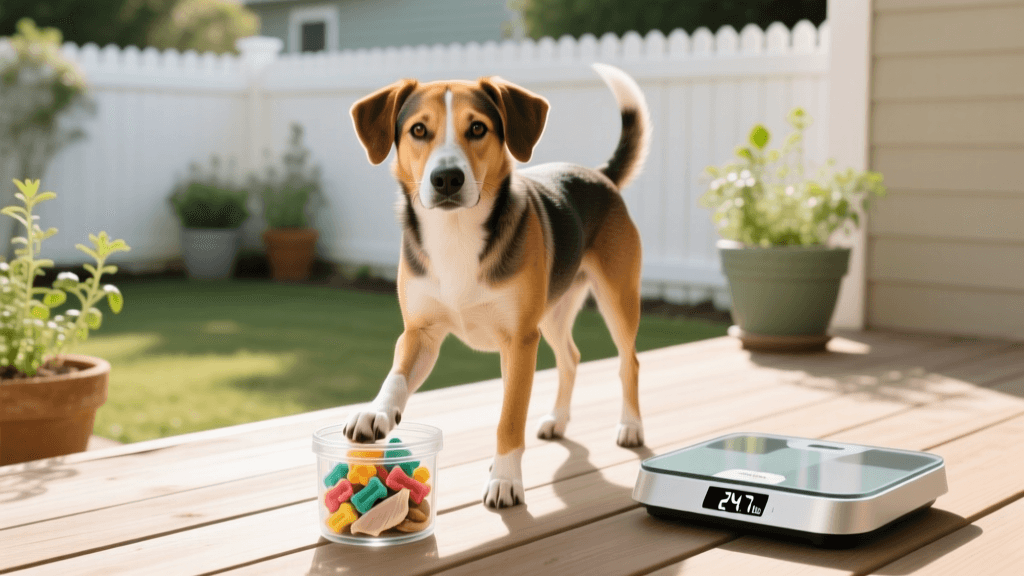
Training an arthritic dog requires a meticulous approach to pacing and reward selection. The FDA guidelines on canine OA emphasize that weight management is one of the most critical factors in slowing the progression of joint degeneration. Every extra pound places exponential stress on compromised cartilage.
- Session Length: Keep training sessions strictly between 5 to 10 minutes. Arthritic dogs often mask their pain and will continue to work to please their handler until a joint suddenly gives out. Stop the session while the dog is still eager for more.
- Low-Calorie Rewards: Ditch the high-fat commercial training treats. In 2026, veterinary nutritionists recommend using single-ingredient, low-calorie rewards such as freeze-dried minnows, dehydrated chicken breast shreds, or even the dog's measured daily kibble ration.
- Pharmacological Timing: If your veterinarian has prescribed a non-steroidal anti-inflammatory drug (NSAID) or a monoclonal antibody therapy like bedinvetmab (Librela), time your training sessions to coincide with the medication's peak efficacy window. Never attempt to train proprioception exercises if the dog is currently experiencing a breakthrough pain flare-up.
Trainer's Note: Always observe your dog's micro-expressions. Lip licking, yawning, a tightly closed mouth, or a sudden reluctance to take a treat are all early indicators of joint fatigue or pain. If you see these, end the session immediately and offer a gentle massage or a warm compress to the affected joints.
Conclusion
A canine osteoarthritis diagnosis in 2026 is a mandate for adaptation, not a sentence of inactivity. By replacing high-impact obedience with deliberate proprioception exercises, stationary scent work, and modified cues, you can protect your dog's physical joints while fiercely guarding their cognitive health. Training remains one of the most profound ways to communicate with your dog, and modifying your methods to accommodate their changing body is the ultimate expression of the human-animal bond. Always consult with a certified canine rehabilitation therapist or your primary veterinarian before beginning a new conditioning regimen to ensure the exercises are tailored to your dog's specific orthopedic needs.
aaron-whyte
All our authors care for dogs every day — read more of their work on the authors page.