Best Puppy Breeds for Remote Workers in 2026: Top Picks
Discover the best puppy breeds for remote workers in 2026. Learn which low-anxiety, adaptable dogs thrive in a home-office environment.
The Psychology of the Home-Office Dog in 2026
As remote work solidifies its place in the global economy in 2026, the home office has become a shared space for millions of professionals and their canine companions. However, not all dogs are psychologically wired to handle the unique dynamics of a work-from-home lifestyle. When you are on back-to-back video calls, you need a puppy that understands the concept of 'settling' rather than one that demands constant interaction or suffers from high environmental sensitivity.
Understanding your dog's baseline arousal level is critical. According to the ASPCA, dogs with high environmental sensitivity or intense herding instincts often struggle in home offices. A Border Collie, for instance, may try to 'herd' your moving feet or become overstimulated by the sounds of a delivery driver, leading to disruptive barking. Conversely, breeds with low baseline arousal, high adaptability, and a genetic predisposition for companionship rather than independent working drives make the ideal home-office partners.
In this guide, we explore the psychological and behavioral traits of the best puppy breeds for remote workers in 2026, helping you choose a companion that will sleep peacefully under your desk while you hit your quarterly targets.
Top 5 Puppy Breeds for Remote Workers: A Behavioral Comparison
Before diving into the specific breeds, it is helpful to look at how these dogs compare across key behavioral metrics that impact remote work. The table below outlines their energy levels, vocalization tendencies, and aptitude for 'desk-sleeping'.
| Breed | Indoor Energy | Vocalization | Independence | Desk-Sleeping Aptitude |
|---|---|---|---|---|
| Cavalier King Charles Spaniel | Low | Very Low | Low (Velcro) | Exceptional |
| Greyhound | Very Low | Low | Moderate | High |
| Basset Hound | Low | Moderate (Bay) | High | High |
| Shih Tzu | Low | Moderate | Moderate | Exceptional |
| Whippet | Low | Very Low | Moderate | High |
1. The Cavalier King Charles Spaniel: The Ultimate Velcro Companion
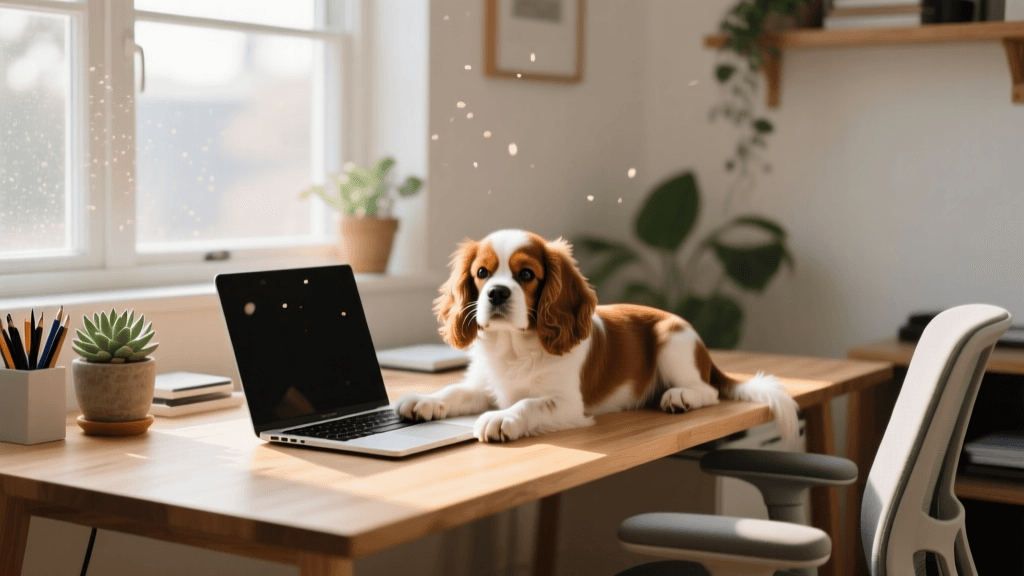
The Cavalier King Charles Spaniel is widely considered the gold standard for remote workers who want a constant, quiet companion. Psychologically, Cavaliers were bred specifically to be lap dogs for nobility. Unlike their spaniel cousins, which possess high prey drives and field instincts, the Cavalier's genetic drive is entirely focused on human proximity.
From a behavioral standpoint, Cavaliers exhibit what canine psychologists call 'contact-seeking behavior.' They do not need to be entertained with complex puzzle toys while you work; their primary source of enrichment is simply being in the same room as you. They are highly attuned to human emotional states, meaning if you are stressed during a difficult Zoom call, your Cavalier is more likely to lean against your leg quietly rather than demand a game of fetch. Their low vocalization tendency ensures that unexpected doorbell rings rarely result in a barking fit.
2. The Greyhound: The 45-MPH Couch Potato
It may seem counterintuitive to recommend a racing breed for a sedentary home office, but the Greyhound's physiology and psychology make them phenomenal remote work companions. Greyhounds are anaerobic sprinters. Their biology is designed for short, explosive bursts of speed followed by long periods of deep rest to recover.
Once a Greyhound puppy has had a 20-minute morning walk or a brief sprint in a fenced yard, their indoor arousal level drops to near zero. They are notoriously quiet and rarely bark, making them ideal for professionals who spend hours on conference calls. The primary behavioral consideration for Greyhounds in a home office is their lack of natural padding. Because they have very low body fat, they require a thick, orthopedic memory foam bed placed directly under or beside your desk to prevent joint stiffness and pressure sores during long workdays.
3. The Basset Hound: The Stubborn but Serene Scent Hound
Basset Hounds possess a unique psychological profile driven by their olfactory processing. As scent hounds, they experience the world primarily through their noses. While this can make recall training outdoors a challenge, indoors, a Basset Hound is remarkably placid. Their heavy bone structure and low-slung bodies mean they expend very little energy just moving around the house.
For a remote worker, the Basset Hound offers a grounding, calm presence. They are highly independent thinkers, meaning they will not suffer from separation anxiety if you need to step into another room for a private phone call. However, their food-driven psychology means they will likely sleep under your desk dreaming of dropped snacks. It is crucial to manage their diet strictly, as their low indoor energy expenditure makes them highly prone to obesity, which can exacerbate their susceptibility to spinal issues.
4. The Shih Tzu: The Royal Lap Dog
Bred to sit in the laps of Chinese royalty, the Shih Tzu's entire psychological makeup revolves around indoor companionship. They possess a brachycephalic (short-snouted) facial structure, which naturally limits their stamina and makes them highly sensitive to heat and overexertion. This biological trait translates into a dog that is perfectly content to sleep for 80% of your workday.
Behaviorally, Shih Tzus are highly adaptable and generally friendly with strangers, which is beneficial if your remote work involves occasional in-home client meetings or visits from technicians. They do not have a strong guarding instinct, so they are unlikely to aggressively bark at the mail carrier. The main requirement for a Shih Tzu in a home office is climate control and a dedicated grooming routine, as their luxurious coat requires daily brushing to prevent matting, which can be a nice, mindful break in your workday schedule.
5. The Whippet: The Apartment-Friendly Sighthound
The Whippet is essentially a smaller, more manageable version of the Greyhound, sharing the same sprint-and-snooze psychological profile. For remote workers living in apartments or smaller homes where space is at a premium, the Whippet is an exceptional choice. They are incredibly sensitive dogs that form deep, quiet bonds with their owners.
Whippets are highly observant but rarely reactive. They will watch you type, listen to your meetings, and simply absorb the environment without feeling the need to participate vocally. According to breed behaviorists documented by the American Kennel Club (AKC), Whippets are notably clean and odorless, which is a significant bonus when sharing a small, enclosed home office space. They do, however, have a moderate sighthound prey drive, so it is best to keep them away from small, fast-moving objects like robotic vacuums while they are in a resting state.
Behavioral Management: Training the 'Settle' Command
Even the most genetically predisposed low-energy breeds require behavioral conditioning to thrive in a home office. The most critical skill you can teach your puppy in 2026 is the 'Place' or 'Settle' command. This command teaches the dog to go to a specific mat or bed and remain there in a relaxed state until released.
- Step 1: Lure and Reward. Use a high-value treat to guide your puppy onto their designated office bed. The moment all four paws are on the mat, mark the behavior with a clicker or a verbal 'Yes' and reward.
- Step 2: Add Duration. Gradually increase the time between the reward and the release cue. Start with five seconds and build up to five minutes while you sit at your desk.
- Step 3: Incorporate Work Triggers. Practice the command while you are typing, moving your mouse, or talking on the phone. This desensitizes the puppy to your work-related movements, teaching them that your work activity is a cue to rest, not a cue to play.
If you struggle with separation anxiety when you leave the house for errands, the Humane Society of the United States recommends gradual desensitization protocols, ensuring your puppy learns that your departures are temporary and safe.
Setting Up Your 2026 Home Office for a Puppy
Creating an environment that supports your puppy's psychological need for security is just as important as breed selection. Modern home offices in 2026 are equipped with smart technology that can aid in canine management. Consider investing in a smart pet camera with two-way audio and treat-tossing capabilities. This allows you to reward your dog for calm behavior on their mat while you are in the kitchen making lunch.
Additionally, utilize a white noise machine or a smart speaker playing low-frequency classical music. Studies in canine auditory psychology show that classical music and reggae significantly lower cortisol levels in dogs. Masking the sound of delivery trucks or neighborhood construction will prevent your puppy from entering a state of hyper-vigilance, allowing both you and your dog to maintain focus and peace throughout the workday.
Conclusion
Choosing the right puppy for a remote work lifestyle requires looking beyond aesthetics and focusing on canine psychology, baseline arousal, and breed instincts. By selecting a low-anxiety, adaptable breed like the Cavalier King Charles Spaniel, Greyhound, or Whippet, and pairing them with structured behavioral training, you can create a harmonious home office. In 2026, your dog doesn't just have to be a pet; they can be the ultimate, quiet co-worker, providing stress relief and companionship without disrupting your professional flow.
priya-sutaria
All our authors care for dogs every day — read more of their work on the authors page.