Best Puppy Breeds for Remote Workers in 2026: 5 Calm Picks
Discover the best low-anxiety puppy breeds for remote workers in 2026. Learn about WFH-friendly temperaments, health screenings, and separation anxiety prevention.
The 2026 Remote Work Landscape and Canine Wellness
As we navigate the flexible, hybrid, and fully remote work structures of 2026, the home office has become a permanent fixture for millions of professionals. While having a canine companion nearby offers profound mental health benefits, not all puppies are suited for the quiet focus required during virtual meetings and deep work sessions. The American Veterinary Medical Association (AVMA) consistently highlights the human-animal bond as a critical component of stress reduction and cardiovascular health, but this bond must be nurtured through careful breed selection that aligns with your daily lifestyle.
For remote workers, the ideal puppy is not just one that is "cute" or "small." The true metric of a work-from-home (WFH) friendly breed involves low vocalization tendencies, moderate energy levels, and a genetic predisposition toward emotional stability. Furthermore, preventive healthcare and understanding breed-specific vulnerabilities are paramount in 2026, as veterinary medicine has advanced to allow for early genetic screening and tailored wellness plans that keep your companion thriving while you hit your deadlines.
What Makes a Puppy "WFH-Friendly"?
Before diving into specific breeds, it is essential to understand the health and behavioral criteria that define a great remote work companion. High-energy herding breeds, for instance, may develop destructive behaviors or neurotic anxiety if they cannot patrol or herd while you are typing. Conversely, breeds with extreme brachycephalic (flat-faced) features may struggle with respiratory distress if your home office lacks optimal climate control.
- Low Vocalization: Barking at delivery drivers or neighborhood noises will disrupt your Zoom calls and elevate your own cortisol levels.
- Moderate Exercise Needs: You need a dog that is satisfied with a brisk morning walk and an evening play session, rather than one requiring midday agility training.
- Emotional Resilience: Puppies that are overly Velcro-dependent can develop severe separation anxiety on the days you do need to commute to a corporate hub or co-working space.
Top 5 Low-Anxiety Puppy Breeds for Home Offices
1. Cavalier King Charles Spaniel
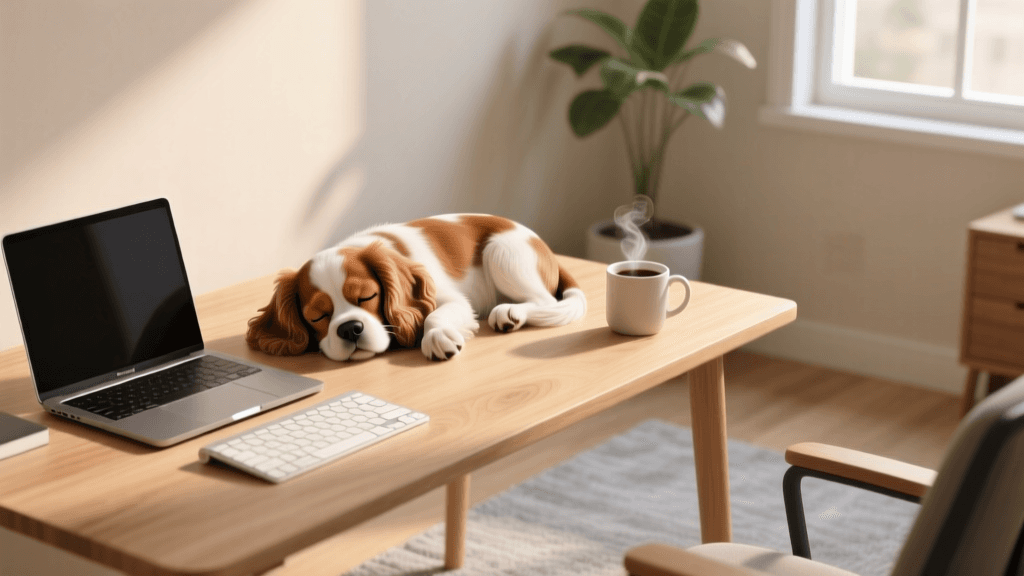
The Cavalier King Charles Spaniel remains a premier choice for remote workers due to their empathetic, gentle nature. They are known to rest quietly under a desk for hours, providing a calming presence without demanding constant attention. However, from a health and wellbeing perspective, prospective owners in 2026 must be vigilant about breed-specific health screenings. Cavaliers are predisposed to Mitral Valve Disease (MVD) and Syringomyelia (SM). Responsible breeders now utilize advanced cardiac ultrasounds and MRI screenings to ensure the genetic health of their litters. Routine veterinary care should include bi-annual cardiac auscultation and strict weight management to reduce stress on their joints and heart.
2. Greyhound (The "45-MPH Couch Potato")
While often associated with racing, retired racing Greyhounds and well-bred puppies from calm lines are famously known as "45-MPH couch potatoes." They sleep up to 18 hours a day, making them the ultimate silent partners for long coding sessions or writing blocks. Greyhounds have very little body fat and thin coats, meaning they feel the cold acutely. A WFH setup for a Greyhound requires an orthopedic, heated dog bed placed in a draft-free corner of your office. Health-wise, they are generally robust but are prone to osteosarcoma and bloat (Gastric Dilatation-Volvulus). Utilizing slow-feeder bowls and avoiding vigorous exercise immediately after meals are critical preventive measures.
3. Bichon Frise
For remote workers who suffer from pet dander allergies, the Bichon Frise is a top-tier hypoallergenic option. Their cheerful, adaptable temperament makes them excellent companions who rarely exhibit aggressive guarding behaviors. Because they are highly attuned to their owner's emotions, they provide excellent emotional support during high-stress project launches. The primary health focus for the Bichon in 2026 revolves around dental hygiene and patellar luxation. Daily tooth brushing and providing veterinary-approved dental chews are mandatory, as small breeds are highly susceptible to early-onset periodontal disease, which can lead to systemic organ damage if left untreated.
4. Japanese Chin
The Japanese Chin is an aristocratic, quiet, and profoundly affectionate toy breed. They are notoriously quiet, rarely barking without a highly compelling reason, which is ideal for open-mic virtual environments. They require minimal exercise, thriving on short indoor play sessions. Because they are a brachycephalic breed, their wellbeing depends heavily on environmental management. Your home office must be kept at a stable, cool temperature to prevent respiratory distress. Additionally, their prominent eyes require daily wiping to prevent tear staining and corneal ulcers. Regular veterinary ophthalmic exams are a non-negotiable part of their annual wellness plan.
5. Basset Hound
If you have a spacious home office and appreciate a dog with a dry sense of humor and a remarkably low energy output, the Basset Hound is a fantastic choice. They are incredibly stubborn but profoundly calm, preferring to snore softly in the background while you work. The primary health battle for the Basset Hound is obesity. Their long spines and short legs mean that excess weight quickly leads to Intervertebral Disc Disease (IVDD). In 2026, veterinary nutritionists recommend precise caloric calculations and joint-supporting supplements (like Omega-3 fatty acids and glucosamine) starting from puppyhood to preserve their spinal health and mobility.
2026 WFH Breed Comparison Chart
| Breed | Energy Level | Barking Tendency | Primary 2026 Health Focus | WFH Suitability |
|---|---|---|---|---|
| Cavalier King Charles | Low to Moderate | Low | Cardiac (MVD), Neurological (SM) | Excellent |
| Greyhound | Low (Sprint only) | Very Low | Bloat, Bone density, Cold sensitivity | Excellent |
| Bichon Frise | Moderate | Moderate | Dental disease, Patellar luxation | Very Good |
| Japanese Chin | Low | Very Low | Respiratory, Ophthalmic (Corneal) | Excellent |
| Basset Hound | Low | Moderate (Howling) | Spinal (IVDD), Obesity, Glaucoma | Good |
Preventing "Hybrid Schedule" Separation Anxiety
One of the most pressing canine mental health issues in 2026 is separation anxiety triggered by hybrid work schedules. If you work from home Monday through Wednesday but commute to an office on Thursday and Friday, your puppy can experience severe psychological distress when left alone. The ASPCA's guidelines on separation anxiety emphasize that prevention must begin during the puppy's critical socialization window.
To safeguard your dog's mental wellbeing, you must practice "departures" even on the days you work from home. Leave the house for 30 minutes to grab a coffee or take a walk without the dog. This prevents the puppy from associating your constant presence with their baseline state of security. Furthermore, the American Kennel Club (AKC) recommends utilizing interactive puzzle feeders and long-lasting chew toys to create a positive association with alone time, stimulating their brains and reducing cortisol spikes when you step out of the home office.
Ergonomic Home Office Setups for Canine Health
Just as you invest in an ergonomic chair and monitor stands for your own spinal health, your dog's physical wellbeing requires an optimized home office environment. In 2026, veterinary physical therapists strongly advise against allowing small to medium breeds to sleep on hard floors or unsupportive cushions, which can exacerbate early-onset arthritis.
Invest in a high-density memory foam orthopedic bed that fits neatly under your standing desk. For breeds prone to joint issues or those that feel the cold, smart-home integrated heating pads with automatic shut-off timers provide therapeutic warmth without the risk of overheating. Additionally, ensure that all cables, power strips, and toxic houseplants (like lilies or sago palms) are secured behind cable management trays to prevent accidental chewing and subsequent emergency veterinary visits. By aligning your remote work environment with proactive health and wellness strategies, you ensure that your canine companion remains a source of joy and stability for years to come.
marcus-aldridge
All our authors care for dogs every day — read more of their work on the authors page.