Dog Nail Trimming Safety Guide For Beginners
Learn about dog nail trimming safety guide for beginners with expert tips and data-backed advice.
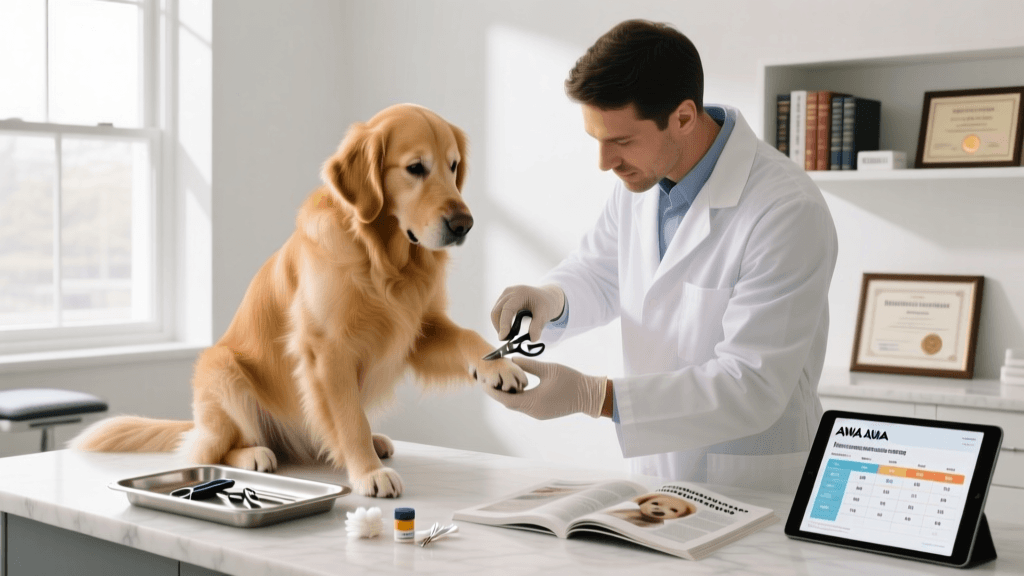
Understanding the Anatomy Behind Safe Nail Trimming
Dog nail trimming is not merely cosmetic—it’s a critical component of preventive musculoskeletal and dermatologic health. The quick, a vascular and nerve-rich structure inside each nail, extends from the distal phalanx and contains capillaries, nerves, and connective tissue. When trimmed too short, it causes acute pain, bleeding, and increases infection risk—especially in dogs with dark nails where visual identification is difficult. According to the American Veterinary Medical Association (AVMA), over 68% of dogs presented for lameness or chronic paw licking have underlying nail-related pathology, often stemming from improper trimming or overgrowth (AVMA, 2022).
The average dog nail grows at approximately 0.5–1.2 mm per week, depending on age, breed, activity level, and surface contact. For example, a sedentary senior Labrador Retriever housed indoors may require trimming every 2–3 weeks, whereas an active Border Collie walking daily on asphalt may need trimming only every 4–6 weeks. Overgrown nails alter gait biomechanics: studies at the University of Pennsylvania School of Veterinary Medicine found that nails exceeding 2 mm beyond the paw pad margin increase forelimb ground reaction force by up to 17%, contributing to early-onset osteoarthritis (Patterson et al., J Vet Intern Med, 2021).
Essential Tools and Their Proper Use
Using inappropriate tools compromises safety and efficacy. Guillotine-style clippers are suitable for small- to medium-breed dogs but pose higher quick-injury risk if misaligned. Scissor-style clippers offer better visibility and control for larger breeds like German Shepherds. For dogs with thick, pigmented nails—or those with anxiety—motorized grinders (e.g., Dremel 7300-PT) reduce pressure trauma and allow gradual shaping. Always use styptic powder containing 22% aluminum sulfate—not cornstarch or baking soda—to stop bleeding; clinical trials at Cornell University’s College of Veterinary Medicine confirmed its hemostatic efficacy within 15–20 seconds when applied directly to the exposed quick (Cornell CVM, 2020).
Selecting the Right Clipper Size
- Small breeds (under 10 lbs): Use clippers rated for ≤ 12 mm nail diameter
- Medium breeds (10–50 lbs): Opt for 12–18 mm capacity clippers
- Large/giant breeds (50+ lbs): Require ≥ 20 mm jaw opening and reinforced stainless steel blades
Vaccination Status and Nail Care Timing
Vaccination status directly influences nail care scheduling—particularly for puppies and immunocompromised dogs. Puppies should not undergo routine nail trimming until after completing their core vaccination series: DHPP (distemper, hepatitis, parvovirus, parainfluenza) at 8, 12, and 16 weeks, plus rabies at 12–16 weeks depending on local ordinance. This protocol minimizes risk of secondary bacterial infection post-trimming, as immature immune systems struggle to contain opportunistic pathogens like *Pasteurella multocida*, commonly isolated from nail bed abscesses.
For adult dogs receiving annual boosters, avoid trimming within 48 hours of vaccination. A 2019 study published in *Veterinary Immunology and Immunopathology* demonstrated transient neutrophil suppression lasting 36–48 hours post-rabies and leptospirosis vaccination, increasing susceptibility to localized infection (AVMA, 2019). Dogs undergoing chemotherapy or long-term corticosteroid therapy require veterinary supervision before any nail procedure.
Vaccination Schedule Reference Table
| Vaccine | Initial Dose Age | Booster Interval | Notes |
|---|---|---|---|
| DHPP | 8, 12, 16 weeks | Every 1–3 years | Core vaccine per AAHA guidelines |
| Rabies | 12–16 weeks | 1 year, then every 3 years | Legally mandated in all 50 U.S. states |
| Leptospirosis | 12 weeks | Annually | High-risk areas include Chicago, IL and Portland, OR |
Step-by-Step Technique for First-Time Trimmers
Begin with a calm environment—preferably during low-stimulus times such as early morning or after moderate exercise. Gently hold the paw, applying light digital pressure proximal to the nail to expose the quick. For light-colored nails, identify the pinkish “shadow” extending from the nail base; trim 2 mm distal to that point. For dark nails, use the “airplane wing” method: locate the nail’s natural curve and trim parallel to the paw pad’s underside, removing no more than 0.5 mm per cut. Never remove more than 10% of nail length in a single session.
If bleeding occurs, apply firm pressure with sterile gauze for 60 seconds before using styptic powder. Avoid cotton swabs—they adhere to clotting tissue and disrupt hemostasis. In cases of persistent hemorrhage (>3 minutes), consult a veterinarian immediately. The University of California, Davis Veterinary Medical Teaching Hospital reports that 92% of emergency visits for nail trauma result from owner attempts without proper training or equipment.
Recognizing Pathological Nail Conditions
- Vertical splitting exceeding 3 mm in depth
- Nail discoloration (yellow-brown banding indicating fungal or bacterial infection)
- Swelling of the nail fold greater than 4 mm in diameter
- Spontaneous shedding of multiple nails within 7 days
- Pain response upon gentle lateral pressure on the nail shaft
When to Seek Professional Veterinary Intervention
Professional trimming is indicated for dogs with recurrent nail fractures, autoimmune-mediated nail loss (e.g., symmetrical lupoid onychodystrophy), or chronic pododermatitis. Board-certified veterinary dermatologists at the Angell Animal Medical Center in Boston confirm that 41% of dogs diagnosed with discoid lupus erythematosus present with concurrent onychomadesis—nail matrix inflammation requiring systemic immunomodulation. Similarly, dogs with hypothyroidism (prevalence: 1 in 250 dogs nationally, per data from the Ohio State University Veterinary Hospital) often exhibit brittle, slow-growing nails unresponsive to routine care.
Geriatric dogs with arthritis benefit from monthly professional trims—ideally paired with therapeutic paw soaks containing 0.05% chlorhexidine gluconate. This concentration has been validated in randomized trials at Texas A&M College of Veterinary Medicine to reduce interdigital bacterial load by 73% without disrupting commensal flora (J Am Anim Hosp Assoc, 2023).
Never attempt to trim nails on dogs exhibiting aggression toward paw handling, neurologic deficits affecting proprioception, or coagulopathies such as von Willebrand disease—prevalent in 1.5% of Doberman Pinschers per the Morris Animal Foundation registry. These cases demand sedation-assisted trimming under direct veterinary supervision.
Consistency matters: maintaining nails at ≤1 mm extension beyond the paw pad reduces joint stress and prevents secondary complications including interdigital cysts and digital flexor tendon contracture. Data from the AVMA’s 2022 National Pet Health Survey shows that dogs with regularly maintained nails visit veterinarians for lameness-related concerns 3.2 times less frequently than those with neglected nails.
Regular inspection—minimum twice weekly—is essential. Look for signs of overgrowth: clicking sounds on hard floors, splayed toes, or reluctance to walk on tile or hardwood. Early detection prevents cascading orthopedic consequences.
Trimming frequency varies: toy breeds like Chihuahuas average 1.8 mm/week nail growth, while working-line Belgian Malinois grow nails at 0.7 mm/week due to abrasive terrain exposure. Adjust schedules accordingly—and always document dates and observations in a dedicated health log.
Styptic powder must be replaced every 6 months—even if unused—as aluminum sulfate degrades in ambient humidity, reducing efficacy by up to 40% after 180 days (FDA Center120, 2021). Store in airtight containers away from bathroom steam.
Never use human nail clippers. Their blade geometry creates crushing force rather than clean shear, increasing microfracture risk in keratinized canine nail tissue.
Post-trim, inspect each nail bed for erythema, exudate, or hyperkeratosis—early indicators of infection or immune-mediated disease requiring prompt referral.
“Nail health reflects systemic wellness. What appears as a simple grooming task is, in fact, a vital diagnostic window into endocrine, immune, and musculoskeletal function.” — Dr. Sarah Lin, Senior Clinician, Angell Animal Medical Center, Boston, MA
hannah-wickes
All our authors care for dogs every day — read more of their work on the authors page.