DIY Dog Paw Balm: Homemade Recipes for Dry Cracked Pads
Learn how to make a soothing DIY dog paw balm at home. Discover safe, natural ingredients to heal dry, cracked pads and protect against harsh weather.
Why Your Dog's Paws Need Extra Care
Dogs rely on their paws for everything, from running and playing to simply walking around the house. Yet, despite their rugged appearance, canine paw pads are remarkably susceptible to environmental damage. Whether it is the scorching asphalt of summer, the harsh chemical ice melts of winter, or the dry indoor heating that saps moisture from the air, your dog's paws face a daily barrage of threats. Over time, this exposure can lead to hyperkeratosis, painful cracking, and even severe burns. While commercial paw balms are widely available, many contain questionable ingredients, synthetic fragrances, or essential oils that can be toxic if ingested. Because dogs naturally lick their paws, everything you apply topically will eventually end up in their digestive system. This is where DIY and homemade solutions shine. By crafting your own paw balm, you gain complete control over every ingredient, ensuring that your dog receives a safe, non-toxic, and highly effective treatment. In this comprehensive guide, we will explore the anatomy of your dog's paws, the science behind natural moisturizers, and provide a step-by-step recipe for the ultimate homemade healing paw balm.
The Anatomy of a Canine Paw Pad
To understand why paw balms are necessary, it helps to understand the unique anatomy of a canine paw pad. The outer layer of a dog's paw pad, known as the stratum corneum, is the thickest skin on their entire body. It is designed to withstand immense pressure and friction. However, unlike the rest of their body, paw pads do not have hair follicles or sebaceous glands to naturally lubricate the skin. Instead, they rely on eccrine sweat glands, which primarily function for thermoregulation and grip, not moisturization. Because they lack natural oil production, paw pads are entirely dependent on external moisture and environmental conditions to maintain their elasticity. When the skin becomes dehydrated, it loses its flexibility. Instead of stretching and absorbing shock, the dry skin becomes brittle and prone to fissuring. These deep cracks, or fissures, can expose the sensitive dermal layers underneath, leading to pain, limping, and a high risk of bacterial or fungal infections. According to VCA Hospitals, paw pad injuries are incredibly common and can significantly impair a dog's mobility and quality of life if left untreated.
Environmental Threats to Paw Health
Environmental threats vary wildly depending on the season and your geographic location. In the winter, the ASPCA warns that rock salt and chemical ice melts can cause severe chemical burns and toxicity when ingested. Snow and ice can also form painful ice balls between the toes, leading to frostbite. Conversely, summer brings the danger of hot pavement. Asphalt can reach temperatures upwards of 140 degrees Fahrenheit on a sunny 85-degree day, capable of causing thermal burns and blistering in a matter of seconds. Even indoor environments pose a threat; forced-air heating systems drastically reduce indoor humidity, drawing moisture out of your dog's skin and leading to dry, flaky, and cracked pads year-round.
Why Choose a Homemade Solution?
The commercial pet care market is flooded with paw balms, but not all are created equal. Many mass-produced balms use petroleum jelly (petrolatum) as their primary base. While petroleum jelly creates a barrier, it does not actually nourish the skin. Furthermore, it can trap dirt and bacteria against the skin if the paws are not thoroughly cleaned before application, potentially leading to folliculitis or interdigital cysts. Additionally, some natural commercial balms include essential oils like tea tree, eucalyptus, or wintergreen to provide a pleasant scent or a cooling sensation. However, these essential oils can be highly toxic to dogs, causing neurological issues, liver damage, or severe gastrointestinal distress when licked. By making a DIY paw balm, you eliminate the risk of hidden toxins, avoid cheap petroleum byproducts, and save money. A single batch of homemade balm costs roughly four to six dollars to make and yields enough product to last an average-sized dog an entire year.
Essential Ingredients for Homemade Paw Balms
Crafting the perfect paw balm requires a careful balance of hard waxes, rich butters, and nourishing liquid oils. Each ingredient plays a specific role in protecting and healing the stratum corneum. Below is a comparison chart of the best natural ingredients for canine paw care.
| Ingredient | Primary Benefit | Estimated Cost | Sourcing Tip |
|---|---|---|---|
| Beeswax Pellets | Creates a breathable, protective barrier against ice and hot pavement. | $0.75 per oz | Source from local beekeepers or organic cosmetic suppliers. |
| Shea Butter | Deeply moisturizes and provides vitamins A and E for skin repair. | $0.50 per oz | Look for raw, unrefined shea butter for maximum nutrient retention. |
| Coconut Oil | Offers natural antibacterial and antifungal properties. | $0.30 per oz | Use cold-pressed, unrefined virgin coconut oil. |
| Sweet Almond Oil | Acts as a carrier oil to improve spreadability and soothe irritation. | $0.60 per oz | Ensure it is 100% pure and safe for topical pet use. |
| Vitamin E Oil | Powerful antioxidant that accelerates the healing of cracked pads. | $1.00 per oz | Buy pure d-alpha-tocopherol oil, avoiding synthetic blends. |
Step-by-Step Recipe: The Ultimate Healing Paw Balm
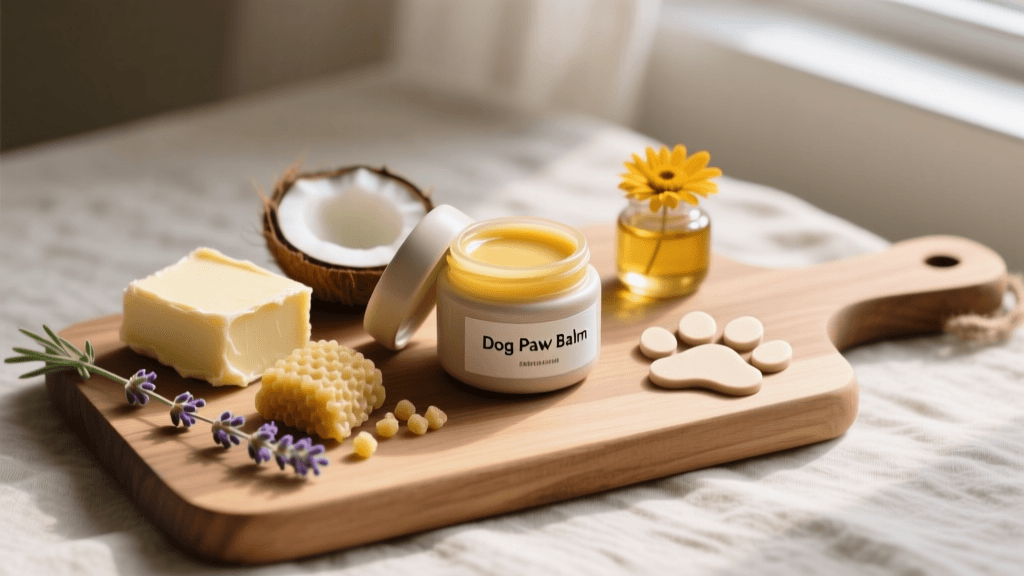
This recipe yields approximately four ounces of balm, which is enough to fill two standard two-ounce metal tins. It is designed to be firm enough to hold its shape in a tin, but soft enough to melt upon contact with your dog's warm skin.
Ingredients and Measurements
- 2 tablespoons of cosmetic-grade beeswax pellets
- 2 tablespoons of raw unrefined shea butter
- 2 tablespoons of cold-pressed virgin coconut oil
- 1 tablespoon of sweet almond oil (or olive oil as a substitute)
- 4 drops of pure Vitamin E oil
Equipment Needed
- A glass measuring cup or heat-safe bowl
- A saucepan for a double boiler
- A stirring utensil (like a wooden skewer or chopstick)
- Two 2-ounce metal tins or silicone molds
Instructions
- First, create a double boiler by filling a saucepan with about two inches of water and placing it over medium-low heat. Place the glass measuring cup into the water.
- Add the beeswax pellets to the glass cup. Beeswax has the highest melting point, so it must go in first. Allow it to melt completely, which should take about five to seven minutes.
- Once the beeswax is fully liquid, stir in the shea butter and coconut oil. Stir gently and continuously until both butters are completely melted and integrated with the wax.
- Remove the glass cup from the heat. The residual heat will be enough to keep the mixture liquid while you add the final ingredients.
- Carefully stir in the sweet almond oil and the Vitamin E oil. Adding these liquid oils off the heat prevents the delicate antioxidants in the Vitamin E from degrading due to high temperatures.
- Immediately pour the liquid mixture into your metal tins or silicone molds.
- Allow the tins to sit undisturbed at room temperature for at least two hours, or until the balm is completely cool and solidified. Do not place the tins in the refrigerator to speed up the cooling process, as rapid temperature changes can cause the beeswax and butters to separate or become grainy.
How to Apply Paw Balm and Train Your Dog
Applying the balm is straightforward, but getting your dog to tolerate it can sometimes be a challenge. Always start by washing your dog's paws with a damp, warm cloth to remove any dirt, debris, or chemical ice melts. Dry the paws thoroughly, as applying balm over wet skin can trap moisture and promote fungal growth. Scoop a small, pea-sized amount of balm onto your finger and gently massage it into the paw pads, working it between the toes and around the nail beds. Because the balm contains food-grade oils, your dog will likely want to lick it off immediately. To prevent this, apply the balm right before a meal, during a training session, or while your dog is distracted by a high-value chew toy or a lick mat. You can also use dog socks or booties for ten to fifteen minutes post-application to allow the balm to fully absorb into the skin. For preventive care, apply the balm two to three times a week. For active healing of cracked pads, apply a thin layer daily before bedtime.
Crucial Safety Warnings: What to Avoid
When experimenting with DIY dog care, it is vital to know what not to use. Never use human lotions or hand creams on your dog's paws. Human skin has a different pH balance than canine skin, and human lotions often contain ingredients like xylitol, zinc oxide, or synthetic fragrances that are toxic to dogs. Furthermore, avoid using pure petroleum jelly. While it is not strictly toxic, it creates an occlusive seal that prevents the skin from breathing and can draw out existing moisture over time, ultimately making the dryness worse. Finally, as mentioned earlier, strictly avoid all essential oils unless explicitly directed by a holistic veterinarian. Oils like peppermint, citrus, pine, and ylang-ylang are known irritants and systemic toxins for canines.
When to Skip the DIY and See a Veterinarian
While homemade paw balms are excellent for routine maintenance, minor dryness, and environmental protection, they are not a substitute for professional veterinary care. The American Veterinary Medical Association (AVMA) advises pet owners to closely monitor their dogs for signs of severe paw trauma. You should consult your veterinarian if you notice deep, bleeding fissures, persistent limping, excessive swelling, redness between the toes, or any discharge such as pus, which indicates a bacterial or yeast infection. Additionally, if your dog's paw pads are excessively overgrown or suffer from severe hyperkeratosis (often seen in older dogs or specific breeds), a veterinarian or professional groomer may need to carefully trim the excess keratinized tissue before topical balms can be effective. By combining safe, homemade preventative care with professional veterinary oversight, you can ensure your dog's paws remain healthy, resilient, and ready for every adventure.
anouk-beaumont
All our authors care for dogs every day — read more of their work on the authors page.