Step-by-Step Guide to Loose Leash Walking for Dogs
Master loose leash walking with our step-by-step dog training guide. Learn gear choices, timing, and actionable tips for stress-free daily walks.
The Ultimate Step-by-Step Guide to Loose Leash Walking
Walking your dog should be a relaxing bonding experience, not a tug-of-war contest that leaves your shoulder aching and your patience frayed. If your dog pulls on the leash, you are not alone. According to the Humane Society of the United States, leash pulling is one of the most common behavioral issues reported by dog owners. Fortunately, with the right gear, high-value rewards, and a consistent step-by-step training protocol, you can teach your dog to walk politely by your side.
This comprehensive guide will walk you through the exact methodology used by professional canine behaviorists to cure leash pulling. We will cover the biomechanics of pulling, compare the best training gear, and provide a foolproof, four-step training blueprint.
Understanding the Opposition Reflex
Before diving into the training steps, it is crucial to understand why dogs pull. Dogs do not pull on the leash to dominate you or assert alpha status. They pull primarily due to the "opposition reflex" (thigmotaxis) and a simple difference in pace. A dog's natural walking speed is significantly faster than a human's. When they feel tension on the collar or harness, their instinctual response is to lean into that pressure and pull harder.
Furthermore, the environment is incredibly stimulating. Scents, squirrels, and other dogs act as powerful magnets. If pulling successfully gets them closer to the stimulus, the behavior is reinforced. Our goal is to rewire this association so that a loose leash becomes the key to moving forward.
Selecting the Right Training Gear
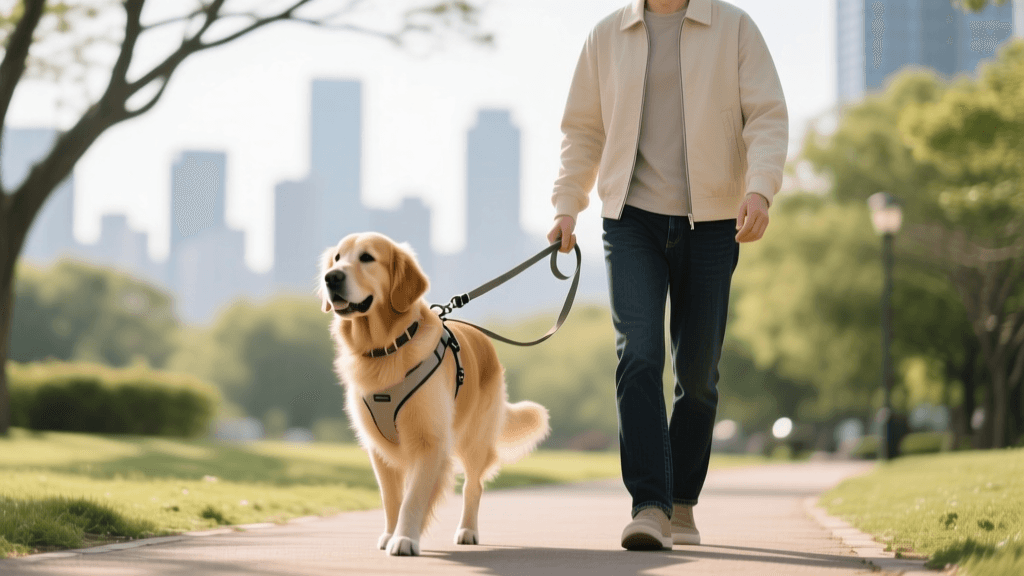
Using the wrong equipment can inadvertently reinforce pulling or cause physical injury. Retractable leashes, for instance, teach dogs that pulling extends the leash, which is the exact opposite of what we want. The American Kennel Club (AKC) strongly recommends using a standard 4-to-6-foot leash and a well-fitted harness for training.
Below is a comparison chart of the most common walking tools and their effectiveness for loose leash training.
| Equipment Type | Average Cost | Pros | Cons | Training Verdict |
|---|---|---|---|---|
| Standard Flat Collar | $10 - $20 | Great for holding ID tags. | Can cause tracheal damage if the dog pulls heavily. | Not recommended for active pulling dogs. |
| Retractable Leash | $20 - $40 | Allows dog to roam further in open fields. | Teaches pulling; thin cord can cause rope burn. | Avoid entirely during training. |
| Back-Clip Harness | $15 - $35 | Protects the neck and trachea. | Can actually encourage pulling (like a sled dog). | Good for car rides, poor for leash training. |
| Front-Clip Harness | $20 - $45 | Gently redirects the dog's momentum sideways. | Can cause chafing if improperly fitted. | Highly Recommended for training. |
| Martingale Collar | $12 - $25 | Prevents slipping for narrow-headed breeds (e.g., Greyhounds). | Still applies pressure to the neck. | Situational; use with caution. |
Pro Tip: Pair a front-clip harness (like the Ruffwear Front Range or the Petsafe Easy Walk) with a sturdy, 6-foot biothane or nylon leash. Biothane is waterproof and easy to clean, typically costing around $25 to $40.
Preparation: Treats, Timing, and Environment
Timing is everything in dog training. You need treats that your dog values more than the environment. Skip the dry kibble and opt for high-value, soft, smelly treats. Zuke's Mini Naturals or small pieces of boiled chicken breast work exceptionally well. Keep your treats in a dedicated treat pouch (like the Outward Hound Treat Pouch, approx. $15) worn on your waist so your hands remain free and you can deliver rewards within 1 to 2 seconds of the desired behavior.
Additionally, consider the time of day for your initial training sessions. Early morning or late evening, when neighborhood traffic and wildlife are less active, provides a calmer baseline for learning. Avoid training immediately after your dog has been cooped up all day; let them have five minutes of off-leash play in a fenced yard or a quick game of fetch to burn off explosive energy before you clip on the leash.
The 4-Step Loose Leash Training Blueprint
Step 1: Establishing the "Sweet Spot"
The "sweet spot" is the area directly beside your leg, roughly between your hip and your knee. This is where your dog will learn that good things happen.
- Start indoors in a low-distraction environment like your living room.
- Stand still with your dog on the leash.
- The exact second your dog looks at you or naturally steps into the sweet spot, mark the behavior with a clicker or a verbal "Yes!" and deliver a treat right at the seam of your pants.
- Repeat this 15-20 times until your dog is actively choosing to stand by your leg.
Step 2: The "Be a Tree" Method
This step teaches the dog that tension on the leash equals a full stop.
- Begin walking forward at a normal pace.
- The millisecond you feel tension on the leash, stop walking completely. "Be a tree." Do not yank the leash back; simply lock your arm and stand still.
- Wait. Your dog will eventually look back at you or take a step backward to relieve the tension.
- The moment the leash forms a "J" shape (indicating slack), mark with "Yes!" and reward them in the sweet spot.
- Resume walking.
Warning: This step requires immense patience. Your first 10-minute walk might only cover 20 feet. Consistency is vital; if you let them pull you just one time to reach a fire hydrant, you undo the training.
Step 3: The U-Turn Technique
If "being a tree" isn't working, or if your dog is hyper-fixated on a distraction ahead, use the U-Turn.
- Walk forward. If your dog pulls ahead, immediately say "Let's go!" in a cheerful voice.
- Pivot 180 degrees and walk in the exact opposite direction.
- When your dog catches up to you and enters the sweet spot, praise heavily and deliver a jackpot reward (3-4 small treats).
- This teaches your dog that they must keep an eye on you because you are unpredictable and hold the rewards.
Step 4: Adding Real-World Distractions
Once your dog has mastered the loose leash in the house and your backyard, it is time to graduate to the front yard, and eventually the neighborhood.
- Increase distance gradually: Move from the living room to the driveway.
- Use the Premack Principle: If your dog wants to sniff a bush, use the sniff as the reward. Walk on a loose leash toward the bush. If they pull, stop. If the leash stays loose, release them with a "Go sniff!" cue.
- Manage the environment: If you see a highly triggering dog or squirrel approaching, create distance by crossing the street before your dog reacts.
"Training is not about controlling your dog; it is about communicating clearly what you want and making that choice the most rewarding option for them." — Modern Canine Behaviorists
Troubleshooting Common Issues
My dog bites the leash: Leash biting is often a sign of over-arousal or frustration. Carry a secondary toy or offer a high-value chew treat to redirect their mouth. Never play tug-of-war with the leash.
My dog sits down and refuses to move: This is common in puppies or dogs that have learned that stopping the walk gets them attention. If your dog anchors themselves, do not pull them. Instead, take two steps backward, make a happy kissing noise, and encourage them to come to you. Reward heavily when they move toward you, then resume your forward direction.
My dog only pulls toward other dogs: This is leash reactivity. You must increase your distance from the trigger. Work on "Look at That" (LAT) games from a distance where your dog remains under their reactivity threshold, as recommended by certified behaviorists.
Conclusion
Loose leash walking is a marathon, not a sprint. By utilizing a front-clip harness, high-value treats, and the step-by-step methods outlined above, you will transform your daily walks from a stressful chore into an enjoyable routine. Remember to keep training sessions short (10-15 minutes) to prevent frustration for both you and your dog. With time, patience, and positive reinforcement, your dog will learn that walking politely by your side is the best way to explore the world.
aaron-whyte
All our authors care for dogs every day — read more of their work on the authors page.