Master Loose Leash Walking: An 8-Week Progression Plan
Transform chaotic walks into peaceful strolls with our 8-week loose leash walking progression plan. Step-by-step training for adult dogs and rescues.

Introduction: The Journey to Peaceful Walks
Walking a dog that constantly pulls is physically exhausting and mentally frustrating. What should be a relaxing bonding experience often devolves into a tug-of-war that leaves you with a sore shoulder and your dog overstimulated. According to the ASPCA's guide to walking your dog, establishing a consistent routine and using positive reinforcement are the foundational pillars of successful leash manners. However, many owners fail because they attempt to teach loose leash walking in high-distraction environments before the dog has mastered the basics.
This 8-week training progression plan is designed to systematically build your dog's leash skills. By starting in low-distraction environments and gradually increasing the difficulty, you will set your dog up for success rather than frustration. Whether you have a newly adopted rescue or an older dog with ingrained pulling habits, this roadmap will transform your daily walks.
Understanding Why Dogs Pull
Before diving into the training plan, it is crucial to understand why dogs pull. Dogs pull on the leash primarily for three reasons:
- The Opposition Reflex: Dogs naturally lean into pressure. When they feel the leash tighten, their instinct is to pull forward against it.
- Pace Mismatch: A dog's natural walking pace is significantly faster than a human's. To them, we are agonizingly slow.
- Environmental Reinforcement: Pulling works. If a dog pulls toward a fascinating scent or another dog, and the owner follows, the dog learns that pulling equals forward movement.
Our goal in this progression plan is to teach the dog that a loose leash is the only way to move forward and access environmental rewards.
Essential Gear for Success
You cannot train effectively with the wrong equipment. Ditch the retractable leash and the standard flat collar, which can cause tracheal damage if your dog lunges.
The Recommended Setup
- Harness: Use a front-clip no-pull harness, such as the Rabbitgoo No-Pull Pet Harness or the Petsafe Easy Walk. The front clip redirects the dog's momentum back toward you when they pull.
- Leash: A 6-foot fixed-length leash made of leather or Biothane. Biothane is highly recommended for its durability, waterproof nature, and ease of cleaning. Avoid chains or thin nylon that can cause leash burn.
- Treat Pouch: A high-capacity treat pouch (like the Dog Gone Smart or PetSafe Treat Pouch) that attaches securely to your waist for rapid reward delivery.
- High-Value Treats: For outdoor training, dry kibble will not suffice. Use boiled chicken breast, low-sodium hot dogs, or commercial treats like Zuke's Mini Naturals or Happy Howie's meat rolls.
Phase 1: Weeks 1-2 (Indoor Foundation & Engagement)
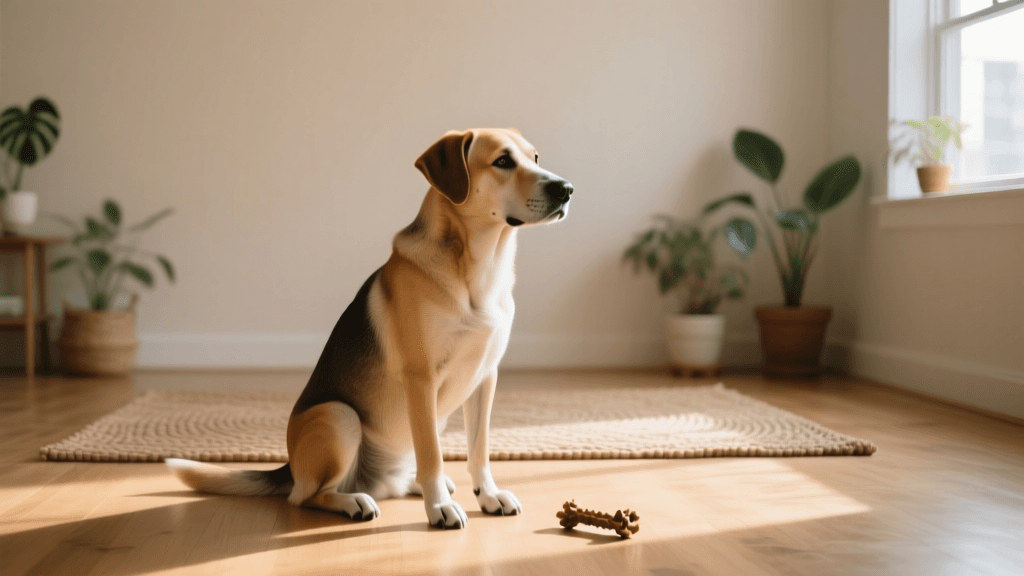
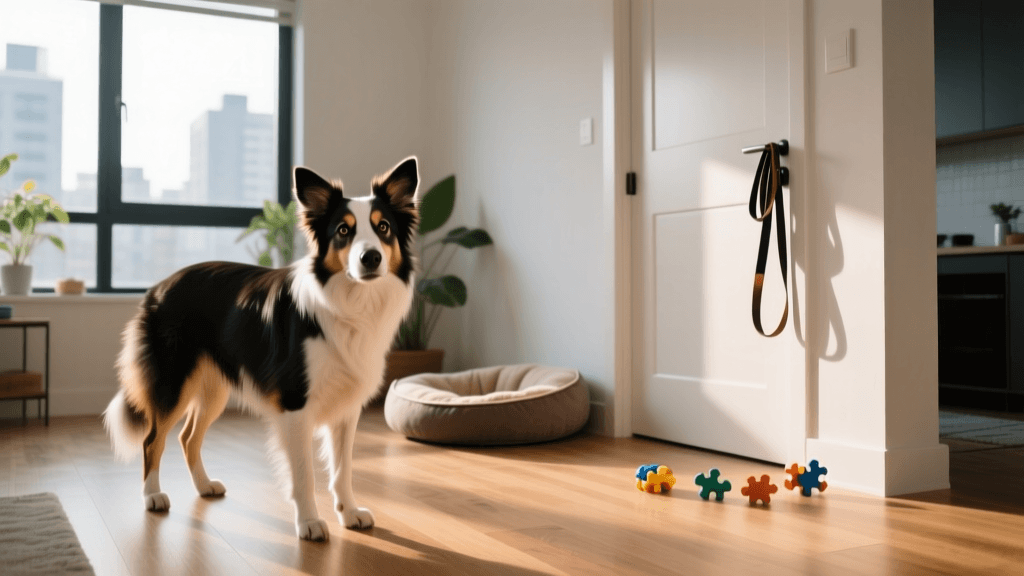
The first two weeks are strictly indoors. The goal is to build engagement and teach the dog that staying near your left or right leg (your chosen 'heel' side) is highly rewarding.
The Name Game and Orientation
Start in your living room with zero distractions. With your dog on the 6-foot leash, simply stand still. The moment your dog looks at you or steps toward your side, mark the behavior with a clicker or a verbal 'Yes!' and deliver a treat directly at the seam of your pants leg. This teaches the dog that the 'reward zone' is right next to your thigh.
Next, take one step forward. If the dog follows and stays near your leg, mark and reward. Gradually increase to two steps, then five steps. If the dog pulls ahead, stop immediately. Do not yank the leash; simply become a tree. Wait for the dog to look back at you or create slack in the leash, then mark, reward, and resume walking.
Timing: Three 10-minute sessions per day.
Phase 2: Weeks 3-4 (Low-Distraction Outdoor Environments)
Now that your dog understands the reward zone indoors, it is time to move outside. However, do not go to the street yet. The world is too exciting.
Driveway and Backyard Drills
Begin your sessions in your driveway or a fenced backyard. The Humane Society dog walking tips emphasize patience during this transition, noting that dogs often experience an 'extinction burst'—a temporary increase in pulling behavior when they realize their old tactics aren't working in a new environment.
Implement the 'U-Turn' technique. Walk forward, and if the dog reaches the end of the leash, cheerfully say 'Let's go!' and immediately pivot 180 degrees in the opposite direction. When the dog catches up to your side, mark and reward. This teaches the dog that they must pay attention to your movements because you might change direction at any moment.
Timing: Two 15-minute sessions per day in the driveway or yard.
Phase 3: Weeks 5-6 (Moderate Distractions & Duration)
It is time to hit the pavement. Choose a quiet residential street during a low-traffic time, such as early morning or mid-afternoon.
Managing Thresholds and Triggers
During this phase, you will encounter mild distractions: a blowing leaf, a distant car, or a neighbor's cat. This is where threshold training becomes critical. If your dog notices a distraction but remains under threshold (able to take treats and respond to cues), reward heavily for engagement. If your dog goes over threshold (lunging, barking, refusing treats), you are too close. Increase the distance immediately.
Use the 'Find It' scatter cue. If you see a mild distraction approaching, toss a handful of high-value treats into the grass and say 'Find it!' This engages the dog's natural sniffing instinct, which lowers their heart rate and redirects their focus away from the trigger and back to the ground near you.
Timing: One 20-minute walk per day, supplemented by mental enrichment games at home.
Phase 4: Weeks 7-8 (Real-World Mastery & Proofing)
The final phase involves 'proofing' the behavior in busier environments. This means practicing in local parks, on busier sidewalks, and around other leashed dogs.
Passing Other Dogs
Passing other dogs is the ultimate test of loose leash walking. As noted in the American Kennel Club's training resources, consistency and distance management are key when navigating canine greetings. Do not allow on-leash greetings during this training phase; on-leash greetings create tension and frustration.
When another dog approaches, arc away from them, creating a wide berth. Keep feeding your dog high-value treats continuously as the other dog passes. Once the dog is past, give a release cue like 'All done' and allow your dog to sniff a nearby bush as a life reward. Over time, you can fade the continuous feeding and reward only for a loose leash during the pass.
Timing: Daily 30-minute walks in varied environments.
8-Week Progression Checklist
| Week | Primary Goal | Environment | Treat Value | Session Length |
|---|---|---|---|---|
| 1-2 | Engagement & Reward Zone | Indoors (Living Room) | Medium (Kibble/Cheese) | 10 mins x 3/day |
| 3-4 | Directional Changes & Focus | Driveway / Fenced Yard | High (Hot dogs/Chicken) | 15 mins x 2/day |
| 5-6 | Threshold Management | Quiet Residential Street | High (Meat Rolls/Liver) | 20 mins x 1/day |
| 7-8 | Proofing & Distraction Passing | Parks / Busy Sidewalks | Highest (Real Meat/Fish) | 30 mins x 1/day |
Troubleshooting Common Setbacks
My Dog Won't Eat Treats Outside
If your dog refuses treats outdoors, they are likely overstimulated or stressed. This means the environment is too distracting. Move back to your driveway or indoors, and build up the difficulty more slowly. You can also try 'real food' like scrambled eggs or freeze-dried minnows, which have a stronger scent profile than commercial biscuits.
My Dog Sits Down and Refuses to Move
Some dogs protest the front-clip harness by going on strike. Do not pull them. Instead, drop a treat near their nose, take a step back, and cheerfully encourage them to come to you. Reward the forward movement. Never drag a dog that has anchored itself.
Conclusion: A Lifelong Practice
Loose leash walking is not a trick your dog learns once and forgets; it is a lifelong habit and a continuous conversation between you and your dog. There will be days when your dog's leash manners regress, especially if they are tired, unwell, or highly stimulated. On those days, manage the environment, increase your distance from triggers, and rely on your foundational engagement exercises. By following this 8-week progression plan, you are not just teaching your dog not to pull; you are building a foundation of trust, communication, and mutual enjoyment that will make every walk a pleasure for years to come.
robin-maitland
All our authors care for dogs every day — read more of their work on the authors page.